Mastering Tulip Arrangements: A Comprehensive Guide to Design and Longevity
Arranging tulips offers a unique opportunity to showcase their elegant, trumpet-shaped blooms and vibrant colors. Unlike many robust flowers, tulips possess a distinct growth habit and stem structure that necessitates specific techniques for optimal display and extended vase life. Understanding these characteristics is paramount to creating visually appealing and long-lasting arrangements. The inherent flexibility of tulip stems, for instance, can be both a blessing and a curse. While it allows for graceful, cascading designs, it also means they are prone to drooping if not properly prepared and supported. Conversely, their tendency to continue growing in the vase, bending towards light, can be a stylistic element or a frustrating distortion, depending on the intended aesthetic. This guide will delve into the meticulous steps required to prepare tulips, select the perfect vase, and construct arrangements that are both beautiful and durable, addressing common challenges and offering advanced tips for horticultural artists.
Tulip Selection and Preparation: The Foundation of a Flawless Arrangement
The journey to a successful tulip arrangement begins with discerning selection and thorough preparation. Opt for tulips with firm, upright stems and tightly furled or partially open blooms. Avoid flowers with bruised petals, brown tips, or limp stems, as these indicate age or stress, significantly reducing their vase life. When purchasing, choose bunches where the flowers are still predominantly in bud; they will open beautifully in your vase, providing a longer display. Upon arrival home, immediate hydration is critical.
The primary preparation step for tulips is cutting the stems. This should be done at an angle, using a sharp knife or clean floral shears. An angled cut increases the surface area available for water absorption. Crucially, this cut should be performed underwater. This prevents air bubbles from entering the vascular system of the stem, which can block water uptake and lead to wilting. Submerging the stems in a basin of water while cutting is an effective method. The stems should be cut to the desired length for your chosen vase. Consider the proportions of the vase and the visual impact you aim to achieve. Taller vases can accommodate longer stems, allowing for more dramatic, sweeping arrangements, while shorter vases suit more compact, clustered displays.
Another vital preparation step involves removing lower leaves. Any foliage that will sit below the waterline in the vase should be stripped away. Submerged leaves decompose rapidly, introducing bacteria into the water, which can clog the stems and shorten the flowers’ lifespan. This decomposition also releases ethylene gas, a natural plant hormone that accelerates aging and wilting in all flowers. Thorough leaf removal ensures cleaner water and a healthier environment for your tulips.
Tulips are known to "grow" in the vase, bending and stretching towards light sources. To mitigate this tendency and maintain a desired posture, some florists recommend scoring the stem bases. Using a sharp knife, make a shallow vertical slit, approximately 1-2 cm long, at the very bottom of each stem. This encourages more uniform water uptake and can help to keep stems straighter. However, this is an advanced technique and can sometimes lead to excessive water loss if not done carefully. For most home arrangements, thorough hydration and proper water management will suffice.
Finally, conditioning the tulips is essential for maximizing their longevity. After cutting and de-leafing, place the prepared tulips in a bucket of cool water, in a cool, dark place, for at least two hours. This allows them to hydrate thoroughly before being arranged. This period of "conditioning" helps to firm up their stems and plumps up the blooms, preparing them for their final display.
Vase Selection: The Stage for Your Tulip Masterpiece
The choice of vase significantly impacts the overall aesthetic and structural integrity of your tulip arrangement. Consider the vase’s height, width, opening, and material.
Height: The vase’s height should be proportionate to the length of your tulip stems and the desired visual impact. For tall, dramatic arrangements, a tall, slender vase is ideal. For more intimate, tabletop displays, a shorter, wider vase will be more appropriate. Ensure the vase is tall enough to support the stems and prevent the blooms from toppling over, especially as they continue to grow.
Width and Opening: The opening of the vase dictates how many stems you can comfortably fit and how the flowers will be positioned. A narrow opening is excellent for single stems or small, tight bouquets, emphasizing individual bloom beauty. A wider opening allows for a more voluminous and lush arrangement, enabling stems to spread out. Be mindful not to overcrowd the vase; insufficient space can lead to competition for water and light, and also bruising of delicate petals.
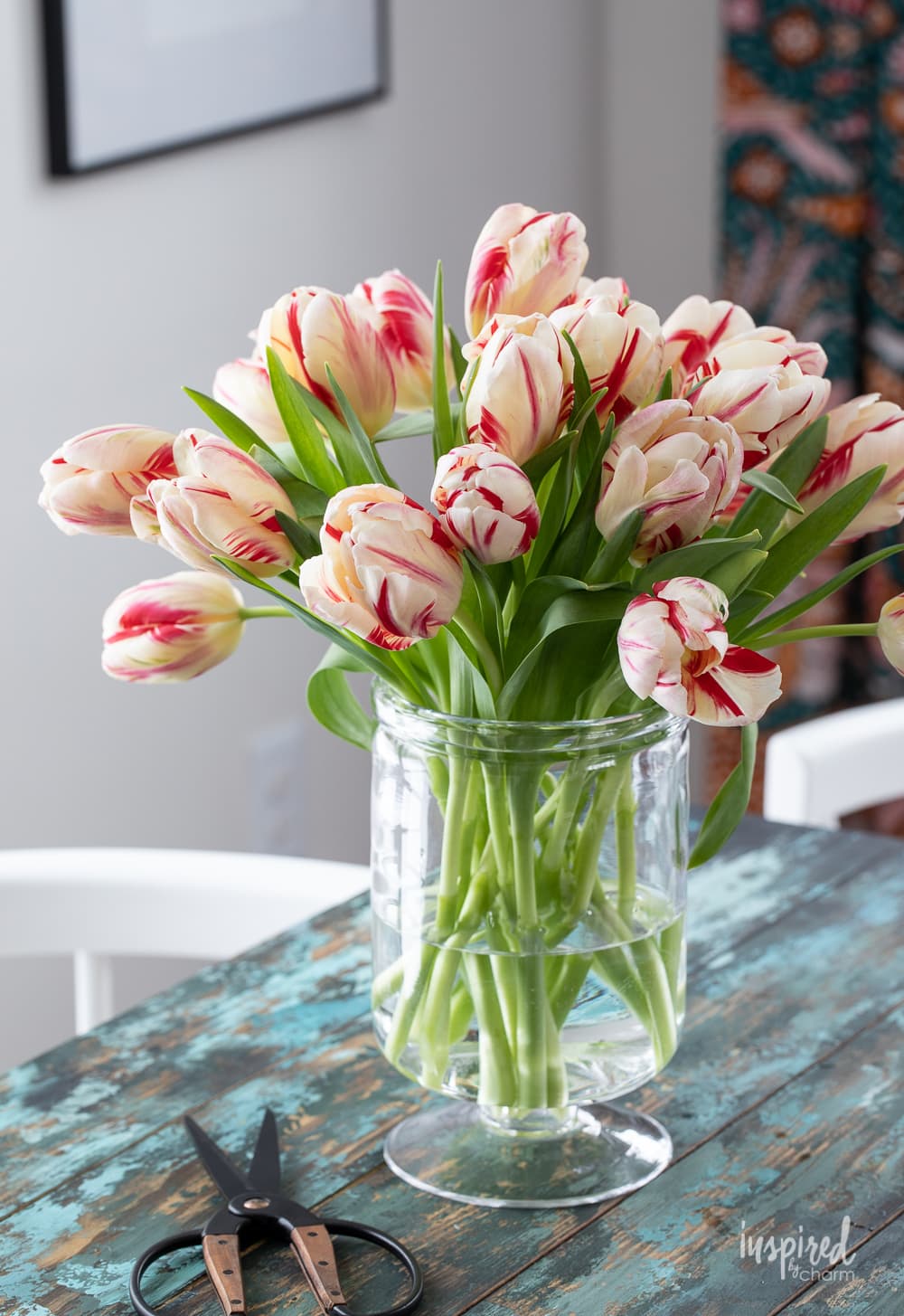
Material: Ceramic, glass, metal, and even rustic wooden containers can all be used. Glass vases offer the advantage of allowing the beauty of the hydrated stems to be visible, which can be a design element in itself. Clear glass also allows you to easily monitor water levels. Opaque vases, such as ceramic or metal, hide the stems, allowing the focus to remain solely on the blooms. They can also offer better insulation, keeping the water cooler.
Stability: For arrangements with many stems or taller, more flexible tulips, stability is key. A vase with a wider, heavier base will provide better support and prevent tipping. If using a slender vase for a large arrangement, consider using floral foam or chicken wire within the vase to provide a more secure structure.
Water Quality and Additives: Nourishing Your Blooms for Extended Beauty
The quality of the water and any additives used are critical for the longevity of your tulip arrangement.
Water Temperature: Tulips prefer cool water. Avoid using warm or hot water, as this can accelerate wilting. Regularly changing the water is more important than the initial temperature.
Water Changes: The water in your tulip arrangement should be changed every one to two days. This is perhaps the single most important factor in extending their vase life. When changing the water, it’s also beneficial to re-trim the stems by about half an inch, again under running water or submerged, to remove any clogged vascular tissue.
Floral Preservative: Commercial floral preservatives are highly recommended. These packets typically contain three key components:
- Sugar: Provides nourishment for the flowers.
- Acidifier: Lowers the water’s pH, facilitating water uptake.
- Biocide: Inhibits the growth of bacteria and fungi in the water.
Follow the instructions on the preservative packet carefully for the correct dilution. If you don’t have a commercial preservative, a few drops of bleach can act as a biocide, and a pinch of sugar can provide some nourishment. Some also suggest using a coin (copper) in the water, claiming its anti-bacterial properties, though scientific evidence for this is limited.
Arrangement Techniques: Crafting Visual Harmony and Structural Integrity
Creating a visually appealing and structurally sound tulip arrangement involves several key techniques.
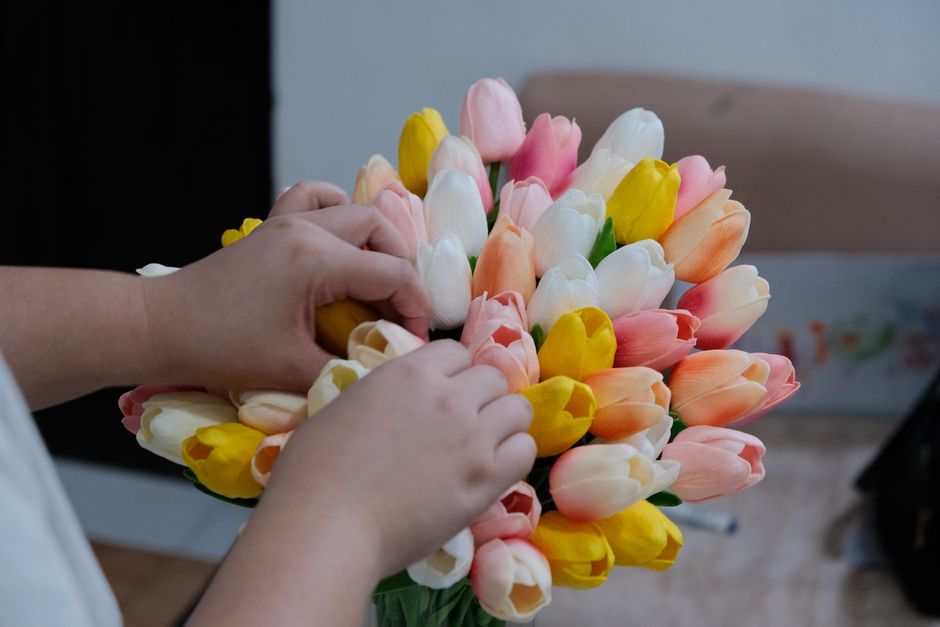
The Spiral Technique: This is a fundamental technique for creating professional-looking arrangements. Begin by holding your first tulip stem in your hand. Add subsequent stems at an angle, spiraling them around the central stem in the same direction. This creates a natural, rounded shape and allows the stems to support each other. The spiral technique also ensures that all stems are at slightly different heights, creating depth and interest. As you add stems, rotate the arrangement in your hand to maintain an even spiral. This method is particularly effective for creating arrangements that will be viewed from all sides, such as a centerpiece.
Stem Placement and Height Variation: Varying the heights of your tulip stems is crucial for creating a dynamic and visually interesting arrangement. Taller stems at the back and shorter stems towards the front can create a sense of depth. Alternating heights throughout the arrangement can prevent it from looking flat and one-dimensional. Consider the natural growth habit of the tulips; some will naturally lean and curve, which can be embraced to create movement and organic flow.
Bloom Placement: Think about the interplay of colors and bloom sizes. Place larger or more impactful blooms strategically, perhaps at the focal points of the arrangement. Lighter colors can be placed towards the edges to draw the eye outwards, while darker colors can be used to create depth and grounding. Ensure that no single bloom is overshadowed by others; each should have its moment to shine.
Color Palettes and Combinations: Tulips come in an astonishing array of colors. Consider simple, monochromatic arrangements for a sophisticated look, or bold, contrasting color combinations for a more vibrant display. Complementary colors (opposite each other on the color wheel, e.g., yellow and purple) create a lively contrast, while analogous colors (next to each other on the color wheel, e.g., pink and red) create a harmonious and blended feel. Consider the mood you want to evoke: soft pastels for tranquility, or bright primaries for energy.
Incorporating Other Elements: While this article focuses on tulips, they can be beautifully complemented by other floral elements or foliage. Consider adding:
- Foliage: Greenery like eucalyptus, fern, or even simple leaves can add texture, depth, and structure.
- Complementary Blooms: Smaller flowers with different textures, such as ranunculus, anemones, or even delicate filler flowers, can add interest. Ensure these companion flowers are equally easy to care for and have a similar vase life to tulips.
Managing Tulip Growth and Drooping: Proactive Solutions
Tulips’ unique tendency to grow and their susceptibility to drooping require specific strategies.
The Light Factor: As mentioned, tulips bend towards light. To maintain a more upright appearance, rotate your arrangement daily. This ensures that all sides are exposed to light more or less equally, discouraging excessive leaning. If you desire a particular curve or bend, intentionally place the arrangement near a light source.
Stem Support: For very tall or heavy arrangements, stems can become burdened. Floral foam, chicken wire, or even strategically placed twigs can provide internal support without being visually obvious. If a bloom is drooping significantly, sometimes a clean cut to a shorter length and immediate rehydration can revive it.
The "Droop Test": If you notice a tulip stem beginning to droop, it’s often a sign of dehydration or bacterial blockage. Immediately remove the affected stem, re-cut the base underwater, and submerge the entire stem, including the bloom, in a bowl of cool water for about an hour. This can often perk it back up.
Overnight Revitalization: For an entire arrangement that seems to be losing its vigor, submerging the entire bouquet in a cool bathtub or large sink filled with water for a few hours overnight can work wonders. Ensure all foliage is above the water line.
Advanced Techniques and Creative Applications
Beyond basic arrangement, experienced florists employ advanced techniques to elevate tulip displays.
Layering and Gradation: Creating arrangements with a visual gradation of color, from light to dark or vice versa, can be highly impactful. This requires careful selection of tulip varieties and strategic placement.
Sculptural Arrangements: Embracing the natural curves and growth habits of tulips can lead to more sculptural, almost abstract designs. Allowing stems to arch dramatically or intertwine can create dynamic, modern arrangements.
Mixed Media: For a contemporary twist, consider incorporating non-floral elements like wire, driftwood, or even decorative stones into your tulip arrangements. Ensure these elements are clean and do not leach harmful substances into the water.
The Art of the Single Bloom: Sometimes, the most impactful arrangement is a single, perfect tulip displayed in a minimalist vase. This approach allows the exquisite form and color of the individual bloom to be fully appreciated.
Troubleshooting Common Issues: When Tulips Misbehave
- Wilting Blooms: This is most commonly due to inadequate water uptake. Ensure stems are properly cut underwater, lower leaves are removed, and water is changed regularly. Re-cutting and rehydrating individual blooms or the entire arrangement can help.
- Bent Stems: While sometimes intentional, excessive bending is usually due to uneven growth towards light. Rotate the arrangement regularly. If a stem is bent too sharply, it may be permanently compromised.
- Yellowing Leaves: This indicates the leaves are submerged and decaying, or the flower is reaching the end of its natural life cycle. Remove yellowing leaves immediately.
- Rotting Stems: Caused by bacteria in the water. Ensure water is changed frequently and use a floral preservative. Thoroughly clean your vase before each use.
By understanding the unique nature of tulips and applying these detailed techniques, you can create breathtaking arrangements that bring enduring beauty and color into any space. The process is a rewarding blend of horticultural knowledge and artistic expression, transforming simple stems into captivating floral art.

