
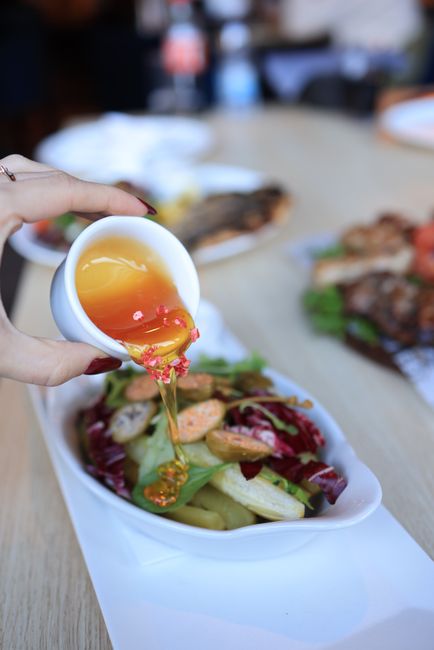
Homemade Honey Mustard Vinaigrette: A Culinary Essential for Salads, Marinades, and Beyond
Crafting a superior homemade honey mustard vinaigrette elevates any dish, transforming simple ingredients into culinary delights. This versatile condiment, celebrated for its perfect balance of sweet, tangy, and savory notes, is a cornerstone in kitchens worldwide. Its accessibility, ease of preparation, and adaptability make it an indispensable tool for home cooks seeking both flavor and health. Unlike store-bought alternatives laden with preservatives and artificial ingredients, a homemade version offers unparalleled freshness and control over its components, allowing for customization to suit individual palates and dietary needs. The fundamental elements – a quality oil, sharp mustard, natural sweetener, and acidic vinegar – form a foundation that can be endlessly tweaked, making it a truly personalizable culinary staple. Understanding the role of each ingredient and the principles of emulsification is key to mastering this seemingly simple yet profoundly impactful dressing.
The foundation of any successful vinaigrette, including honey mustard, lies in the quality of its oil. Extra virgin olive oil is a popular and healthy choice, offering a fruity, peppery character that complements the other flavors. Its monounsaturated fats are beneficial for heart health, and its robust flavor profile adds complexity. However, other oils can be used to achieve different taste experiences. A neutral oil like canola or grapeseed oil allows the mustard and honey flavors to shine through without adding their own distinct notes. For a richer, nuttier profile, walnut or avocado oil can be incorporated, though their distinct flavors should be considered in relation to the overall desired taste. The ratio of oil to acid is crucial for emulsification and overall taste. A general starting point for vinaigrettes is three parts oil to one part acid, but this can be adjusted based on personal preference. A higher oil content will result in a richer, smoother dressing, while a higher acid content will yield a tangier, more piquant sauce. Experimentation with different oil types and ratios is encouraged to discover your perfect balance.
The "mustard" in honey mustard vinaigrette is more than just a flavor agent; it’s a critical emulsifier. Dijon mustard is the classic choice, renowned for its sharp, complex flavor with a vinegary kick. Its fine texture and inherent emulsifying properties help to bind the oil and vinegar, creating a stable and creamy dressing. Whole grain mustard, with its visible mustard seeds, offers a coarser texture and a more pungent, robust flavor. For a milder, sweeter profile, yellow mustard can be used, though it often lacks the depth and emulsifying power of Dijon. A blend of mustards can also be employed to achieve a nuanced taste. For instance, combining Dijon for tang and emulsification with a touch of whole grain for texture and bite. The quantity of mustard used will directly impact the dressing’s intensity. Start with a tablespoon or two and adjust to taste. Too little mustard and the dressing may separate easily and lack its characteristic sharpness. Too much, and it can overpower the other ingredients.
Sweetness in honey mustard vinaigrette is typically derived from honey, a natural sweetener that also contributes a distinct floral aroma and subtle complexity. The type of honey used will influence the final flavor. Wildflower honey offers a delicate, varied sweetness, while clover honey is milder and more ubiquitous. Darker honeys like buckwheat or molasses-based honey will impart a deeper, more robust sweetness and a richer color. For those seeking to reduce refined sugar or seeking alternative sweeteners, maple syrup is an excellent substitute, offering a warm, caramelly note. Agave nectar provides a neutral sweetness that blends seamlessly. Even a simple sugar, like granulated or brown sugar, can be used in a pinch, though they lack the nuanced flavors of honey or maple syrup. The amount of sweetener is a matter of personal preference and the desired balance with the mustard’s sharpness and the vinegar’s acidity. It’s best to add sweetener gradually, tasting as you go, until the perfect harmony is achieved.
The acidic component of a honey mustard vinaigrette provides the essential tang that cuts through the richness of the oil and balances the sweetness of the honey. The most common choice is white wine vinegar, offering a clean, crisp acidity. Apple cider vinegar brings a fruity, slightly sweet undertone that pairs exceptionally well with honey. Red wine vinegar lends a deeper, more robust flavor, suitable for heartier salads or marinades. Champagne vinegar offers a delicate, refined effervescence. Balsamic vinegar, while a popular choice for many vinaigrettes, can add a significant sweetness and a darker hue to honey mustard, so it’s important to use it judiciously or in combination with a lighter vinegar. Lemon juice can also serve as an acidic element, providing a bright, citrusy note that is particularly refreshing. The ratio of vinegar to oil, as previously mentioned, is a critical factor in the vinaigrette’s overall structure and taste.
Creating a stable emulsion is the hallmark of a well-made vinaigrette. This is the process where oil and vinegar, which naturally repel each other, are forced to combine into a uniform mixture. The emulsifying agents in honey mustard vinaigrette are primarily the mustard and, to a lesser extent, the proteins present in honey. The process of whisking vigorously or blending breaks down the oil into tiny droplets, which are then suspended within the vinegar and mustard mixture. When the emulsification is successful, the vinaigrette will appear creamy and cohesive, with no visible separation of oil and vinegar. A hand whisk is the traditional tool, allowing for controlled incorporation of ingredients. However, an immersion blender or a regular blender can achieve a thicker, more stable emulsion more quickly. For a classic vinaigrette consistency, a whisk is often preferred. The key to a stable emulsion is to add the oil slowly while continuously whisking or blending. This gradual addition allows the emulsifiers to effectively coat the oil droplets.
Beyond the core ingredients, a world of flavor enhancers can transform a basic honey mustard vinaigrette into something extraordinary. Freshly ground black pepper is a non-negotiable for adding subtle heat and aromatic complexity. Salt, of course, is essential for amplifying all the other flavors; consider flaky sea salt for a pleasant textural contrast. Garlic, finely minced or grated, introduces a pungent depth. Shallots, offering a milder, sweeter allium note than garlic, also contribute beautifully. Herbs, fresh or dried, can add vibrant notes. Parsley provides a clean, herbaceous flavor, while chives offer a delicate oniony sweetness. Dill is a classic pairing with mustard. A pinch of cayenne pepper or red pepper flakes can introduce a pleasant warmth. A touch of Worcestershire sauce can add umami depth. For a creamy texture without the use of dairy, a small amount of mayonnaise or Greek yogurt can be incorporated, though this shifts the dressing from a classic vinaigrette to a creamy dressing.
The versatility of homemade honey mustard vinaigrette extends far beyond the salad bowl. It serves as an exceptional marinade for grilled or roasted meats, poultry, and seafood. The combination of acidity, sweetness, and mustard’s enzymatic action helps to tenderize proteins while infusing them with flavor. Marinating times will vary depending on the protein and the desired intensity of flavor, but generally range from 30 minutes to several hours. For vegetables, it can be used as a glaze during roasting, caramelizing beautifully under heat. It can also be mixed with cooked grains like quinoa or couscous for a flavorful side dish. As a dip, it pairs wonderfully with raw vegetables, chicken tenders, or even as a topping for baked potatoes. Consider using it to bind salads like potato salad or coleslaw, offering a lighter alternative to traditional creamy dressings.
Storing homemade honey mustard vinaigrette is straightforward. Due to its acidic content and lack of preservatives, it’s best stored in an airtight container in the refrigerator. A glass jar with a tight-fitting lid is ideal. Properly stored, it will typically last for one to two weeks. Over time, some separation may occur, especially if a very stable emulsion was not achieved during preparation. This is perfectly normal and can be easily remedied by a quick shake or whisk before serving. If any signs of spoilage, such as off-odors or mold growth, appear, the vinaigrette should be discarded immediately. Making smaller batches more frequently ensures the freshest possible product.
For optimal flavor and texture, several tips can be employed. Always use fresh, high-quality ingredients. The difference in taste between a store-bought olive oil and a fresh, extra virgin olive oil is significant. Similarly, fresh garlic and herbs will always outperform their dried counterparts in terms of vibrancy. Measure ingredients accurately, especially when first experimenting, to understand the foundational ratios. Taste and adjust. This is arguably the most important step. Your palate is the ultimate guide to achieving the perfect balance of sweet, sour, and savory. Don’t be afraid to deviate from standard recipes and experiment with different flavor combinations. Consider the context in which the vinaigrette will be used; a dressing for a delicate spring salad might differ from one intended for a robust kale salad. Finally, allow the flavors to meld. While the vinaigrette can be used immediately, letting it sit in the refrigerator for at least 30 minutes to an hour allows the flavors to marry and deepen.
In conclusion, mastering the art of homemade honey mustard vinaigrette is a valuable culinary skill. It offers a gateway to a world of personalized flavors, healthy eating, and culinary creativity. From its simple beginnings as a salad dressing, its applications expand to marinades, glazes, dips, and beyond. By understanding the role of each ingredient, the principles of emulsification, and the infinite possibilities for customization, home cooks can consistently create a delicious and versatile condiment that elevates everyday meals. Its ease of preparation, coupled with its superior taste and health benefits compared to commercially produced alternatives, solidifies its status as an indispensable kitchen essential. The pursuit of the perfect homemade honey mustard vinaigrette is not merely about following a recipe, but about embarking on a flavorful journey of culinary exploration and discovery.

