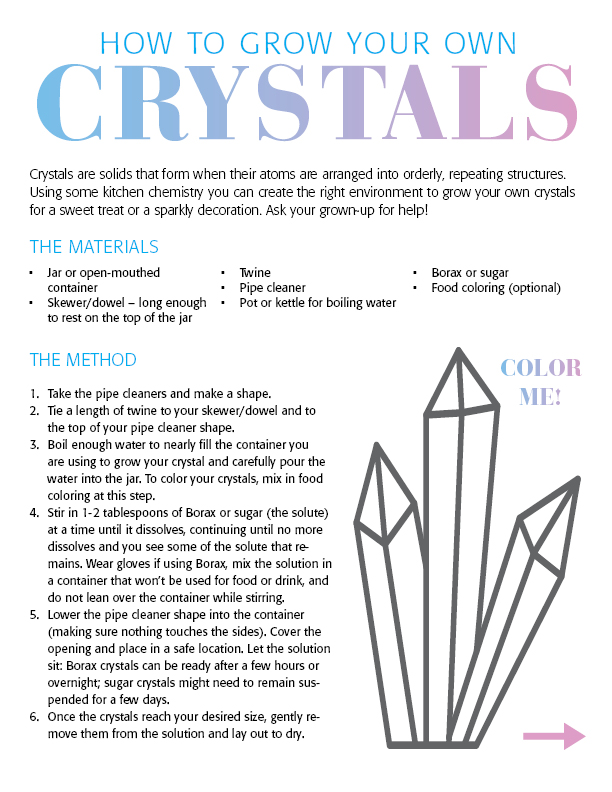

Growing Your Own Crystals: A Comprehensive Guide to Cultivating Mineral Wonders
The allure of growing crystals stems from their inherent beauty and the fascinating scientific principles behind their formation. This guide provides a comprehensive, SEO-friendly approach to cultivating your own mineral wonders at home, covering essential materials, detailed procedures for common crystal types, troubleshooting tips, and advanced techniques. Understanding the fundamental concepts of supersaturation, nucleation, and crystal growth is paramount for success. Supersaturation is achieved when a solvent, typically water, holds more solute (the substance that will form the crystal) than it can under normal conditions. This can be accomplished through heating the solvent or by evaporating the solvent over time. Nucleation is the initial formation of a tiny, stable crystal seed. This can occur spontaneously or be induced by introducing a seed crystal. Once nucleation occurs, the crystal grows by adding more solute molecules to its existing structure.
Common Crystal Growing Projects and Procedures
For beginners, several accessible crystal-growing projects offer excellent learning opportunities and visually rewarding results. The most common and straightforward method involves growing crystals from a supersaturated solution. This process leverages the principle that many solid substances are more soluble in hot water than in cold. As the solution cools, or as the water evaporates, the solute becomes supersaturated, forcing it to precipitate out of the solution in an organized crystalline structure.
Alum Crystals: A Classic and Rapid Grow
Potassium aluminum sulfate, commonly known as alum, is a readily available chemical compound found in most supermarkets in the spice aisle, often as "baking powder" (though pure alum is preferred for clarity). Alum crystals are ideal for rapid growth and exhibit well-defined geometric shapes.
Materials:
- Alum powder (potassium aluminum sulfate)
- Distilled water (preferred for purity, tap water can introduce impurities that hinder growth)
- Glass jar or beaker (at least 1-liter capacity)
- Spoon for stirring
- String or fishing line
- Pencil or skewer
- Paper towels
- Optional: Seed crystal (a small, pre-existing alum crystal)
Procedure:
- Prepare the Solution: Heat distilled water until it is hot but not boiling. The exact amount will depend on the size of your container, but aim to fill it about two-thirds full. Gradually add alum powder to the hot water, stirring continuously. Continue adding alum until no more will dissolve, creating a saturated solution. This typically requires a significant amount of alum.
- Achieve Supersaturation: Once no more alum dissolves, you have a saturated solution. For a faster growth process, you can create a supersaturated solution. Carefully pour the hot, saturated solution into your clean glass jar. Allow it to cool slightly, then add a few more crystals of alum and stir. The goal is to have a solution that holds more alum than it normally would at room temperature.
- Seed Crystal Preparation (Optional but Recommended): If you have a small alum crystal, tie it to a piece of string. Suspend this seed crystal in the supersaturated solution using a pencil or skewer laid across the rim of the jar, ensuring the seed crystal is fully submerged but not touching the bottom or sides of the jar. The seed crystal provides a perfect surface for new molecules to attach to, leading to more uniform and larger crystals.
- Natural Seeding: If no seed crystal is available, nucleation will eventually occur spontaneously within the solution. Tiny crystals will form on the bottom or sides of the jar. You can then carefully select the most promising small crystal and tie it to your string for suspended growth.
- Crystal Growth and Maintenance: Cover the jar loosely with a paper towel or cheesecloth to prevent dust from entering while allowing evaporation. Place the jar in a stable location where it will not be disturbed and away from direct sunlight or drafts, as temperature fluctuations can affect crystal formation. Over the next few days to weeks, you will observe crystals forming and growing. As the solution evaporates, more alum will crystallize.
- Harvesting and Preservation: Once your crystals reach the desired size, carefully remove them from the solution. Gently rinse them with distilled water to remove any residual solution. Allow them to air dry completely on paper towels. For longer-term preservation, you can coat them with a clear sealant like clear nail polish or a spray sealant, though this is purely aesthetic and not necessary for the crystal itself.
Salt (Sodium Chloride) Crystals: Simple and Accessible
Table salt, or sodium chloride, is another excellent material for growing crystals, offering a simpler and more accessible option for very young learners. While salt crystals tend to be smaller and less geometrically perfect than alum crystals, the process is fundamentally the same.
Materials:
- Table salt (sodium chloride)
- Distilled water
- Glass jar or beaker
- Spoon
- String or fishing line
- Pencil or skewer
- Paper towels
Procedure:
- Prepare the Solution: Similar to alum, heat distilled water and dissolve as much salt as possible, stirring continuously until no more salt dissolves.
- Achieve Supersaturation: Pour the hot, saturated solution into your jar. Allow it to cool slightly and then add a bit more salt, stirring to achieve supersaturation.
- Seed Crystal or Natural Nucleation: Suspend a seed salt crystal on a string, or allow spontaneous nucleation to occur.
- Growth and Maintenance: Cover the jar loosely and place it in a stable location. Salt crystals typically grow more slowly than alum crystals.
- Harvesting and Preservation: Remove, rinse with distilled water, and air dry the salt crystals. Be aware that salt crystals are hygroscopic, meaning they absorb moisture from the air, and may dissolve or lose their shape over time if not stored in a dry environment or sealed.
Sugar (Sucrose) Crystals: Edible and Engaging
Growing sugar crystals, also known as rock candy, is a popular project due to its edible outcome. The process is similar to salt and alum, but requires careful temperature control and patience.
Materials:
- Granulated sugar (sucrose)
- Distilled water
- Saucepan
- Glass jar or beaker
- Spoon
- String or fishing line
- Pencil or skewer
- Paper towels
- Candy thermometer (optional but recommended)
Procedure:
- Prepare the Solution: In a saucepan, combine equal parts sugar and distilled water (e.g., 2 cups sugar to 2 cups water). Heat the mixture over medium heat, stirring constantly, until the sugar is completely dissolved.
- Achieve Supersaturation: Continue heating the solution, stirring occasionally, until it reaches approximately 235°F (113°C), the soft-ball stage for candy making. This creates a highly concentrated sugar syrup. Caution: Hot sugar syrup is extremely dangerous. Adult supervision is mandatory.
- Seed Crystal or Natural Nucleation: Pour the hot sugar syrup into your clean glass jar. If using a seed crystal (a pre-existing sugar crystal works well), tie it to a string and suspend it in the syrup, ensuring it doesn’t touch the bottom or sides. Alternatively, allow spontaneous nucleation.
- Growth and Maintenance: Cover the jar loosely with a paper towel. Place the jar in a warm, undisturbed location. Sugar crystals grow more slowly than alum or salt, often taking several days to weeks to reach a significant size.
- Harvesting and Preservation: Once the crystals are the desired size, carefully remove them from the syrup. Allow them to drain and dry on parchment paper. Rock candy can be stored in an airtight container.
Factors Affecting Crystal Growth and Quality
Several environmental and procedural factors significantly influence the size, shape, clarity, and quantity of crystals you grow. Understanding and controlling these variables is key to achieving optimal results.
Supersaturation Level: The degree of supersaturation directly impacts the rate of crystal growth. Higher supersaturation leads to faster growth but can also result in more imperfections and smaller crystals due to rapid nucleation. A moderate level of supersaturation is generally ideal for producing larger, more well-formed crystals.
Temperature: Temperature plays a critical role in solubility and evaporation rates. For solution-based crystal growth, the principle of differential solubility with temperature is exploited. Heating the solvent increases its capacity to dissolve the solute, creating a supersaturated solution as it cools. Consistent temperature is also important during the growth phase. Fluctuations can cause crystals to dissolve and re-form, leading to rough surfaces and less defined shapes.
Evaporation Rate: For methods that rely on evaporation (like growing crystals from saltwater on a string), the rate of evaporation influences crystal formation. A slow, steady evaporation rate generally promotes the growth of larger, more ordered crystals. Rapid evaporation can lead to the formation of many small crystals or a powdery substance.
Purity of Solute and Solvent: Impurities in either the solute (the substance forming the crystal) or the solvent (typically water) can significantly hinder crystal growth. Impurities can disrupt the orderly arrangement of molecules, leading to cloudy or misshapen crystals, or even preventing crystallization altogether. Using distilled water is highly recommended for most crystal-growing projects.
Seed Crystals: Introducing a seed crystal is a critical step for growing large, single crystals. A seed crystal provides a pre-existing, ordered surface for new molecules to attach to. Without a seed crystal, spontaneous nucleation will occur, resulting in numerous small crystals. The quality and orientation of the seed crystal can influence the resulting crystal’s habit (its external shape).
Stirring and Agitation: While initial stirring is necessary to dissolve the solute, excessive or continued stirring during the growth phase can be detrimental. Agitation can break off growing crystals or disrupt the delicate process of molecular deposition, leading to rough surfaces. Once the supersaturated solution is prepared and the seed crystal is introduced, minimize disturbance.
Container Choice: The material and cleanliness of the container are important. Glass is preferred as it is non-reactive and easy to clean. Ensure the container is thoroughly washed and rinsed to remove any residual soap or contaminants. The size of the container should be appropriate for the expected crystal size.
Troubleshooting Common Crystal Growing Problems
Even with careful preparation, crystal growing can present challenges. Identifying and addressing common issues will improve your success rate.
No Crystals Forming: This could be due to insufficient supersaturation, a lack of nucleation sites, or impurities in the solution. Ensure you have truly achieved supersaturation by adding more solute than can normally dissolve. If using a seed crystal, ensure it is clean and properly suspended. For spontaneous nucleation, try gently scratching the inside of the container or adding a tiny piece of unpolished rock or a grain of sand to act as a nucleation site.
Crystals are Small and Powdery: This often indicates a high rate of evaporation or excessive supersaturation, leading to rapid, uncontrolled nucleation. Slow down the evaporation rate by covering the container more tightly, or reduce the supersaturation by adding a small amount of solvent.
Crystals are Cloudy or Opaque: This suggests the presence of impurities in the solution or rapid crystal growth that trapped air bubbles. Ensure you are using distilled water and a pure solute. A slower growth rate allows for more orderly molecular arrangement and less trapped material.
Crystals are Rough or Irregular: This can be caused by temperature fluctuations, excessive agitation, or impurities. Maintain a stable temperature, avoid disturbing the solution, and ensure the purity of your materials.
Seed Crystal Dissolves: If your seed crystal dissolves instead of growing, the solution is likely not supersaturated enough, or the temperature is too high. Ensure the solution is supersaturated and at an appropriate temperature for growth.
Advanced Crystal Growing Techniques
Once you have mastered the basics, several advanced techniques can lead to even more impressive crystal specimens.
Growing Larger Single Crystals: The key to growing large single crystals is patience, controlled supersaturation, and a high-quality seed crystal. Slow evaporation and stable temperatures are paramount. Carefully select the best-formed small crystal from a natural nucleation event as your seed crystal. You can also purchase commercially grown seed crystals.
Crystal Films and Thin Layers: By manipulating the supersaturation and evaporation rates, it’s possible to grow thin films or layers of crystals on a substrate. This can involve dipping a clean surface into a supersaturated solution and allowing slow evaporation.
Growing Crystals Under Specific Conditions: Experimenting with different solvents, solutes, and environmental conditions (like controlled humidity or pressure) can lead to unique crystal forms and properties. This area delves into mineralogy and solid-state physics.
Growing Complex Structures: By introducing specific shapes or templates into the supersaturated solution, it’s possible to influence the growth patterns of crystals, potentially leading to more complex and intricate structures.
Safety Precautions
While most common crystal-growing projects involve relatively safe materials, it’s essential to adhere to safety guidelines.
Adult supervision is mandatory for any project involving heating water or working with hot solutions.
Wear safety glasses to protect your eyes from splashes, especially when working with hot liquids or chemicals.
Handle chemicals with care, even common household substances. Avoid ingestion or prolonged skin contact.
Ensure good ventilation when working with any chemicals.
Store growing crystals in a stable location where they are unlikely to be knocked over.
Properly dispose of any unused solutions or materials according to local regulations.
Educational Value and Applications of Crystal Growing
Beyond their aesthetic appeal, growing crystals offers significant educational value across various disciplines.
Science Education: Crystal growing provides a tangible and engaging way to teach fundamental scientific concepts such as solubility, supersaturation, nucleation, molecular structure, and crystallography. It’s an excellent hands-on activity for students of all ages, illustrating abstract principles in a concrete manner.
Problem-Solving and Patience: The process requires careful observation, troubleshooting, and patience. Students learn to identify problems, experiment with solutions, and understand that successful outcomes often require time and persistent effort.
Art and Design: The inherent beauty of crystals can inspire artistic endeavors. Crystal structures can be studied for their geometric properties, influencing designs in art, architecture, and jewelry.
Hobby and Collectibles: Crystal growing is a popular hobby for enthusiasts who enjoy cultivating their own mineral specimens. These home-grown crystals can become cherished collectibles.
Understanding Mineral Formation: By replicating some of the processes involved in natural crystal formation, individuals gain a deeper appreciation for geological processes and the formation of minerals in the Earth’s crust.
Conclusion
Growing your own crystals is a rewarding journey into the fascinating world of mineralogy and chemistry. By understanding the fundamental principles of supersaturation, nucleation, and controlled growth, and by carefully following the procedures outlined in this guide, you can cultivate a collection of beautiful and unique mineral specimens. Whether you are a beginner experimenting with alum and salt, or an advanced hobbyist seeking to grow larger, more complex crystals, the process offers a delightful blend of scientific inquiry, artistic expression, and patient cultivation, leading to the satisfaction of creating your own crystalline masterpieces.

