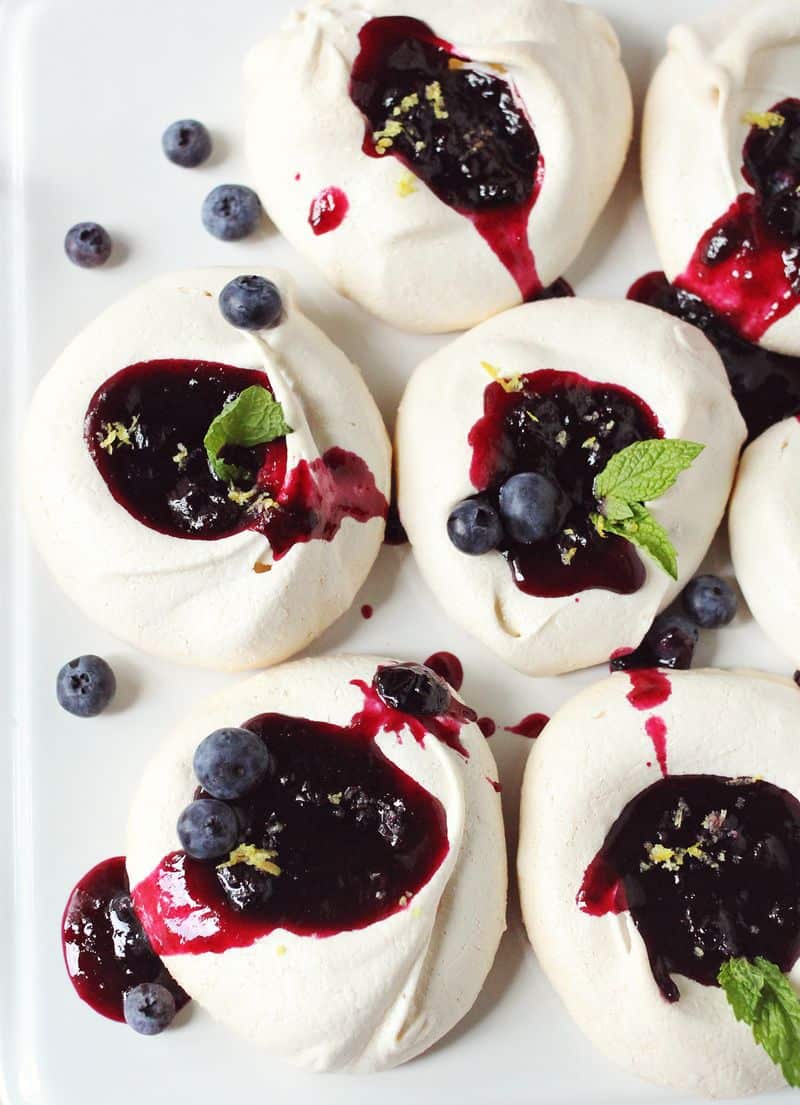
Pavlova with Blueberry Jam: A Culinary Symphony of Crisp Meringue and Tangy Sweetness
The pavlova, a celebrated dessert with origins shrouded in friendly debate between Australia and New Zealand, stands as a testament to the magic of simple ingredients transformed into an ethereal creation. At its core, it’s a baked meringue, a delicate dance of egg whites and sugar that, when executed correctly, yields a cloud-like interior encased in a perfectly crisp shell. The addition of blueberry jam elevates this classic further, introducing a vibrant burst of fruity tartness that beautifully complements the subtle sweetness of the meringue. This article delves deep into the world of pavlova with blueberry jam, exploring its history, the science behind its creation, the art of crafting the perfect meringue, the complementary nature of blueberry jam, variations, and tips for achieving dessert perfection.
The historical roots of pavlova are as debated as its geographical birthplace, with both Australia and New Zealand laying claim to its invention. The most popular theory attributes its creation to a chef at a Wellington hotel in the 1920s, aiming to create a dessert as light and graceful as the Russian ballerina Anna Pavlova. Regardless of its precise origin, the dessert quickly captured hearts and palates, becoming a beloved fixture at celebrations and gatherings. Its simplicity is deceptive; achieving the perfect pavlova requires precision and an understanding of the delicate chemistry involved in meringue making. The transformation of viscous egg whites into a stable, airy foam, and then into a brittle yet chewy structure through baking, is a culinary marvel.
The science of meringue making is fascinating. Egg whites are primarily composed of proteins, specifically albumin. When whipped, these proteins denature, unraveling their coiled structures. As air is incorporated, these denatured proteins form a network, trapping air bubbles and creating the foam. Sugar plays a crucial role in stabilizing this foam. It does so by competing for water molecules with the egg white proteins, effectively reducing the amount of free water and preventing the collapse of the foam. Furthermore, sugar crystallizes on the surface of the air bubbles, strengthening their walls and contributing to the crispness of the final meringue. An acid, often cream of tartar or vinegar, is sometimes added to further stabilize the meringue. The acid helps to break down protein bonds in a controlled manner, allowing for a more stable and voluminous foam.
Crafting the perfect pavlova base is paramount. The process begins with fresh, room-temperature egg whites. Cold egg whites are more challenging to whip into a stable foam. The bowl and whisk must be scrupulously clean, as even a trace of fat can prevent the egg whites from whipping properly. Gradual addition of sugar is key. Initially, whipping the egg whites until soft peaks form provides the foundation. Then, granulated sugar is added tablespoon by tablespoon, allowing each addition to dissolve completely before the next. This ensures a smooth, glossy meringue and prevents the formation of a grainy texture. The meringue is then baked at a low temperature for an extended period. This low-and-slow method is essential for drying out the meringue and achieving the characteristic crisp exterior and marshmallowy interior. Over-baking at too high a temperature will result in a uniformly dry and brittle meringue, lacking the desirable chewy center. Conversely, under-baking will leave the meringue too soft and prone to collapsing.
The choice of sugar is also significant. While granulated sugar is standard, caster sugar dissolves more readily, leading to an even smoother meringue. Some bakers opt for a combination of granulated and caster sugar for optimal texture. The ratio of sugar to egg white is also critical, typically around 2:1 by weight. Too little sugar will result in a fragile meringue that collapses easily, while too much can make it overly sweet and potentially syrupy. The visual cues of a properly whipped meringue are essential: stiff peaks that hold their shape, a glossy sheen, and a smooth texture free from undissolved sugar granules.
The addition of blueberry jam is where the pavlova truly shines, transforming from a sweet canvas to a more complex flavor profile. Blueberries, with their inherent tartness and earthy sweetness, provide a delightful counterpoint to the light and airy meringue. The jam can be homemade or store-bought, but for optimal flavor and texture, a homemade version is often preferred. This allows for control over the sweetness and the consistency of the jam. To make a simple blueberry jam, fresh or frozen blueberries are combined with sugar, a squeeze of lemon juice for brightness and pectin activation, and potentially a thickener like cornstarch or pectin powder, depending on the desired consistency. The mixture is simmered until the berries break down and the jam thickens.
The interplay of textures is another crucial element. The crisp shell of the pavlova provides a satisfying crunch, followed by the yielding, marshmallow-like interior. This textural contrast is amplified by the smooth, slightly viscous consistency of the blueberry jam. When dolloped or swirled onto the pavlova, the jam creates pockets of intense fruity flavor that burst with every bite. The coolness of the jam against the slightly cooled meringue is also a pleasing sensory experience.
Variations on the classic pavlova with blueberry jam abound, allowing for personalization and adaptation to different tastes and occasions. Instead of a smooth jam, a blueberry compote with whole or partially broken-down berries can offer a more rustic texture and intensified berry flavor. For those seeking an extra layer of indulgence, a swirl of whipped cream or mascarpone cheese beneath the jam is a popular addition. This introduces a creamy richness that balances the tartness of the blueberries and adds another dimension of texture. A sprinkle of toasted slivered almonds or pistachios can provide a nutty crunch and visual appeal.
Lemon zest or a hint of lavender can also be incorporated into the meringue itself, infusing subtle floral or citrus notes that complement the blueberries. For a more sophisticated presentation, a balsamic glaze drizzled over the blueberry jam can offer an unexpected savory-sweet complexity. The balsamic vinegar, when reduced, becomes syrupy and offers a deep, rich flavor that pairs surprisingly well with the sweetness of the fruit and meringue.
When assembling the pavlova, the timing is important. The meringue base should be completely cooled before adding the toppings. Warm meringue can cause the cream and jam to melt and become watery. The toppings are typically added just before serving to maintain the crispness of the meringue. Over-saturation with liquid toppings can lead to a soggy base, a cardinal sin in the pavlova world.
The visual appeal of a pavlova with blueberry jam is undeniable. The stark white of the meringue, contrasted with the deep, jewel-toned purple of the blueberry jam, creates a striking and elegant presentation. The irregular, rustic shape of a homemade pavlova adds to its charm, suggesting a lovingly crafted dessert rather than a mass-produced one. Fresh blueberries and a sprig of mint can be used as garnishes to enhance its visual appeal further.
Storing leftover pavlova can be a challenge, as moisture is its nemesis. Once topped, it is best consumed immediately. If there are any uneaten portions, they should be stored in an airtight container in a cool, dry place, but be aware that the crispness will inevitably diminish over time. Ideally, individual meringue shells can be baked ahead of time and stored in an airtight container at room temperature for several days, then topped just before serving. This ensures maximum crispness for each serving.
The dietary considerations surrounding pavlova are worth noting. As a meringue-based dessert, it is inherently gluten-free, making it an excellent option for individuals with celiac disease or gluten intolerance. However, it is high in sugar and calories, and the addition of cream further increases its richness. For those seeking a lighter version, the amount of sugar in the meringue can be slightly reduced, though this may impact its stability and texture. The use of fruit as a primary topping offers natural sweetness and antioxidants.
In conclusion, the pavlova with blueberry jam is more than just a dessert; it is an experience. It is the culmination of careful technique, a balance of flavors, and a symphony of textures. From the whisper-light crispness of the meringue to the sweet and tangy burst of the blueberry jam, each element plays a vital role in creating a truly memorable culinary creation. Whether served at a grand celebration or as a simple treat, this classic dessert continues to enchant and delight, proving that sometimes, the most exquisite pleasures are found in the simplest of ingredients, expertly prepared. The enduring popularity of pavlova with blueberry jam speaks volumes about its timeless appeal and its ability to bring joy to any occasion. Its SEO-friendly attributes lie in its common search terms like "pavlova recipe," "blueberry jam dessert," "easy pavlova," and "gluten-free dessert," making it a popular and searchable topic for home bakers and dessert enthusiasts alike. The detailed exploration of its components, history, and variations provides ample content for search engines to index and rank, ensuring its visibility to a broad audience.

