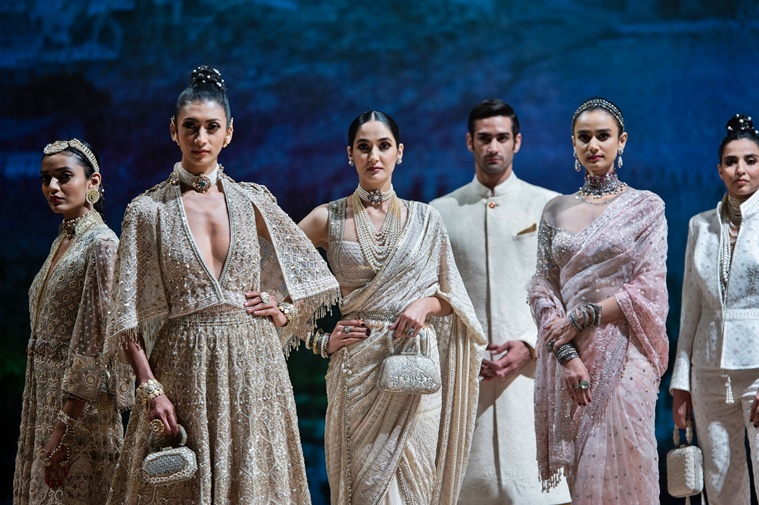
Tarun Tahiliani: A Legacy Woven in Indian Fashion
Tarun Tahiliani’s journey in the Indian fashion landscape is a tapestry woven with innovation, heritage, and a keen understanding of the contemporary Indian woman. From his nascent beginnings to his current standing as a titan of design, Tahiliani has consistently pushed boundaries, blending traditional Indian crafts with modern silhouettes and global aesthetics. His influence extends beyond mere clothing; he has been instrumental in elevating Indian couture to a global platform, making it accessible and desirable for a discerning clientele. This article delves into the past, present, and future trajectory of Tarun Tahiliani, exploring his foundational contributions, his current creative output, and his visionary outlook for the evolution of Indian fashion.
The genesis of Tarun Tahiliani’s design career can be traced back to the early 1990s, a period when the Indian fashion industry was still finding its feet on the global stage. Returning to India after obtaining an MBA from the Wharton School and gaining experience in international retail, Tahiliani recognized a significant gap. While Indian textiles and craftsmanship possessed unparalleled richness, their presentation often lacked contemporary relevance and global appeal. He envisioned a brand that would marry these exquisite indigenous techniques with modern design sensibilities, creating garments that were both timeless and aspirational. His first major foray was the establishment of "Tahiliani Design" in 1997, a brand that quickly became synonymous with luxury prêt-a-porter and couture.
Tahiliani’s early collections were characterized by a sophisticated approach to traditional Indian garments. He masterfully deconstructed and reimagined silhouettes like the sari, lehenga, and anarkali, infusing them with innovative draping techniques, contemporary cuts, and intricate embellishments. His signature style involved a meticulous attention to detail, a refined color palette, and an emphasis on fluid movement and elegant drapery. He was one of the pioneers in introducing Western construction techniques to Indian wear, resulting in garments that were not only visually stunning but also comfortable and functional for the modern wearer. This fusion was a crucial step in democratizing Indian couture, moving it away from purely ceremonial wear towards a more versatile and everyday luxury. His early work was pivotal in establishing a distinct Indian aesthetic that resonated with both domestic and international audiences, paving the way for other Indian designers to gain global recognition. The emphasis on celebrating Indian textiles, from silks and brocades to intricate embroideries like Chikankari and Zardozi, became a hallmark of his design philosophy. He championed the use of these traditional crafts, not as mere embellishments, but as integral elements that told a story of Indian heritage.
Beyond his individual brand, Tahiliani played a significant role in shaping the broader Indian fashion ecosystem. He was instrumental in the establishment of the Fashion Design Council of India (FDCI) in 1998, an organization dedicated to promoting Indian fashion and designers globally. His involvement in organizing and participating in fashion weeks, both in India and internationally, helped to create a platform for designers to showcase their work and connect with buyers and media. This proactive approach to industry development solidified his position not just as a designer but as a thought leader. He understood that for Indian fashion to thrive, it needed a robust infrastructure, a collective voice, and a concerted effort to promote its unique identity.
The present era for Tarun Tahiliani is marked by a sustained commitment to his core design principles while also adapting to the evolving demands of the global luxury market. His label continues to be a benchmark for Indian couture, renowned for its opulent bridal wear, sophisticated evening ensembles, and exquisite prêt-a-porter collections. Tahiliani’s designs consistently reflect a deep engagement with Indian artistry. He remains a staunch advocate for artisanal craftsmanship, working closely with skilled artisans across India to preserve and innovate traditional techniques. This dedication to heritage is not static; it is a dynamic process of reinterpretation. For instance, he might introduce a contemporary twist to a traditional Bandhani or a Kashmiri embroidery, making it relevant for a modern wardrobe.
His approach to bridal wear, in particular, is a testament to his understanding of the Indian consumer. He acknowledges the importance of tradition and ritual in Indian weddings while simultaneously offering designs that are modern, elegant, and reflective of individual style. His bridal collections often feature a blend of rich fabrics, intricate hand-embroidery, and contemporary silhouettes, appealing to a generation of brides who seek both heritage and individuality. The concept of the "modern Indian bride" has been significantly shaped by Tahiliani’s vision, showcasing how traditional attire can be adapted to contemporary tastes without losing its cultural essence.
In recent years, Tahiliani has also explored avenues that extend beyond traditional apparel. His foray into home décor, for example, demonstrates his holistic approach to design and his belief in extending his aesthetic to various aspects of lifestyle. This diversification allows him to reach a broader audience and reinforce his brand’s presence across different luxury segments. The integration of his design ethos into home furnishings – characterized by rich textures, artisanal detailing, and a sophisticated color palette – further solidifies his reputation as a multifaceted designer.
Furthermore, Tahiliani’s brand has embraced digital platforms to enhance its reach and engagement with consumers. While maintaining the exclusivity associated with haute couture, he has also recognized the importance of e-commerce and social media in connecting with a global clientele. This strategic use of digital channels allows him to showcase his collections, tell the story behind his craft, and engage with customers on a more personal level, even across geographical boundaries. The present for Tarun Tahiliani is a confluence of established legacy and forward-thinking adaptation, ensuring his brand’s continued relevance in a rapidly changing world.
Looking towards the future, Tarun Tahiliani’s trajectory is poised for continued innovation and a deepening engagement with sustainability and ethical practices. The fashion industry, globally, is undergoing a significant shift towards conscious consumption, and Tahiliani, with his deep respect for traditional crafts and communities, is well-positioned to lead in this regard. His commitment to working with artisans naturally aligns with the principles of slow fashion and ethical sourcing. The future will likely see him further emphasizing the provenance of his materials, the fair treatment of his craftspeople, and the longevity of his designs.
The evolution of Indian textiles and crafts will remain a central theme in his future endeavors. He is likely to explore newer applications of traditional techniques, perhaps in areas like sustainable materials or even innovative textile engineering, while always preserving their intrinsic beauty and cultural significance. The narrative of Indian heritage, through his designs, will continue to be a powerful tool for cultural diplomacy, showcasing the richness and diversity of India’s artistic traditions to a global audience. This storytelling aspect is crucial, as it imbues his creations with a depth and meaning that transcends mere aesthetics.
Tahiliani’s vision for the future also likely encompasses a greater emphasis on experiential retail and personalized design. As consumers increasingly seek unique and curated experiences, his brand may evolve to offer more bespoke services and immersive brand interactions. This could involve intimate trunk shows, personalized styling consultations, and even workshops that allow customers to connect with the craft and the designer on a deeper level. The future of luxury is not just about the product; it’s about the entire journey and the emotional connection it fosters.
Furthermore, as a seasoned veteran of the industry, Tahiliani is likely to play an even more significant role in mentoring emerging designers and shaping the future generation of Indian fashion talent. His experience and insights are invaluable for navigating the complexities of the global fashion market. He has the potential to establish educational initiatives or mentorship programs that foster a new wave of designers who are not only creative but also conscious of their social and environmental responsibilities. The continued exploration of digital platforms will also be crucial, enabling him to reach and influence a global audience more effectively, potentially through virtual reality experiences or augmented reality try-ons, further bridging the gap between physical and digital retail. The future of Tarun Tahiliani is intrinsically linked to the continued elevation and global recognition of Indian fashion, a legacy he has diligently built and continues to champion.

