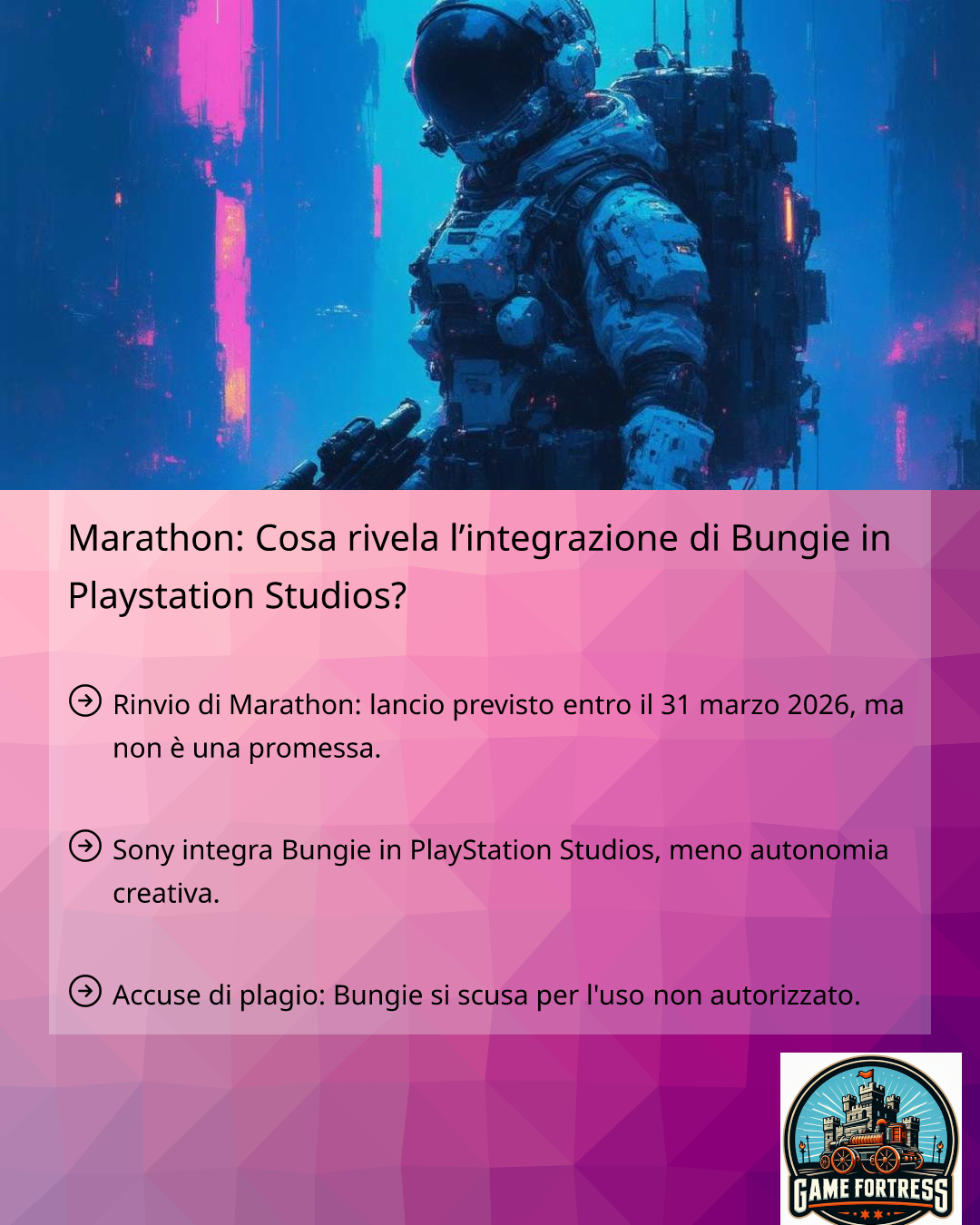
Bungie and PlayStation Revive Marathon: A Deep Dive into the Sci-Fi Shooter’s Return
The acquisition of Bungie by Sony Interactive Entertainment, a monumental $3.6 billion deal finalized in 2022, has significantly reshaped the landscape of console gaming and the future of beloved franchises. While Bungie has achieved global acclaim for its work on Halo and the ongoing success of Destiny 2, a less discussed but equally significant aspect of this partnership is the potential resurrection of a classic. Rumors and leaks strongly suggest that Marathon, the groundbreaking first-person shooter series that first captivated players in the mid-1990s, is poised for a revival under this new PlayStation umbrella. This article delves into the history of Marathon, the strategic implications of its potential return for both Bungie and PlayStation, and what this resurgence could mean for the future of the sci-fi shooter genre.
Marathon, originally developed by Bungie and released for Macintosh in 1994, was a pivotal title in the early evolution of the FPS genre. Unlike its contemporary, Doom, which emphasized fast-paced arcade action, Marathon distinguished itself through its sophisticated narrative, intricate level design, and innovative gameplay mechanics. Players assumed the role of a security officer aboard the interstellar colony ship UESC Marathon, tasked with defending the vessel from an alien invasion. The game’s story unfolded through in-game computer terminals, offering players a rich lore and a sense of mystery that was uncommon for the era. Key innovations included the introduction of dual-wielding weapons, a persistent inventory system, and a compelling AI companion, showcasing Bungie’s early aptitude for storytelling and emergent gameplay. The sequels, Marathon 2: Durandal (1995) and Marathon Infinity (1996), further expanded upon these foundations, introducing new alien races, exploring complex temporal paradoxes, and solidifying the series’ reputation for intellectual depth. The games were also renowned for their robust multiplayer modes, fostering competitive communities that anticipated many of the online multiplayer experiences we enjoy today.
The decision by Sony to acquire Bungie was not merely about bolstering their first-party output; it was a strategic move aimed at securing a developer with a proven track record of creating enduring live-service games and cultivating loyal player bases. Bungie’s expertise in crafting expansive, evolving worlds like the Destiny universe is precisely what Sony seeks to leverage. The Marathon franchise, with its established lore and dedicated fanbase, presents a unique opportunity to tap into both nostalgia and the demand for fresh, narrative-driven sci-fi experiences. For Bungie, the acquisition offers access to PlayStation’s vast resources, including its extensive marketing reach, development infrastructure, and potential for cross-platform synergy. A resurrected Marathon could serve as a showcase for Bungie’s continued creative evolution, demonstrating their ability to reimagine classic IPs for a modern audience, potentially on both PC and PlayStation consoles, aligning with Sony’s broader strategy of expanding its gaming ecosystem beyond the PlayStation platform.
The potential revival of Marathon is laden with strategic implications for the gaming industry. For PlayStation, it signifies a commitment to diversifying its portfolio and recapturing the excitement of established, beloved franchises. While Sony has a strong lineup of original IPs, acquiring and revitalizing dormant yet iconic series can resonate deeply with long-time gamers and attract new players seeking familiar yet innovative experiences. This move also positions Sony as a significant player in the live-service market, a domain where Bungie excels. By integrating Bungie’s expertise, Sony aims to compete more effectively with rivals like Xbox and their ownership of Bethesda, particularly in the realm of ongoing, content-rich gaming experiences. Furthermore, a successful Marathon revival could serve as a powerful marketing tool, demonstrating the value of Bungie’s intellectual property and reinforcing the strategic advantage of the acquisition.
For Bungie, bringing Marathon back from the void offers a chance to return to its roots while simultaneously pushing forward. The original Marathon games were instrumental in defining Bungie’s identity as a studio that prioritizes compelling narratives, innovative mechanics, and challenging gameplay. A modern Marathon could allow Bungie to explore these themes with the advanced technology and design philosophies they’ve honed over decades, particularly through their experience with Destiny. This could manifest as a single-player focused experience, a competitive multiplayer arena shooter, or even a hybrid live-service game, drawing parallels to how Destiny evolved from its initial concept. The franchise’s rich lore and enigmatic antagonist, Durandal, provide fertile ground for intricate storytelling, potentially appealing to a demographic that craves deeper narrative engagement in their shooter experiences. Moreover, a new Marathon could act as a testament to Bungie’s creative independence within the Sony ecosystem, showcasing their ability to deliver unique titles that are distinct from Destiny.
The technical and design possibilities for a modern Marathon are vast. Leveraging current-generation hardware, a resurrected Marathon could feature stunning visual fidelity, intricate environmental detail, and fluid, responsive gameplay. The core tenets of Marathon – intelligent level design, engaging enemy AI, and atmospheric storytelling – could be amplified. Imagine the procedurally generated levels of Marathon Infinity reimagined with advanced AI that adapts to player tactics, or the environmental hazards and puzzle elements that characterized earlier titles now brought to life with sophisticated physics engines. The lore of Marathon, particularly the enigmatic AI Durandal and the existential themes of the series, offers a rich tapestry for narrative exploration. Bungie could delve deeper into the nature of artificial intelligence, consciousness, and the human condition, weaving these complex ideas into a compelling and interactive experience. The combat mechanics, which were once revolutionary, could be updated to incorporate modern shooter advancements, such as advanced movement systems, sophisticated weapon feedback, and a wide array of customizable loadouts, all while retaining the strategic depth that defined the original games.
The potential for Marathon‘s return to impact the sci-fi shooter genre is significant. In a market often dominated by military shooters and battle royale formats, a revival of Marathon could inject a much-needed dose of intellectual and narrative depth. The series’ emphasis on exploration, puzzle-solving, and lore-rich storytelling offers a counterpoint to more action-centric titles. A modern Marathon could inspire other developers to explore more nuanced narrative structures and more cerebral gameplay mechanics within the shooter framework. Furthermore, its potential return as a live-service game, if that is the direction Bungie chooses, could redefine player expectations for evolving sci-fi worlds. The success of Destiny 2 has already demonstrated Bungie’s prowess in this area, and applying their expertise to the Marathon universe could yield a unique and compelling experience that appeals to both long-time fans and a new generation of players seeking a rich, ongoing narrative in a science fiction setting. The resurgence of Marathon could also signify a broader trend of classic franchises being thoughtfully reimagined, reminding players of the enduring appeal of well-crafted gameplay and compelling storytelling.
The commercial viability of a new Marathon is also a factor in its potential revival. The Destiny franchise has consistently generated substantial revenue for Bungie and, by extension, for Sony. While Marathon might not immediately achieve the same scale as Destiny, its established name recognition and the anticipation generated by its return could lead to strong initial sales. Furthermore, if developed as a live-service game, Marathon could tap into recurring revenue streams through expansions, cosmetic microtransactions, and battle passes, mirroring the successful monetization strategies of Destiny. Sony’s investment in Bungie suggests a long-term vision that extends beyond immediate returns; they are likely seeking to build a stable of enduring IPs that can sustain profitability for years to come. A successful Marathon could become another cornerstone of this strategy, contributing to Sony’s overall market share and influence in the gaming industry. The opportunity to capture a dedicated niche audience while also appealing to a broader market hungry for innovative sci-fi shooters makes Marathon a strategically sound choice for revival.
The development and marketing of a new Marathon will likely be a carefully orchestrated process. Bungie, known for its meticulous development cycles and commitment to quality, will undoubtedly invest significant resources into bringing the franchise back to life. The marketing campaign will need to strike a delicate balance between evoking nostalgia for long-time fans and introducing the series to a new generation of players. Teaser trailers that hint at familiar elements, lore deep-dives that explore the enigmatic universe, and gameplay demonstrations that showcase modern mechanics will be crucial. The partnership with PlayStation will provide a significant advantage in terms of marketing reach, with potential for prominent placement on the PlayStation Store, dedicated promotional events, and cross-promotion with other PlayStation titles. The announcement of a new Marathon could be strategically timed to coincide with major gaming events or PlayStation showcases, maximizing its impact and generating widespread excitement. The success of this relaunch will hinge on Bungie’s ability to deliver a game that honors the legacy of the original while also pushing the boundaries of what a modern sci-fi shooter can be.
In conclusion, the potential revival of Marathon under the Bungie-PlayStation banner represents a significant development in the gaming world. It is a move that speaks to strategic foresight on both sides, offering PlayStation a chance to bolster its IP portfolio and live-service capabilities, while providing Bungie an opportunity to revisit a seminal part of its history with enhanced resources and expertise. The enduring legacy of Marathon, its unique blend of narrative depth and innovative gameplay, positions it perfectly for a modern reimagining. If executed effectively, a new Marathon could not only reignite a beloved franchise but also influence the future direction of the sci-fi shooter genre, proving that classic, thoughtful game design can find new life and resonate with contemporary audiences in profound ways. The resurrection of this iconic series is more than just a nod to the past; it is a bold step into the future of interactive entertainment, driven by innovation, narrative ambition, and the enduring power of a well-told story.

