
Decentralized Finance: A Comprehensive Overview of Core Principles and Applications
Decentralized Finance, commonly abbreviated as DeFi, represents a paradigm shift in financial services, aiming to recreate traditional financial instruments and services using blockchain technology. At its core, DeFi seeks to eliminate intermediaries – banks, brokers, and other financial institutions – by leveraging smart contracts, open-source protocols, and decentralized networks. This decentralization promises increased transparency, accessibility, security, and efficiency compared to its centralized counterparts. The foundational elements of DeFi are rooted in blockchain technology, particularly its inherent properties of immutability, transparency, and distributed consensus.
The primary driver behind DeFi’s emergence is the desire to democratize access to financial services. Traditional finance often presents barriers to entry for individuals in developing nations or those with limited financial literacy. DeFi, on the other hand, is designed to be permissionless and accessible to anyone with an internet connection and a cryptocurrency wallet. This open nature allows for innovation and competition, as developers can build new financial applications on top of existing DeFi protocols, fostering a rapidly evolving ecosystem. The underlying infrastructure of most DeFi applications is a public blockchain, most notably Ethereum, due to its robust smart contract capabilities.
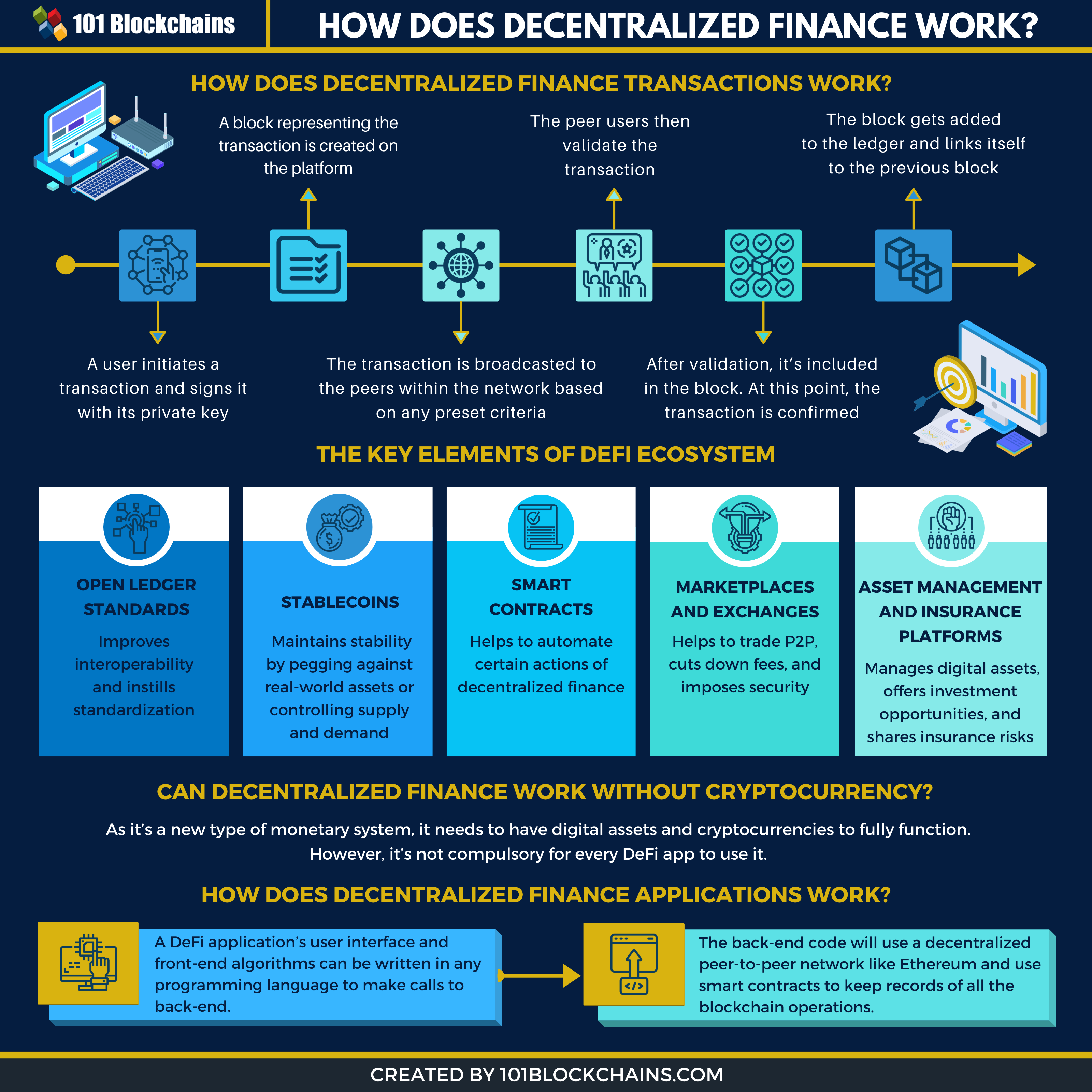
Smart contracts are the invisible engines of DeFi. These are self-executing contracts with the terms of the agreement directly written into code. They reside on the blockchain and automatically execute predefined actions when specific conditions are met, without the need for human intervention. For instance, a smart contract can automatically release funds from escrow once a delivery confirmation is received, or it can manage the lending and borrowing process of digital assets. The immutability of the blockchain ensures that once a smart contract is deployed, its code cannot be altered, providing a high degree of trust and predictability. This automation significantly reduces operational costs and the potential for human error or malicious manipulation.
The concept of "programmable money" is central to DeFi. Cryptocurrencies, the native assets of blockchains, serve as the fundamental building blocks for DeFi applications. Unlike traditional fiat currencies, which are controlled by central banks, cryptocurrencies are decentralized and can be programmatically manipulated through smart contracts. This enables the creation of a wide range of financial products, from stablecoins pegged to fiat currencies to complex derivatives and insurance policies. The interoperability between different DeFi protocols is another key aspect, allowing assets to flow seamlessly between various applications, creating a more integrated and efficient financial system.
Decentralized exchanges (DEXs) are a cornerstone of the DeFi ecosystem. Unlike centralized exchanges that hold user funds and facilitate trades through an order book, DEXs allow users to trade cryptocurrencies directly from their own wallets. Trades are executed through smart contracts, and liquidity is typically provided by users who deposit their assets into liquidity pools. These liquidity providers earn trading fees as an incentive for facilitating trades. Popular DEXs include Uniswap, SushiSwap, and PancakeSwap, each employing different automated market maker (AMM) models to determine asset prices based on the ratio of assets in their liquidity pools. The transparency of DEXs allows anyone to audit trading activity and the composition of liquidity pools.
Lending and borrowing protocols are another critical component of DeFi, mirroring traditional banking functions but in a decentralized manner. Users can deposit their cryptocurrencies into lending pools to earn interest on their assets. Simultaneously, other users can borrow assets from these pools by providing collateral, typically in the form of other cryptocurrencies. Interest rates are often determined algorithmically, based on the supply and demand for specific assets within the protocol. Prominent lending protocols include Aave, Compound, and MakerDAO. MakerDAO, in particular, is known for its decentralized stablecoin, DAI, which is minted by users who lock up collateral. This system provides a decentralized alternative to traditional lending institutions.
Stablecoins are a vital element for bridging the gap between the volatile nature of cryptocurrencies and the stability required for everyday transactions and financial applications. These digital assets are designed to maintain a stable value, typically pegged to a fiat currency like the US dollar, or other assets like gold. Stablecoins can be fiat-backed (e.g., USDT, USDC), crypto-collateralized (e.g., DAI), or algorithmic (e.g., UST, although this category has faced significant challenges). Their stability makes them ideal for payments, trading, and as collateral within DeFi protocols, reducing the risk associated with price fluctuations.
Yield farming and liquidity mining are strategies employed by DeFi users to maximize their returns on cryptocurrency holdings. Yield farming involves depositing digital assets into DeFi protocols to earn rewards, often in the form of interest or governance tokens. Liquidity mining is a subset of yield farming where users provide liquidity to decentralized exchanges or lending protocols and are rewarded with additional tokens for doing so. This incentivizes participation and helps bootstrap liquidity for new protocols. However, these strategies often come with higher risks, including impermanent loss and smart contract vulnerabilities.
Decentralized autonomous organizations (DAOs) are increasingly becoming the governance model for many DeFi protocols. DAOs are organizations governed by code and community consensus, rather than a central authority. Token holders of a particular DeFi protocol typically have the right to vote on proposals related to its development, parameter changes, and treasury allocation. This decentralized governance model aims to ensure that the protocol evolves in a way that benefits its users and stakeholders, fostering a more democratic and transparent decision-making process. Participation in DAOs is typically achieved by holding the protocol’s native governance token.
Security remains a paramount concern in the DeFi space. While blockchain technology offers inherent security features, smart contracts can be vulnerable to bugs, exploits, and hacks. The immutable nature of blockchain means that once a vulnerability is exploited, funds can be lost irreversibly. Audits of smart contract code by reputable security firms are crucial for mitigating these risks. Users are also encouraged to practice good security hygiene, such as using hardware wallets and being wary of phishing attempts. The potential for significant financial losses due to security breaches is a significant challenge that the DeFi ecosystem is continuously working to address.
The regulatory landscape surrounding DeFi is still evolving and presents a complex challenge. Governments and regulatory bodies worldwide are grappling with how to classify and regulate decentralized financial activities. Concerns often revolve around consumer protection, anti-money laundering (AML), and know-your-customer (KYC) requirements. The decentralized and pseudonymous nature of DeFi makes it difficult to apply traditional regulatory frameworks. This uncertainty can hinder mainstream adoption and create risks for both users and developers. Striking a balance between fostering innovation and ensuring financial stability and consumer safety is a key focus for policymakers.
The underlying technology of DeFi, particularly smart contracts, has opened up possibilities for a new generation of financial instruments. These include decentralized derivatives, insurance products, and even tokenized real-world assets. For example, decentralized options and futures platforms allow users to speculate on price movements of cryptocurrencies without relying on traditional exchanges. Decentralized insurance protocols offer coverage against smart contract failures or stablecoin de-pegging events. The tokenization of real-world assets, such as real estate or art, on the blockchain has the potential to unlock liquidity and create new investment opportunities.
Interoperability between different blockchains is another area of active development within DeFi. Currently, many DeFi applications are siloed on specific blockchains, primarily Ethereum. However, cross-chain bridges and interoperability protocols are being developed to allow assets and data to move seamlessly between different blockchain networks. This would enable a more unified and efficient DeFi ecosystem, allowing users to access a wider range of applications and services regardless of the underlying blockchain. Projects like Polkadot and Cosmos are at the forefront of building interoperable blockchain ecosystems.
The potential for financial inclusion offered by DeFi is significant. In regions with underdeveloped traditional financial infrastructure, DeFi can provide access to basic financial services like savings, lending, and payments. This can empower individuals and small businesses, fostering economic growth and reducing poverty. The low barrier to entry, compared to traditional banking, makes it an attractive alternative for underserved populations. The transparency of DeFi can also build trust in financial systems, which may be lacking in regions with high levels of corruption.
The economic incentives that drive DeFi are critical to its growth and sustainability. These incentives are often embedded within the protocol’s tokenomics, which govern the creation, distribution, and utility of the protocol’s native token. Governance tokens, for instance, grant holders voting rights and can also be used to stake and earn rewards. Transaction fees, which are collected by liquidity providers and sometimes burned or distributed to token holders, create a revenue stream for the ecosystem. The design of these economic models is crucial for attracting and retaining users and developers.
The future of DeFi is likely to involve further innovation, increased institutional adoption, and the development of more user-friendly interfaces. As the technology matures and regulatory clarity emerges, more traditional financial institutions may explore integrating DeFi solutions or offering DeFi-inspired products. The continued focus on security, scalability, and interoperability will be essential for DeFi to achieve its full potential and become a mainstream force in global finance. The ongoing evolution of smart contract capabilities and the exploration of novel use cases will continue to shape the DeFi landscape.

