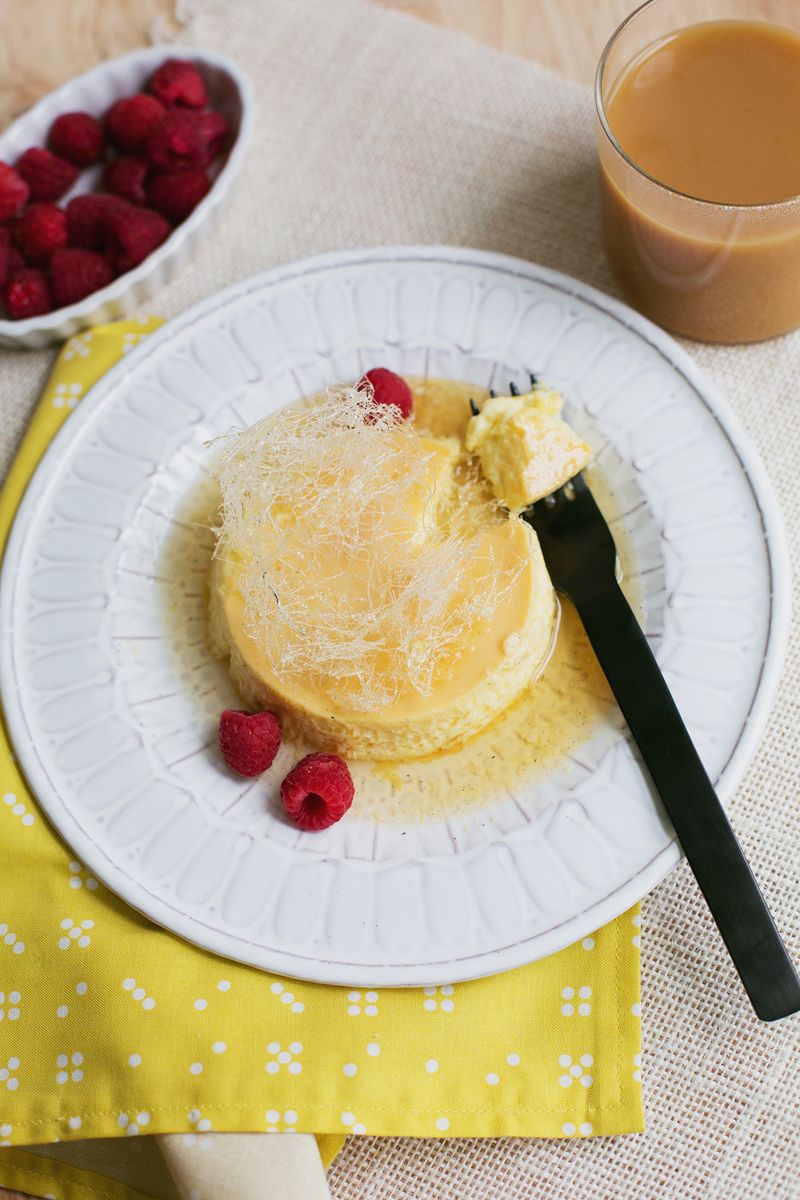

Flan with Crunchy Sugar Tops: A Culinary Masterpiece of Texture and Sweetness
The allure of flan, a classic baked custard dessert, lies in its silken, eggy interior and its signature caramel glaze. However, a particularly exquisite iteration elevates this beloved treat to new heights: flan with crunchy sugar tops. This delightful variation introduces a textural counterpoint, transforming the smooth, yielding custard into a multi-sensory experience. The interplay between the delicate wobbly custard and the shattering crispness of caramelized sugar creates a symphony of textures that is both sophisticated and immensely satisfying. Understanding the nuances of creating this dessert, from the selection of ingredients to the precise cooking and cooling techniques, is crucial for achieving flan perfection with that coveted crunchy sugar crown.
The foundation of any exceptional flan, regardless of its topping, is a meticulously crafted custard. This involves the careful balance of dairy, eggs, and sugar, transformed through gentle heat into a smooth, homogeneous mixture. The traditional flan base relies on whole milk and sometimes cream for richness, though lighter versions can be achieved with evaporated milk or even condensed milk for added sweetness and a more dense texture. The eggs are paramount, providing the structure and creamy emulsion. Whole eggs contribute fat and richness, while egg yolks alone offer an even more luxurious, almost pudding-like consistency. The sugar, beyond its inherent sweetness, plays a vital role in the custard’s texture, tenderizing the proteins in the eggs and contributing to its smooth mouthfeel. For flan with crunchy sugar tops, the base custard should be relatively neutral in flavor, allowing the caramelization to shine. Vanilla extract is the most traditional and universally loved flavoring, but other subtle additions like a hint of citrus zest or a whisper of almond extract can add intriguing complexity without overpowering the dominant sweet and caramel notes. The key to a flawless custard is gentle cooking. Overheating can cause the eggs to curdle, resulting in a grainy texture. Baking in a water bath, or bain-marie, is essential. This method of indirect heat ensures that the flan cooks evenly and slowly, preventing the edges from overcooking before the center is set. The water bath acts as an insulator, buffering the direct heat of the oven and promoting a tender, unctuous custard.
The true star of this particular flan variation is, of course, the crunchy sugar top. Achieving this coveted element requires a specific approach that differs from the standard caramel sauce poured into the bottom of the ramekin before baking. Instead, the sugar is added after the flan has been baked and, crucially, chilled. This prevents the sugar from dissolving into the custard during the baking process. The ideal method involves sprinkling a layer of granulated sugar evenly over the surface of the chilled flan. The thickness of this layer is a matter of personal preference, but a moderately generous coating is usually recommended to ensure a satisfying crunch. Once the sugar is applied, the magic happens through intense, direct heat. This can be achieved in several ways, each with its own advantages. The most traditional and arguably most effective method is using a kitchen torch. A culinary torch allows for precise control, enabling the user to evenly caramelize the sugar without heating the custard beneath significantly. Moving the torch in a consistent motion over the sugar surface is key to achieving a uniform, golden-brown crust. Another effective method, particularly for those without a torch, is to use the broiler function of an oven. This requires careful monitoring to prevent burning. Placing the flan on the top rack of a preheated oven set to broil, with the oven door slightly ajar, allows for observation and quick removal once the sugar has caramelized. The goal is to melt and caramelize the sugar until it forms a glassy, amber-colored crust that shatters with a satisfying crack.
The science behind the crunchy sugar top is a fascinating interplay of heat, sugar, and time. Granulated sugar, when subjected to direct heat, undergoes caramelization. This process involves the breakdown of sucrose molecules and the formation of hundreds of new compounds that contribute to the characteristic brown color and complex flavor of caramel. The initial stage involves melting the sugar, followed by a series of chemical reactions that create a rich, slightly bitter, and intensely sweet flavor profile. For the flan topping, the aim is to achieve this caramelization without allowing the sugar to burn, which would result in an acrid, unpleasant taste. The rapid application of high heat is crucial. It melts and caramelizes the surface sugar quickly, creating a brittle, glassy layer. The rapid cooling of the flan, which has been previously chilled, also plays a role. As the caramelized sugar cools, it solidifies into a hard, fragile shell. The temperature differential between the hot sugar and the cold flan helps to create this distinct crispness. It is important to note that the crunchy sugar topping is best enjoyed immediately after its creation. As the flan sits, moisture from the custard can begin to seep into the caramelized sugar, softening its texture and diminishing its delightful crunch. Therefore, the anticipation of digging into that shattering crust is part of the flan experience.
The history of flan, also known as crème caramel or caramel custard, is a long and varied one, with roots tracing back to ancient Rome. The Romans were known to prepare custards using eggs and milk, often sweetening them with honey. The introduction of sugar to Europe from the Middle East, particularly during the Middle Ages, revolutionized the dessert, leading to the development of the caramel sauce that is synonymous with modern flan. The Spanish conquistadors are often credited with introducing flan to the Americas, where it became a beloved dessert across Latin America and the Caribbean. Variations abound, reflecting regional ingredients and culinary traditions. However, the concept of a baked custard with a caramel element has remained a constant. The addition of a crunchy sugar top is a more recent innovation, driven by the culinary desire to enhance textural contrast. While not as historically entrenched as the liquid caramel, the crunchy topping offers a modern twist that has gained significant popularity. It speaks to a growing appreciation for the textural dimensions of food, moving beyond simple sweetness and smoothness to embrace a more complex and engaging eating experience. The simplicity of granulated sugar, transformed by heat and technique, offers a sophisticated counterpoint to the smooth custard, demonstrating that sometimes, the most profound culinary delights arise from the most humble ingredients.
The construction of flan with crunchy sugar tops requires attention to detail at every stage. For the custard base, the chosen dairy (milk, cream, or a combination) should be gently heated, but not boiled. The eggs and sugar are whisked together until pale and slightly thickened, then tempered with the warm dairy. Tempering is essential to prevent the eggs from scrambling. A ladleful of the warm milk mixture is gradually whisked into the egg mixture, slowly raising its temperature before the entire mixture is returned to the saucepan to thicken slightly. Over-mixing the eggs and sugar can incorporate too much air, leading to a soufflé-like texture rather than the desired smooth custard. Straining the custard mixture through a fine-mesh sieve is a non-negotiable step to remove any chalazae (the stringy bits that hold the egg yolk in place) and ensure a completely silken texture. This smooth base is then poured into individual ramekins or a larger baking dish. The water bath, as mentioned, is crucial for even baking. The ramekins are placed in a larger baking pan, and hot water is poured into the pan until it comes about halfway up the sides of the ramekins. The oven temperature for baking is typically moderate, around 300-325°F (150-160°C). Baking time will vary depending on the size and depth of the ramekins, but it is usually until the edges are set and the center is still slightly jiggly. Overbaking will lead to a rubbery texture. Once baked, the flans must be thoroughly chilled. This is not just for texture but also for the success of the crunchy topping. A minimum of four hours, or preferably overnight, in the refrigerator is recommended to allow the custard to fully set and firm up.
The preparation of the crunchy sugar top is the final, critical step. Once the flan is thoroughly chilled and unmolded (or served directly in its ramekin), the granulated sugar is sprinkled evenly over the surface. The key to a good crunch is the application of intense heat. A kitchen torch is the ideal tool for this. Hold the torch a few inches away from the sugar and move it in a continuous, sweeping motion. The sugar will begin to melt and bubble, then turn amber. It’s important to keep the torch moving to avoid burning any single spot. The goal is an even caramelization. If using the oven broiler, preheat the broiler to high. Place the flan on a baking sheet and position it on the top rack of the oven. Watch it very closely. The sugar will melt and caramelize quickly. As soon as it reaches the desired golden-brown color, immediately remove it from the oven. The caramel will continue to cook slightly as it cools. Allowing the caramelized sugar to cool and harden for a few minutes before serving is essential to achieve the signature shatter. The contrast between the cold, creamy custard and the warm, brittle caramel is what makes this dessert so utterly delightful.
Beyond the classic vanilla, numerous flavor profiles can be explored with flan and its crunchy sugar top. For a tropical twist, incorporate coconut milk into the custard base and add a touch of lime zest. The crunchy sugar topping will complement the subtle coconut and citrus notes beautifully. A hint of coffee or espresso powder can be added to the custard for a mocha-inspired flan, with the caramel providing a natural pairing. For a more decadent experience, consider infusing the milk with a cinnamon stick or star anise during the heating process, adding warm spice notes to the custard. Even a small amount of finely grated orange or lemon zest can add a refreshing brightness. The beauty of flan lies in its adaptability. The neutral base custard serves as a perfect canvas for a myriad of flavors, and the crunchy sugar topping provides a consistent and satisfying textural element that enhances almost any variation. The key is to ensure the added flavors are subtle enough not to compete with the caramelization, allowing the interplay of custard, caramel, and crunch to remain the star.
The presentation of flan with crunchy sugar tops is as important as its preparation. Traditionally, flan is unmolded onto a serving plate, with the caramel sauce that was baked in the bottom pooling around it. For the crunchy topped version, this is slightly different. While it can be unmolded, the crunchy sugar topping is best admired and experienced when the flan is served directly in its ramekin or a shallow serving dish. This allows the intact, gleaming sugar crust to be presented to the diner. A gentle tap of the spoon is all that is needed to break through the crisp surface, revealing the smooth custard beneath. Garnishes can be kept simple, to let the dessert speak for itself. A few fresh berries, a sprig of mint, or a dusting of powdered sugar can add visual appeal without detracting from the star attraction. The visual of the shimmering, golden-brown sugar crust, glistening and promising a delightful textural experience, is inherently appealing. It sets the stage for a truly memorable dessert.
In conclusion, flan with crunchy sugar tops represents a sophisticated evolution of a classic dessert. It masterfully combines the silken, comforting texture of a well-made custard with the exhilarating shatter of perfectly caramelized sugar. The meticulous attention to detail in both the custard preparation and the creation of the crunchy topping is rewarded with a dessert that is both visually stunning and incredibly delicious. From the careful tempering of eggs to the precise application of heat for caramelization, each step contributes to the final masterpiece. This dessert is a testament to the power of textural contrast in enhancing culinary enjoyment, proving that even a simple ingredient like sugar, when treated with respect and skill, can be transformed into an extraordinary element that elevates a beloved classic to new and exciting heights. The appeal lies in its balance of familiar comfort and delightful surprise, a dessert that consistently delights the senses.
