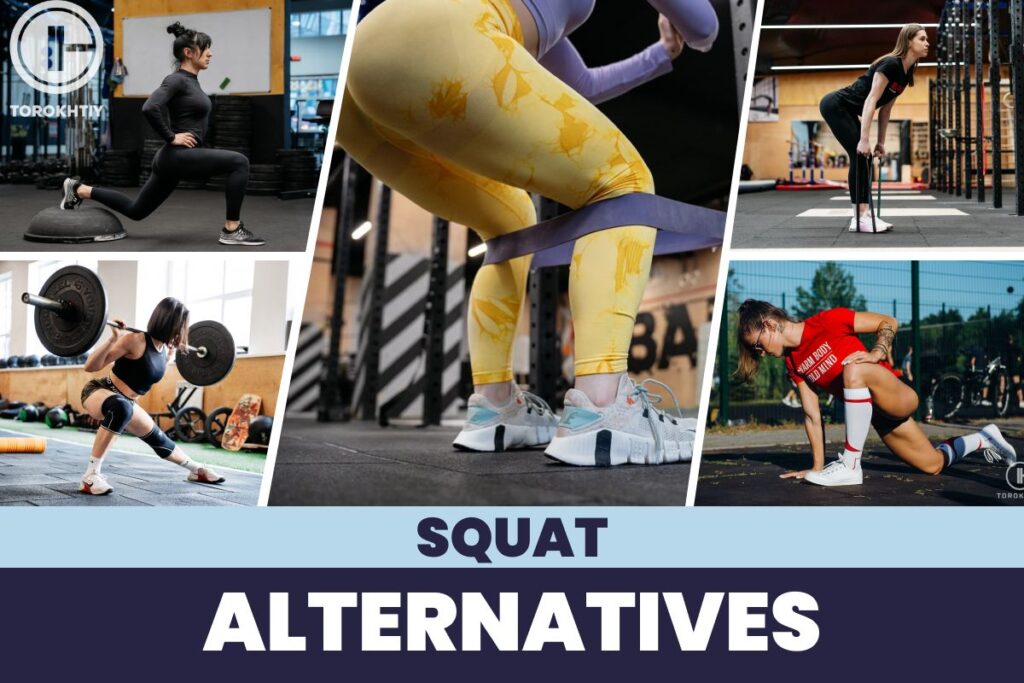

The Unconventional Powerhouse: Superior Alternatives to the Back Squat for Enhanced Fitness
The back squat is an undisputed king of lower body exercises, a foundational movement revered for its ability to build strength, muscle mass, and overall athletic prowess. However, for a multitude of reasons – from individual biomechanics and injury history to equipment limitations and the desire for training variety – not everyone can or wants to perform the traditional back squat. Fortunately, the fitness landscape is rich with effective and often more targeted alternatives that can deliver comparable, and in some cases, superior results. This article will delve deep into these powerful substitutes, exploring their benefits, target muscle groups, proper execution, and how to integrate them into a comprehensive fitness program, all while optimizing for search engine visibility.
Understanding the Back Squat’s Strengths and Limitations
Before exploring alternatives, it’s crucial to understand what makes the back squat so effective and where its limitations lie. The back squat is a compound exercise that engages a vast network of muscles: the quadriceps femoris, hamstrings, gluteal muscles, adductors, erector spinae, and core musculature. Its standing, bilateral nature demands significant coordination, balance, and intermuscular communication, contributing to functional strength development. The primary limitations of the back squat often stem from:
- Individual Anatomy: Hip structure, ankle mobility, and torso length can make the conventional back squat uncomfortable or even unsafe for some individuals.
- Injury History: Previous back, knee, or hip injuries might necessitate avoiding or modifying the back squat.
- Equipment Access: While a barbell is common, not all gyms have adequate squat racks, or individuals might train at home with limited equipment.
- Targeted Muscle Development: Sometimes, the goal is to isolate or emphasize specific muscle groups within the lower body, which the back squat, being a global movement, may not achieve as effectively.
- Variety and Periodization: Constantly performing the same exercise can lead to plateaus and decreased motivation. Introducing variations keeps training fresh and stimulates new adaptations.
- Core and Spinal Loading: For individuals seeking to minimize direct spinal compression or who have contraindications, alternatives that reduce axial loading are paramount.
The Front Squat: A Quad-Dominant Marvel with Enhanced Core Engagement
The front squat shifts the barbell’s position to the anterior deltoids, significantly altering the biomechanical demands and muscle activation patterns. This unilateral modification immediately places a greater emphasis on the quadriceps, demanding a more upright torso and consequently, a more engaged upper back and core to maintain proper form.
- Benefits: Superior quadriceps development, improved upper back strength and posture, enhanced core stability, reduced shear forces on the lumbar spine compared to the back squat, and often better tolerated by individuals with shoulder mobility issues or certain lower back sensitivities.
- Target Muscle Groups: Primarily quadriceps, with significant involvement from the upper back (traps, rhomboids, erector spinae), anterior deltoids, glutes, and core.
- Execution: Stand with feet shoulder-width apart, toes slightly out. Drape the barbell across the front of your shoulders, resting it on your clavicles and anterior deltoids. Grip the bar with either a clean grip (fingertips under the bar, wrists cocked back) or a cross-arm grip (forearms crossed over the bar, hands supporting it from the top). Keep elbows high, creating a shelf for the bar. Descend by pushing hips back and bending knees, maintaining an upright torso. Drive back up through the heels, extending hips and knees.
- SEO Keywords: Front squat, quad-dominant squat, upright torso squat, core strength exercise, anterior deltoid exercise, shoulder mobility squat, back pain friendly squat.
The Goblet Squat: Accessibility and Superior Core Activation for All Levels
The goblet squat, performed with a dumbbell or kettlebell held at chest level, is an exceptionally accessible and effective squat variation. Its simplicity makes it ideal for beginners to learn proper squat mechanics, while its challenging anterior load provides a potent stimulus for advanced trainees.
- Benefits: Excellent for teaching proper squat depth and upright posture, significantly enhances core engagement due to the forward lever arm, improves hip and ankle mobility, builds upper back and shoulder strength, and is easily scalable for all fitness levels. It’s also a fantastic tool for addressing mobility limitations that might hinder back squats.
- Target Muscle Groups: Quadriceps, glutes, hamstrings, adductors, core (especially rectus abdominis and obliques), upper back, and shoulders.
- Execution: Hold a dumbbell vertically by the head or a kettlebell by the horns at chest level, keeping elbows tucked. Stand with feet shoulder-width apart, toes slightly out. Descend into a squat, maintaining an upright torso and ensuring the weight stays close to your body. Aim for a deep, controlled descent, ideally with thighs parallel to the floor or lower. Drive back up through the heels, squeezing the glutes at the top.
- SEO Keywords: Goblet squat, dumbbell squat, kettlebell squat, beginner squat, core exercise, mobility squat, functional strength training, accessible lower body workout.
The Zercher Squat: An Abdominal Powerhouse with Unique Loading
The Zercher squat is characterized by holding the barbell in the crook of your elbows. This unconventional position creates a significant challenge for the core and anterior chain, while also targeting the quadriceps and glutes. It’s a highly effective exercise for developing isometric core strength and grip endurance.
- Benefits: Unparalleled core and abdominal strength development, significant erector spinae engagement for spinal erector hypertrophy, builds upper back and trap strength, improves hip mobility, and can be a good option for individuals who struggle with barbell placement on the back or front. It also demands significant mental toughness and stability.
- Target Muscle Groups: Quadriceps, glutes, hamstrings, significant anterior core (rectus abdominis, obliques), erector spinae, upper back, and forearms.
- Execution: Set the barbell in a power rack slightly below shoulder height. Squat down and position the bar in the crook of your elbows. Keep your back straight and chest up. Drive up out of the rack and step back. Descend by pushing hips back and bending knees, maintaining a rigid torso. The weight will naturally pull you forward, forcing your core to work overtime to stay upright. Drive back up.
- SEO Keywords: Zercher squat, abdominal strength exercise, core power workout, erector spinae exercise, grip strength training, upper back hypertrophy, unconventional squat.
The Bulgarian Split Squat: Unilateral Dominance and Functional Strength
The Bulgarian split squat (or rear-foot elevated split squat) is a unilateral powerhouse that challenges balance, stability, and strength independently in each leg. By elevating the rear foot, the range of motion is increased, and the emphasis is shifted more directly onto the front leg.
- Benefits: Superior unilateral strength and muscle development, significant improvements in balance and proprioception, enhanced gluteal and hamstring activation on the working leg, helps correct muscular imbalances between legs, and can be a great exercise for athletes requiring single-leg power. It also places less direct stress on the lower back.
- Target Muscle Groups: Primarily quadriceps and glutes of the front leg, with significant hamstring involvement. Secondary engagement from the stabilizing muscles of the ankle, knee, and hip, as well as the core.
- Execution: Stand a few feet in front of a bench or elevated surface. Place the top of your rear foot on the bench. Your front foot should be positioned so that when you descend, your knee tracks over your ankle and you can achieve a comfortable depth without your back knee hitting the floor. Keep your torso upright. Descend by bending the front knee and hip, keeping the front heel on the ground. Drive back up through the front heel, squeezing the glute at the top.
- SEO Keywords: Bulgarian split squat, unilateral leg exercise, single leg squat, glute strength, hamstring workout, balance training, athletic performance, leg hypertrophy, injury rehab squat.
The Pistol Squat: The Ultimate Test of Single-Leg Strength and Mobility
The pistol squat is a highly advanced, single-leg squat that demands exceptional strength, balance, mobility, and coordination. While challenging, mastering the pistol squat offers unparalleled benefits for developing functional strength and athletic potential.
- Benefits: Extreme single-leg strength and power development, phenomenal improvements in balance and proprioception, significant glute and quad activation, challenges hip and ankle mobility, and builds immense core stability. It’s a testament to complete lower body control.
- Target Muscle Groups: Quadriceps, glutes, hamstrings, adductors, ankle stabilizers, and core.
- Execution: Stand on one leg. Extend the other leg straight out in front of you, keeping it off the ground. Simultaneously, descend by bending the knee of the standing leg, pushing your hips back. Keep your torso as upright as possible, and maintain balance. Lower yourself until your hamstring touches your calf, or as deep as your mobility allows. Drive back up through the heel of the standing leg, squeezing the glute at the top. Assistance can be gained from holding onto a stable object or using a TRX.
- SEO Keywords: Pistol squat, single leg squat advanced, balance and stability, leg power exercise, full range of motion squat, mobility and strength, functional fitness challenge.
Other Notable Squat Alternatives for Comprehensive Training:
Beyond the primary alternatives, several other exercises offer unique benefits and can complement a squat-focused program:
- Hack Squat Machine: Provides a stable platform for high-volume quad work with less demand on balance and upper back strength.
- Leg Press: Offers a controlled environment to load the quads, hamstrings, and glutes with varying foot placements to emphasize different muscle groups. It’s a good option for those with back issues.
- Box Squat: Performed by squatting down to a box or bench. This variation helps reinforce proper depth, teaches controlled descent, and can be used to manage fatigue or focus on the concentric (lifting) phase of the movement.
- Jefferson Squat: A unique lift performed with the barbell between the legs, offering a different loading pattern that engages the entire posterior chain and core.
Integrating Squat Alternatives into Your Training Program:
The key to effectively utilizing these squat alternatives lies in intelligent programming. Consider the following:
- Assess Your Needs: Identify your individual goals, limitations, and equipment availability.
- Prioritize Compound Movements: While alternatives are valuable, ensure your program still incorporates foundational strength exercises.
- Vary Intensity and Volume: Use different variations for different training phases. For example, use front squats for strength focus and goblet squats for higher rep endurance.
- Address Weaknesses: If you have poor ankle mobility, prioritize goblet squats and rear-foot elevated split squats. If core strength is a limiting factor, incorporate Zercher squats.
- Listen to Your Body: If a particular variation causes pain, modify or substitute it.
- Progress Gradually: Don’t jump into highly advanced variations like pistol squats without building a solid foundation.
By strategically incorporating these powerful squat alternatives, you can break through plateaus, enhance your overall fitness, build a more resilient and stronger physique, and achieve your training goals with greater effectiveness and enjoyment. The world of lower body training is vast and varied, and embracing these unconventional powerhouse movements is a sure path to unlocking new levels of strength and performance.

