
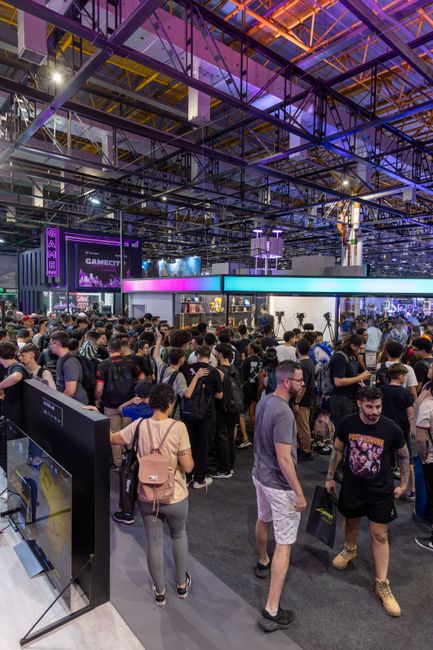
E3: A Corpse Beyond Resurrection, The Once-Majestic Gaming Expo’s Irreversible Decline
The once-dominant Electronic Entertainment Expo, or E3, is not merely ailing; it is unequivocally, irrevocably deceased. The echoes of its former glory, once a deafening roar of anticipated announcements and industry spectacle, have faded into a desolate silence. The concept of E3 as a viable, relevant event for the modern gaming landscape is a relic, a ghost haunting the halls of memory. Its demise isn’t a sudden, unexpected event, but rather a protracted, agonizing implosion driven by a confluence of technological shifts, evolving industry practices, and a fundamental misunderstanding of what the gaming community and developers truly need. The recent, official cancellation of E3 2024 and the subsequent dissolution of the ESA’s plans for its revival are merely the final, ceremonial nails in the coffin of an entity that had already succumbed to terminal irrelevance.
The initial allure of E3 was undeniable. For decades, it served as the premier annual gathering for the video game industry. It was the stage where PlayStation, Xbox, and Nintendo unveiled their next-generation hardware, showcased groundbreaking titles, and set the agenda for the coming year. For journalists and media outlets, it was a crucial period of information gathering, securing exclusive interviews, and delivering breaking news to an eager global audience. For consumers, it was a tantalizing glimpse into the future, a window into the games that would define their entertainment for years to come. The palpable excitement, the meticulously crafted presentations, the sheer scale of the Los Angeles Convention Center transformed into a gamer’s paradise – these were the ingredients that forged E3’s legendary status. However, the very factors that fueled its ascent also sowed the seeds of its eventual downfall.
The most significant catalyst for E3’s irrelevance has been the internet and the subsequent rise of digital distribution and direct-to-consumer communication. The exclusive, controlled environment of E3 once held immense power because it was the primary conduit for information. Developers and publishers were beholden to the expo to disseminate their news. This paradigm, however, shattered with the advent of high-speed internet. Publishers and developers quickly realized they could bypass the expensive and logistically complex E3 to announce their own games, on their own terms, and directly to their audiences. The "E3 Trailer" became less a special unveiling and more a standard marketing tool. The "E3 Reveal" lost its exclusivity when it could be streamed live globally from a company’s own headquarters or a dedicated online event. This shift empowered developers, allowing them to control their narrative, maximize reach, and avoid the hefty price tag associated with participating in a trade show.
The financial burden of E3 was a constant, gnawing problem. For major players like Sony, Microsoft, and Nintendo, the cost of a booth, travel, staffing, and producing elaborate presentations ran into the millions of dollars. As their ability to communicate directly with consumers grew, the return on investment for E3 diminished significantly. Sony’s decision to pull out of E3 in 2019 was a watershed moment, a clear signal that the old model was no longer sustainable for industry giants. Their reasoning, which cited a focus on direct consumer engagement through PlayStation events like State of Play, proved prescient. This departure from the major console manufacturers created a domino effect, leading to further erosion of E3’s perceived value. Smaller publishers and independent developers, while benefiting from E3’s platform in the past, found the cost increasingly prohibitive, leading to a less diverse and ultimately less exciting show floor in its later years.
The "show, don’t tell" nature of video game marketing also contributed to E3’s decline. While a curated gameplay trailer or a developer diary could generate buzz, nothing could replicate the visceral impact of experiencing a game firsthand. E3’s shift towards a more public-facing event, allowing gamers onto the show floor, was a well-intentioned attempt to recapture relevance but ultimately diluted its core purpose. Developers were less inclined to showcase unfinished, potentially buggy gameplay to a general audience when a controlled, polished presentation to media was more strategically advantageous. The pressure to create a "wow" moment became immense, often leading to marketing hype that outpaced actual game development, a phenomenon that fueled player disappointment and skepticism.
Furthermore, the rise of independent digital showcases and the increasing sophistication of live-streaming technology democratized the announcement process. Geoff Keighley’s “Summer Game Fest” emerged as a prime example of this evolution. By offering a consolidated, digital-first platform that spans multiple weeks, Summer Game Fest provides a flexible and cost-effective alternative to E3. It allows developers to participate on their own schedule, releasing trailers and announcements when they are ready, rather than being constrained by E3’s specific dates. This decentralized approach caters to a global audience that can engage with announcements from the comfort of their homes, eliminating the need for travel and the logistical nightmares associated with a physical event. Summer Game Fest’s success has demonstrably proven that the industry no longer needs E3.
The nature of game development itself has also changed, impacting E3’s relevance. Games are increasingly developed as live services, with ongoing updates and expansions. This means that major announcements are no longer confined to annual hardware launches or single game reveals. Instead, developers are constantly engaging with their communities, providing regular updates and content drops. E3, with its singular focus on a week-long, once-a-year spectacle, struggled to adapt to this continuous engagement model. The information flow has become a constant stream, not a concentrated flood.
The pandemic acted as an accelerant, rather than the sole cause, of E3’s demise. The forced shift to digital-only events in 2020 and 2021 highlighted the viability of online presentations and the ease with which information could be disseminated. While E3 attempted to pivot, its digital offerings lacked the polish and impact of dedicated online showcases. The years of cancelled or scaled-back events chipped away at its authority and its ability to command attention. When the ESA, the organization behind E3, finally announced its permanent closure, it was a confirmation of a death that had long been evident. The repeated cancellations, the dwindling list of exhibitors, and the persistent rumors of its demise had painted a grim picture.
The SEO implications of E3’s demise are also noteworthy. For years, “E3” was a highly searched keyword during the gaming calendar, driving significant traffic to news sites and industry publications. The absence of E3 means that search traffic has been redistributed to a multitude of other events and platforms. Terms like “Summer Game Fest,” individual publisher showcases (e.g., “Xbox Games Showcase,” “PlayStation Showcase”), and specific game announcements now dominate the search landscape during the traditional E3 window. This fragmentation of the online conversation means that no single event can capture the singular attention E3 once commanded.
In conclusion, E3 is dead, not by accident, but by an inevitable evolution of the gaming industry. The internet, digital distribution, direct-to-consumer marketing, changing development cycles, and the rise of more agile and cost-effective digital events have rendered the traditional trade show model obsolete. The grand pronouncements, the elaborate booths, and the curated reveals of E3 are now relics of a bygone era. The gaming world has moved on, embracing a more fluid, decentralized, and consumer-centric approach to information dissemination. The passing of E3 is not a tragedy, but a natural progression, a clear indication that the industry has outgrown its former kingmaker. Its absence will be felt by some, a pang of nostalgia for a time when E3 was the undisputed epicenter of gaming news, but its legacy is now firmly etched in the annals of gaming history, a testament to both its past triumphs and its ultimate, unrecoverable obsolescence.

