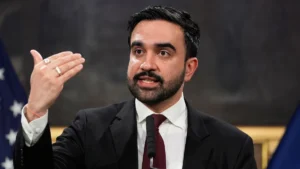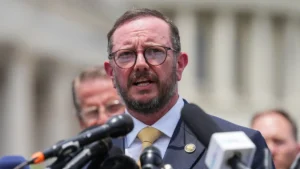
In a significant move highlighting the escalating importance of artificial intelligence policy in American politics, Defending Our Values PAC, a conservative super PAC dedicated to shaping the future of AI legislation, has announced its first substantial campaign investments. The organization is throwing its financial support behind two Republican candidates in pivotal House races: Rhett Marques in Alabama’s 2nd Congressional District and Scott Singer in Florida’s 25th Congressional District. These investments, exclusively revealed by Fox News Digital and confirmed by a source familiar with the PAC’s operations, underscore a strategic effort to bolster the Republican Party’s narrow majority in the House of Representatives ahead of the crucial 2026 midterm elections and to ensure conservative voices lead the discourse on emerging technologies.
The political landscape currently sees Republicans holding a razor-thin majority in the House, making every competitive race a potential determinant of control for the next congressional session. Defending Our Values PAC views both the Alabama and Florida contests as prime opportunities to fortify the GOP’s position, aligning its financial leverage with candidates who champion its core tenets regarding AI, Big Tech accountability, and national security in the digital age. This initial allocation of funds follows the PAC’s broader announcement last week of a $15 million election effort, the specific beneficiaries of which remained undisclosed until now.
The Rise of AI as a Political Battleground
Artificial intelligence has rapidly transitioned from a niche technological discussion to a central policy debate on Capitol Hill, compelling lawmakers to grapple with its profound implications across various sectors. The technology’s rapid advancement presents a complex dual challenge: fostering innovation to maintain American leadership on the global stage, particularly against strategic rivals like China, while simultaneously developing robust regulatory frameworks to mitigate potential societal risks. These risks include concerns over data privacy, algorithmic bias, job displacement, national security vulnerabilities, and the pervasive influence of large technology corporations, often collectively referred to as "Big Tech."
A recent Fox News poll, referenced in the original reporting, indicated a growing public perception of Big Tech as a significant threat to the United States, even surpassing traditional concerns about government overreach. This sentiment provides fertile ground for political campaigns to address the issue, and Defending Our Values PAC is strategically positioning itself to ensure that the conservative perspective—emphasizing free-market principles, national security, parental rights in online spaces, and a skepticism towards unchecked corporate power—is at the forefront of this evolving policy debate. The PAC explicitly argues that conservatives, rather than Silicon Valley executives, should be the primary architects of these critical policies, advocating for an approach that balances innovation with traditional values and national interests.
The legislative efforts surrounding AI have seen a flurry of activity, though concrete regulations remain largely nascent. Various congressional committees, including the Senate Judiciary Committee, the House Energy and Commerce Committee, and dedicated subcommittees, have held hearings, proposed frameworks, and initiated discussions on topics ranging from AI safety standards and data governance to intellectual property rights and the ethical deployment of autonomous systems. The Department of Commerce, through the National Institute of Standards and Technology (NIST), has also published voluntary AI risk management frameworks, but many policymakers believe a more robust, legislative approach is necessary. The sheer complexity and rapid pace of AI development mean that any comprehensive regulatory scheme must be adaptable, forward-looking, and carefully crafted to avoid stifling innovation while safeguarding public welfare.
Defending Our Values PAC: Mission and Strategy
Defending Our Values PAC operates with a clear mandate: to influence the composition of Congress by supporting candidates who align with its vision for artificial intelligence policy. The organization’s overarching goal is to ensure that future legislative decisions regarding AI and Big Tech reflect conservative principles, prioritizing American innovation, national security, and the protection of children and families in the digital realm. The PAC’s $15 million election effort signifies a substantial investment, indicating a long-term commitment to shaping the political discourse around these issues.
The selection of Rhett Marques and Scott Singer as the first recipients of the PAC’s financial backing is not arbitrary. According to the informed source, both candidates were chosen because they are perceived as individuals who would become "strongest advocates for taking on Big Tech, strengthening online protections for children and families, and advancing policies aimed at helping the United States outpace China in artificial intelligence innovation." This multi-faceted approach underscores the PAC’s view that AI policy is not a singular issue but rather an intricate web of economic, social, and geopolitical challenges that require a cohesive and principled conservative response.
The PAC’s strategy involves more than just financial contributions; it aims to elevate the profile of AI and tech regulation as front-burner issues in these competitive races. By investing early in the primary process, Defending Our Values seeks to help its preferred candidates not only secure their party’s nomination but also build name recognition and establish their policy platforms well in advance of the general election. This proactive engagement is crucial in crowded primary fields where candidates often struggle to differentiate themselves and gain traction with voters. The ultimate objective is to elect a cohort of lawmakers who are not only technologically literate but also ideologically aligned with the PAC’s conservative framework for governing the digital frontier.
Key House Races: Alabama’s 2nd Congressional District
Rhett Marques, an Alabama State Representative, is campaigning in Alabama’s newly redrawn 2nd Congressional District. The district’s boundaries were adjusted following a legal challenge asserting racial gerrymandering, leading to a court-ordered redistricting that is expected to make the seat more competitive for Democrats in the general election. This makes the Republican primary particularly significant, as the eventual nominee will face a formidable challenge.
Marques is navigating a crowded Republican primary field, a common scenario in districts where the general election outcome is perceived as critical. His campaign has already garnered high-profile endorsements, including that of former President Donald Trump and current U.S. Senator Katie Britt (R-Ala.). These endorsements provide significant boosts in name recognition, fundraising, and grassroots support, particularly within the conservative base. Senator Britt, a rising star in the Republican Party, is seen as a key figure in Alabama politics, and her backing signals Marques’ alignment with established state conservative leadership. The special Republican primary election in Alabama is scheduled for August 11, setting the stage for an intense campaign cycle.
Defending Our Values PAC’s investment in Marques aims to help him cut through the noise of the primary, ensuring that his message on AI, Big Tech, and national security resonates with voters. Should Marques emerge victorious from the primary, he is slated to face incumbent Rep. Shomari Figures, a Democrat. Figures, having previously served as Chief of Staff to Senator Doug Jones and as an Assistant U.S. Attorney, brings his own political experience and a strong Democratic base to the contest. The general election in AL-02 is anticipated to be one of the most closely watched races nationally, embodying the broader struggle for House control.
Key House Races: Florida’s 25th Congressional District
In Florida’s 25th Congressional District, Scott Singer, the current Mayor of Boca Raton, is also vying for the Republican nomination in a highly competitive primary. Singer’s tenure as mayor has provided him with executive experience and a platform to address local issues, which he can now leverage for a congressional bid. His campaign has received endorsements from notable Republican figures, including Florida Attorney General James Uthmeier, signaling support from within the state’s powerful Republican establishment. Florida’s political landscape, particularly in South Florida, is dynamic, with shifting demographics and a blend of conservative and moderate voters.
Like Marques, Singer faces multiple opponents in his Republican primary, making the PAC’s support crucial for differentiation and resource allocation. The Florida primary election is scheduled for August 18, just a week after Alabama’s, intensifying the late-summer political calendar. The PAC’s investment is designed to amplify Singer’s voice on issues central to the organization’s mission, such as reining in Big Tech’s influence, protecting online privacy for families, and advocating for policies that enhance America’s competitive edge in AI development, especially in comparison to China.
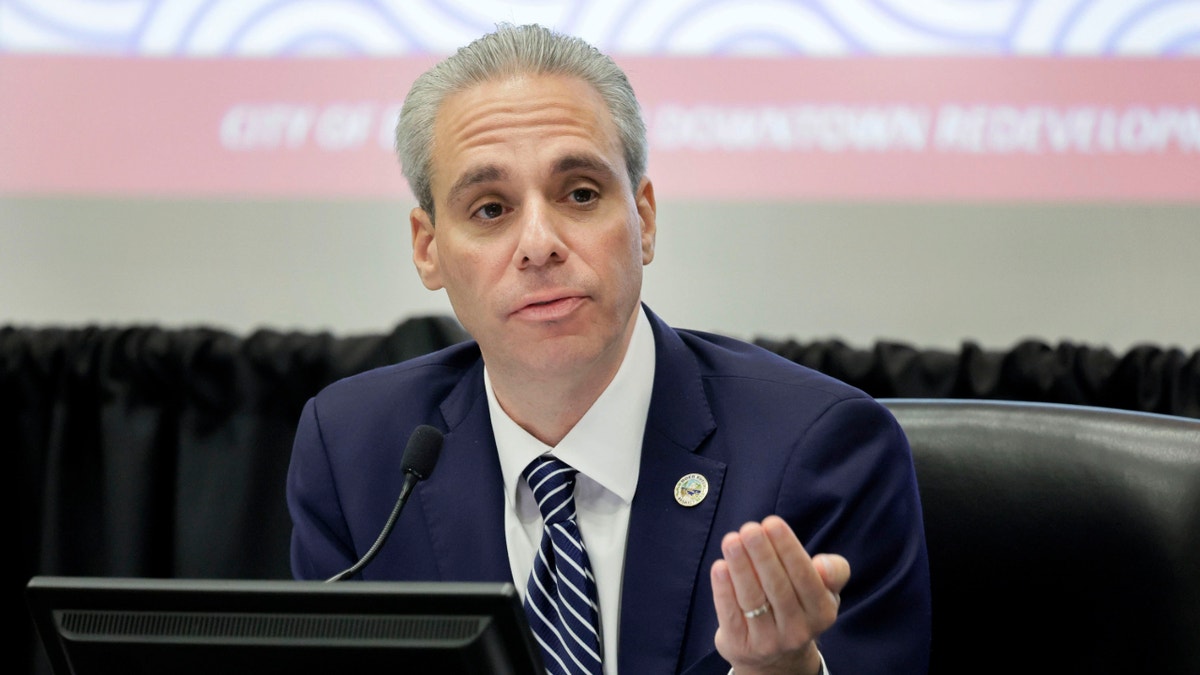
If Singer secures the Republican nomination, he is expected to challenge incumbent Rep. Jared Moskowitz, a Democrat. Congressman Moskowitz is a prominent figure in the Democratic Party, known for his outspoken criticism of former President Trump and his active presence on social media. His district, encompassing parts of Broward and Palm Beach counties, is a battleground where both parties will heavily invest resources. A potential Marques-Moskowitz showdown would pit a conservative focused on tech regulation and national security against a vocal Democratic incumbent, further highlighting the ideological cleavages within Congress. The contest in FL-25 is not only vital for House control but also for the future direction of tech policy, given the prominence of Florida in technological innovation and its diverse population.
The Broader Electoral Landscape and House Control
The decision by Defending Our Values PAC to focus its initial investments on these specific House races underscores the high stakes of the upcoming 2026 midterm elections. With the Republican Party currently holding a precarious majority, every seat is critical. Historically, midterm elections often see shifts in power, with the party out of the White House frequently gaining seats. However, the specific dynamics of each district, candidate quality, fundraising, and salient national issues all play a significant role.
The current political climate is characterized by deep partisan divisions, intense ideological battles, and a highly mobilized electorate. Issues like the economy, immigration, healthcare, and foreign policy consistently rank high among voter concerns. The strategic introduction of AI and Big Tech policy into this mix by a conservative super PAC suggests a belief that these issues can resonate with voters beyond traditional tech circles, potentially galvanizing a segment of the electorate concerned about online safety, corporate power, and national competitiveness.
The slim majority held by Republicans in the House, which could be as narrow as a single seat in some projections, means that both parties will be pouring immense resources into swing districts. Outside groups, including super PACs, play an increasingly vital role in these contests, providing independent expenditure support for favored candidates. Their ability to raise and spend unlimited amounts of money on advertising, voter mobilization, and other campaign activities makes them powerful actors in shaping electoral outcomes.
The Role of Super PACs in Modern Elections
Super PACs, officially known as "independent expenditure-only committees," emerged following the Supreme Court’s 2010 Citizens United v. Federal Election Commission decision and subsequent lower court rulings. These organizations can raise and spend unlimited amounts of money from corporations, unions, associations, and individuals to advocate for or against political candidates. Crucially, they are prohibited from coordinating directly with candidates’ campaigns, operating as "independent" entities. This independence, however, often blurs in practice, with super PACs frequently run by operatives closely aligned with specific political figures or parties.
The rise of super PACs has dramatically reshaped campaign finance in the United States, injecting vast sums of "dark money" (funds from undisclosed donors, often funneled through other non-profits) and "unlimited money" into elections. In the 2022 midterm elections, for instance, super PACs spent billions of dollars, influencing races from presidential primaries down to local contests. Their primary function is to conduct aggressive advertising campaigns, including television, digital, and print ads, as well as engage in voter outreach efforts, all designed to bolster their favored candidates or attack opponents.
Defending Our Values PAC’s commitment of $15 million, while significant, is part of a much larger ecosystem of outside spending. This level of investment indicates the PAC’s seriousness in shaping the congressional debate around AI and Big Tech, reflecting a belief that these issues are not only policy priorities but also potent electoral tools that can motivate voters and differentiate candidates. By strategically deploying funds in targeted races, super PACs can have a disproportionate impact on election outcomes, particularly in districts where the vote margin is expected to be tight.

Implications for AI Policy and Big Tech Regulation
The proactive engagement of Defending Our Values PAC signals a critical juncture for AI policy in the United States. If the PAC’s supported candidates are successful, it could significantly influence the legislative agenda concerning technology. The focus on strengthening online protections for children and families suggests potential pushes for legislation around age verification, content moderation, data privacy for minors, and greater transparency from social media platforms. The emphasis on outcompeting China in AI innovation points towards policies promoting domestic research and development, protecting intellectual property, securing critical supply chains, and potentially imposing stricter controls on technology transfer.
The conservative argument that Big Tech needs to be reined in, a sentiment increasingly shared across the political spectrum but for different reasons, could gain substantial momentum. While some Democrats advocate for antitrust measures and consumer protection, conservatives often highlight concerns about censorship, perceived bias, and the unchecked power of tech giants. Candidates like Marques and Singer, if elected, could become vocal proponents of these conservative-aligned regulatory approaches, potentially shaping committee assignments, legislative priorities, and the overall tenor of the debate.
This development also underscores the politicization of technology, transforming it from a purely technical domain into a fiercely contested political arena. As AI becomes more integrated into daily life and national security, the ideological leanings of policymakers tasked with its governance will become increasingly important. The PAC’s intervention suggests a deliberate effort to ensure that the legislative framework for AI is built upon a foundation of conservative principles, moving away from what they might perceive as a Silicon Valley-centric or overly progressive approach.
Looking Ahead: The 2026 Midterm Stakes
The 2026 midterm elections are still some time away, but the early investments by groups like Defending Our Values PAC indicate that the groundwork for these crucial contests is already being laid. The outcomes in districts like Alabama’s 2nd and Florida’s 25th will not only determine the balance of power in the House but also the direction of key policy debates, particularly on artificial intelligence and Big Tech.
For the Republican Party, preserving or expanding their House majority is paramount to advancing their legislative agenda and serving as a check on the executive branch. For Democrats, reclaiming the House would provide a platform to push their own policy priorities and potentially obstruct the opposition’s initiatives. The targeted investments in these races by a super PAC focused on AI policy demonstrate a growing understanding that technology is no longer an ancillary issue but a core component of the national political discourse.
The coming months will see intense primary battles, followed by even more competitive general elections. As the campaigns unfold, the candidates’ stances on AI, Big Tech, and national security will likely become more defined, offering voters a clearer choice on how they believe these transformative technologies should be governed. The strategic interventions of super PACs like Defending Our Values will undoubtedly play a critical role in shaping these narratives and ultimately, the composition of the next United States Congress.