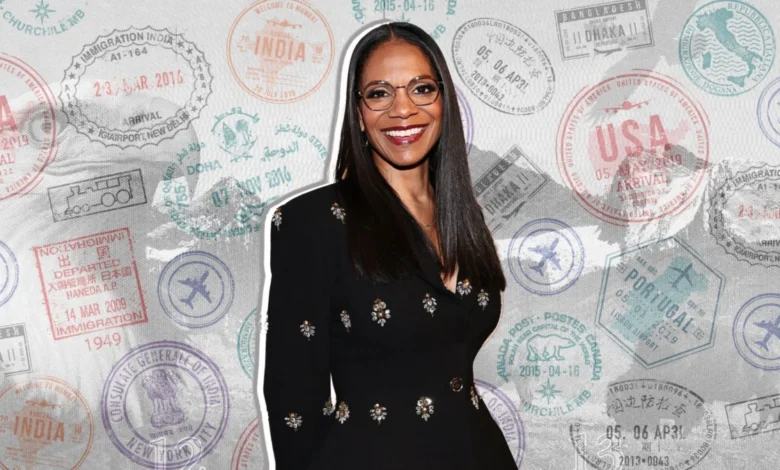
The theatrical landscape of the twenty-first century boasts few figures as decorated or vocally formidable as Audra McDonald. Holding the distinction of being the most Tony Award-nominated performer in Broadway history—with six competitive wins spanning four distinct acting categories—McDonald represents a rare intersection of operatic training, dramatic depth, and enduring commercial viability. As she balances a multifaceted career that encompasses television, international concert touring, voice work, and active board service, the logistics of maintaining a world-class instrument while traversing the globe require rigorous discipline. In a recent interview, McDonald detailed the exacting protocols behind her global itinerary, her reflections on iconic performance venues, her adventures in family travel, and her off-stage sanctuaries.
Vocal Preservation and the Realities of Global Touring
For an artist whose livelihood depends on the unamplified delivery of a pristine soprano over a full orchestra, global travel presents inherent occupational hazards. Changes in cabin pressure, dry air, and exposure to viral pathogens are persistent threats to vocal health. McDonald approaches these variables with structured preventative measures honed over decades of professional touring.
Her primary defenses are straightforward yet uncompromising: strict adherence to masking in commercial aircraft and ensuring that every hotel lodging is equipped with a humidifier. These protocols are not merely precautionary; they are vital economic and artistic safeguards. A canceled performance due to illness carries financial repercussions for producers and disappointment for audiences who often travel significant distances to hear her perform. By insulating herself against common respiratory infections, McDonald maintains a level of reliability that has anchored her career across major international stages.
This rigorous travel schedule coincides with a prolific period in her professional output. Beyond her celebrated television work in period dramas such as HBO’s The Gilded Age—which is currently broadcasting its fourth season—McDonald recently collaborated with a roster of Broadway luminaries to release a holiday compilation titled Voices of the Gilded Age: The Christmas Album. This convergence of screen acting, recording projects, and live concert engagements underscores the stamina required to sustain a multi-decade career at the highest tier of the performing arts.
Chronology of a Historic Career
To understand the weight of McDonald’s presence in global performance spaces, it is necessary to examine the trajectory of her career, which spans more than thirty years of continuous achievement on stage and screen.
1988–1993: Formal Training and Early Breakthroughs
McDonald trained as a classical soprano at the Juilliard School, graduating in 1993. Her foundational education in opera provided the technical foundation that would later allow her to navigate demanding musical theater scores without vocal fatigue.
1994–2004: Historic Tony Award Accumulation
Within a decade of graduating, McDonald secured four Tony Awards for her performances in Carousel (1994), Master Class (1996), Ragtime (1998), and A Raisin in the Sun (2004). This rapid accumulation of accolades established her as a dominant force in American theater before the age of 35.
2007–2014: Genre-Crossing and Record-Breaking Achievements
Expanding her repertoire into classical crossover and dramatic plays, McDonald won her fifth Tony Award for Porgy and Bess in 2012. In 2014, she secured her sixth Tony Award for her tour-de-force portrayal of Billie Holiday in Lady Day at Emerson’s Bar & Grill, making her the first person to win in all four acting categories.
2016–Present: Television, Advocacy, and International Touring
In recent years, McDonald has balanced substantial television commitments—including roles in The Good Fight and The Gilded Age—with extensive concert tours and philanthropic board service, notably with Carnegie Hall. Her recent international travels, including an extended stay in Australia and New Zealand, reflect an increasingly global footprint.
The Magic of Carnegie Hall and New York City’s Holiday Tradition
Despite performing in elite venues worldwide, McDonald identifies Carnegie Hall in Manhattan as her premier performance destination. Her relationship with the historic institution extends beyond the stage; she serves as a member of its board of directors, contributing to the governance and artistic programming of the landmark hall.
Reflecting on the psychological demands of performing at Carnegie Hall, McDonald notes that the performance anxiety she typically experiences is magnified tenfold within its walls. However, this apprehension dissipates the moment she steps onto the stage. She describes the venue’s acoustic and architectural design as a supportive presence—a physical space engineered to amplify vocal nuance and foster a direct, communal exchange between artist and audience. This acoustic benevolence, she suggests, elevates the performance, allowing both singer and listener to experience the material with optimal clarity.
Domestically, McDonald maintains a residence in New York City, a metropolis she has called home for thirty-six years. She views the city’s holiday season as an unmatched cultural experience, supported by traditions shared with family and friends. From annual attendance at the Radio City Christmas Spectacular and New York City Ballet’s production of The Nutcracker to viewing the Rockefeller Center Christmas Tree, her family integrates the city’s institutional holiday offerings into their annual calendar. These long-standing routines provide stability amidst a nomadic professional life.
Logistics of Family Travel and Aviation Anxieties
Traveling internationally with a ten-year-old child introduces unpredictable variables that even the most meticulous planning cannot eliminate. McDonald’s recent journey from the United States to Australia illustrates the resilience required of modern touring families. During a fifteen-hour transoceanic flight, her daughter contracted a gastrointestinal virus that manifested immediately after the cabin doors closed.
Rather than succumbing to the anxiety of disrupting fellow passengers, McDonald adopted a pragmatic approach to in-flight crisis management. She credits the flight crew with professionalism and calm authority, noting that airline personnel routinely encounter medical emergencies and travel disruptions. Her primary counsel to parents navigating similar situations centers on self-compassion and recognizing that public judgment holds little weight compared to the immediate well-being of a child. With modern passengers largely insulated by personal headphones and digital entertainment, parental focus can remain squarely on managing the immediate situation without undue concern for external perceptions.
Conversely, McDonald is candid about her personal anxieties regarding commercial aviation. Following the death of her father in a plane crash approximately twenty years ago, she has managed mild aviation-related distress through meticulous observation of flight trajectories and meteorological data. Rather than attempting to sleep or prepare for professional engagements—approaches often complicated by her neurodivergence—she monitors flight progress and atmospheric conditions via cabin Wi-Fi. While she acknowledges the psychological quirkiness of tracking weather patterns from thousands of feet in the air, this analytical engagement serves as a functional coping mechanism, providing a sense of localized control within an inherently unpredictable environment.
Global Explorations: From New Zealand’s Wilderness to Portugal’s Countryside
When professional obligations permit extended leaves, McDonald’s travel preferences favor immersive natural landscapes and culturally rich rural environments. Among her global travels, a multi-week expedition through New Zealand stands out as a defining itinerary. Following professional engagements in Tahiti alongside her husband, actor Will Swenson, McDonald utilized a three-week hiatus prior to her Australian tour to explore both the North and South Islands of New Zealand.
The journey encompassed diverse terrains, including Queenstown, Rotorua, Hahei Beach, the Southern Alps, Christchurch, and Wellington. The family engaged in localized tourism, such as traveling on the historic Pelorus Mailboat to access remote coastal communities reachable solely by water, as well as visiting cinematic landmarks like Hobbiton. This comprehensive exploration of New Zealand’s topography left a profound impression, characterized by diverse ecosystems and community engagement.
In addition to her affinity for the South Pacific, McDonald maintains a long-standing connection to Portugal. Long before the country emerged as a primary destination for expatriates and international tourists, she and her husband frequented the region, drawn by friends living locally. Their travels extended beyond urban centers like Lisbon and Porto to encompass the agricultural interior, characterized by varied topography and historic villages. The accessibility of high-quality regional goods—including local wines historically acquired at nominal cost—contributed to their integration into the community, culminating in the acquisition of rural property within the country.
Unexpected Encounters and Future Itineraries
Despite performing on prominent international stages, recognition often occurs in unexpected locales. During her residence in South Melbourne, Australia, while supporting her husband’s theatrical run in A Beautiful Noise: The Neil Diamond Musical, McDonald was approached in a neighborhood bookstore near her daughter’s school. The local resident recognized her not from her televised performances or stage appearances, but from her narration of Emily Wilson’s recent audio translation of Homer’s The Iliad. McDonald has frequently cited the recording process for The Iliad as one of the most physically and mentally demanding projects of her career, making the unexpected recognition in the Southern Hemisphere a notable point of validation.
Looking forward, McDonald’s travel agenda focuses on cultural education and heritage tourism. As her daughter approaches early adolescence, she plans to organize an extensive itinerary across the African continent. Planned destinations include Ghana—to explore the historical origins of the African diaspora—alongside wildlife safaris in Kenya and primate trekking excursions in Uganda. This prospective journey represents a deliberate effort to integrate historical context and ecological awareness into her family’s global education, ensuring that future travels continue to combine artistic enrichment with personal discovery.