The British Broadcasting Corporation (BBC) has announced its acquisition of the highly anticipated drama series Kabul, a powerful and harrowing portrayal of the chaotic and terrifying real-life events that unfolded in Afghanistan in 2021. This significant acquisition marks one of the final on-screen appearances of the late, immensely talented actor Eric Dane, whose passing earlier this year has cast a poignant shadow over the series. Kabul promises to immerse audiences in the heart of a crisis that reshaped global politics and devastated countless lives, offering a deeply human perspective on a monumental historical moment.
A Descent into Chaos: The Fall of Kabul and the Race Against Time
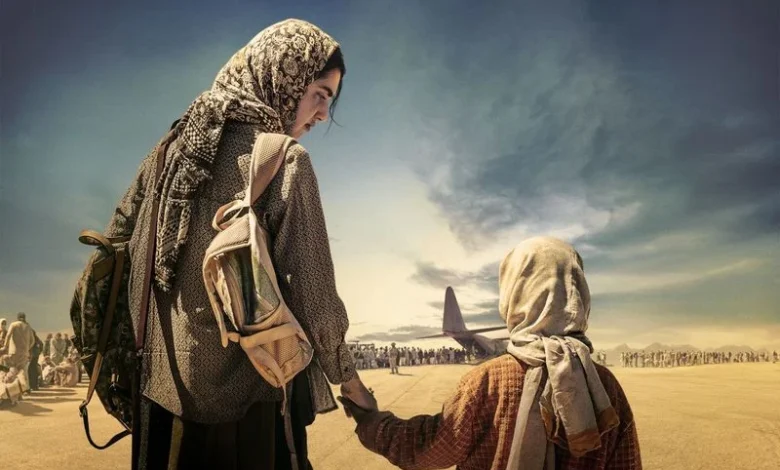
The Kabul series, a co-production by Mediawan for the European Alliance of broadcasters – comprising ZDF, Rai, and France Télévisions – plunges viewers directly into the heart of the cataclysmic withdrawal of American troops from Afghanistan and the swift, brutal seizure of Kabul by the Taliban. The narrative focuses on the plight of the Nazany family, an ordinary Afghan family caught in the crossfire, who, like millions of their compatriots, are forced to confront the terrifying prospect of retaliation and the complete collapse of their way of life.
The series masterfully captures the palpable fear and desperation that gripped the city as the Taliban advanced. Amidst this unfolding tragedy, the looming threat of attacks by ISIS adds another layer of extreme peril, amplifying the urgency of the unfolding humanitarian crisis. In this maelstrom of fear and uncertainty, a diverse coalition of international personnel – including French police officers, Italian diplomats, German military personnel, and American intelligence services – find themselves in a desperate race against time. Their mission: to coordinate a complex and perilous operation to manage the unprecedented influx of civilians desperately seeking escape from the encroaching darkness.
Eric Dane’s Final Performance: A Legacy Remembered
In Kabul, Eric Dane delivers a performance as Martin, a character whose role is central to navigating the complex international efforts during the evacuation. Dane, widely celebrated for his impactful roles in Euphoria and the long-running medical drama Grey’s Anatomy, passed away earlier this year, making his presence in Kabul a poignant and significant contribution to the series. His inclusion adds an emotional depth and resonance to the drama, ensuring his talent continues to be celebrated.
The international cast assembled for Kabul is a testament to the global scope and ambition of the production. Alongside Dane, the series features a constellation of accomplished actors, including Darina Al Joundi (The New Look), Shervin Alenabi (Tehran), Vassilis Koukalani (Kandahar), Hannah Abdoh, Jonathan Zaccaï (Le bureau des legends), Gianmarco Saurino (L’estate piu Calda), and Jeanne Goursaud (Pax Massilia). This diverse ensemble brings a wealth of experience and authentic portrayals to the complex web of human stories at the core of the series.
The European Alliance and the BBC’s Role
Kabul is a product of Mediawan’s extensive production capabilities, with global sales managed by Mediawan Rights. The series is a flagship production for the European Alliance of broadcasters, a collaborative initiative designed to foster high-quality, pan-European television content. While the BBC is not a formal member of this alliance, its involvement in Kabul follows a precedent set by its participation in previous co-productions, such as the acclaimed adaptation of Around the World in 80 Days. This demonstrates the BBC’s commitment to bringing compelling international narratives to its audience.
Nick Lee, Head of BBC Programme Acquisition, articulated the profound significance of Kabul in a statement, emphasizing its tragic scope and immediate historical relevance. " Kabul is a tragedy of the highest stakes," Lee stated. "A warzone story which is propelled by the real ticking clock of the evacuation that was just five years ago this summer. Global politics remain complex, but Kabul dramatises the biggest view of history through the smallest window of a human family." His words underscore the series’ dual focus: the grand sweep of geopolitical upheaval and the intimate, devastating impact on individual lives.
A Chronology of Crisis: The August 2021 Evacuation
To fully appreciate the dramatic backdrop of Kabul, understanding the chronology of the 2021 Afghanistan crisis is essential. The series’ narrative is directly informed by these real-world events:
- April 14, 2021: President Joe Biden announces the withdrawal of all U.S. troops from Afghanistan by September 11, 2021, marking the end of a 20-year military presence.
- May 2021 onwards: As U.S. and NATO forces withdraw, the Taliban launches a rapid and highly effective offensive across the country, capturing territory at an astonishing pace.
- August 6, 2021: The Taliban captures its first provincial capital, Zaranj, in the southwestern province of Nimruz. This marks the beginning of a swift collapse of Afghan government forces.
- August 13-14, 2021: The Taliban encircles and captures Kandahar and Herat, the country’s second and third-largest cities. Intense fighting erupts in and around the capital.
- August 15, 2021: The Taliban enters Kabul with little resistance. Afghan President Ashraf Ghani flees the country, leaving a power vacuum. This date is widely considered the effective fall of Kabul.
- August 16-30, 2021: In the immediate aftermath of the Taliban takeover, a frantic and unprecedented evacuation effort is launched by the U.S., UK, and other allied nations. Airports and border crossings become scenes of immense desperation as thousands of Afghans attempt to flee the country, fearing for their lives under the new regime. This period is characterized by chaotic scenes, overwhelming numbers of evacuees, and the constant threat of further violence, including the devastating August 26th bombing at Hamid Karzai International Airport claimed by ISIS-K. The final U.S. troops depart on August 30th, officially ending the U.S. military mission.
The Kabul series is set against the backdrop of this critical period, particularly the intense final days of the evacuation. The fictional Nazany family’s struggle to escape, alongside the international efforts to facilitate evacuations, directly mirrors the real-life harrowing experiences of thousands.
Supporting Data and Context: The Human Cost of Conflict
The events depicted in Kabul are not merely geopolitical shifts; they represent a profound human tragedy with far-reaching consequences. The U.S. withdrawal and subsequent Taliban takeover led to a severe humanitarian crisis:
- Displacement: Millions of Afghans were displaced internally, and hundreds of thousands sought refuge in neighboring countries and beyond. The United Nations High Commissioner for Refugees (UNHCR) has consistently highlighted the scale of displacement in Afghanistan, exacerbated by decades of conflict and instability.
- Economic Collapse: Following the Taliban’s return to power, Afghanistan’s economy faced a severe downturn. International sanctions, the freezing of Afghan central bank assets, and the suspension of much foreign aid led to widespread poverty, food insecurity, and a collapse of public services.
- Human Rights Concerns: The Taliban’s return has raised serious concerns about human rights, particularly for women and girls, who have seen significant restrictions imposed on their freedoms, education, and employment. Minority groups also face increased vulnerability.
- Security Landscape: While the immediate end of the U.S. war brought a reduction in direct combat casualties, the rise of groups like ISIS-K has introduced new security threats, creating a complex and volatile environment.
The series Kabul aims to bring these statistics and broad trends to life through compelling individual narratives, illustrating the immense human cost of such profound political and social upheaval.
Creative Vision: Directorial and Writing Team
The artistic vision behind Kabul is shaped by a talented team of directors and writers. The series was directed by Kasia Adamik (No Escape) and Olga Chajdas (Imago), known for their nuanced storytelling and ability to capture intense emotional landscapes. The screenplay was penned by Olivier Demangel (Class Act), Thomas Finkielkraut (Baron Noir), and Joey Lavy (The Shift), a writing team with a proven track record in crafting complex, character-driven dramas. The production was overseen by producers Fabienne Servan-Schreiber and Charlotte Ortiz at Cinétévé, Matthias Weber and Thibault Gast at 24 25 Films, with Sandrine Paquot serving as executive producer. This collaborative effort ensures a high standard of cinematic quality and narrative integrity.
Broader Implications and Analysis
The acquisition of Kabul by the BBC and its inclusion in the European Alliance programming signals a growing trend towards co-produced, internationally relevant dramas that tackle contemporary global issues. The series offers a critical lens through which to examine:
- The Nature of Modern Warfare and Intervention: Kabul implicitly explores the complexities and often unforeseen consequences of prolonged military interventions and rapid withdrawals. It prompts questions about the effectiveness of nation-building efforts and the challenges of imposing external political structures.
- The Resilience of the Human Spirit: Despite the overwhelming despair and chaos depicted, the narrative is likely to highlight the extraordinary resilience, courage, and adaptability of ordinary civilians caught in extraordinary circumstances. The struggle for survival and the pursuit of safety will be central themes.
- International Cooperation and Diplomacy: The series showcases the often-fraught but essential efforts of international actors to manage humanitarian crises. It underscores the challenges of coordinating diverse national interests and resources in the face of overwhelming need.
- The Power of Storytelling in Geopolitical Contexts: By dramatizing the events of 2021, Kabul provides a vital platform for understanding the human dimension of a major geopolitical event that continues to shape global affairs. It allows audiences to connect with the crisis on a personal level, fostering empathy and a deeper understanding of the complexities involved.
As Kabul prepares to premiere on the BBC next month, it stands as a testament to the power of television to illuminate critical historical moments, honor the legacies of artists like Eric Dane, and foster a more profound global understanding of the human impact of conflict and political transition. The series promises to be a significant and thought-provoking addition to the television landscape, offering a vital perspective on one of the most defining events of the early 21st century.