The persistent human fascination with the cosmos reached a fever pitch following a rapid succession of high-profile announcements concerning potential extraterrestrial biosignatures. In the span of several months, prominent research institutions and space agencies presented findings that captured global media attention, painting a picture of an imminent breakthrough in the search for life beyond Earth. However, while headlines frequently invoke monolithic declarations of what "science says," a closer examination of expert consensus reveals a far more nuanced, cautious, and divided scientific reality.
To bridge the gap between media narratives and expert opinion, a team of researchers recently conducted a systematic evaluation of the astrobiology community. The findings challenge the binary framing often presented to the public, offering a window into how scientists process uncertainty, weigh ambiguous data, and respond to paradigm-shifting claims.
A Chronology of Major 2025 Biosignature Claims
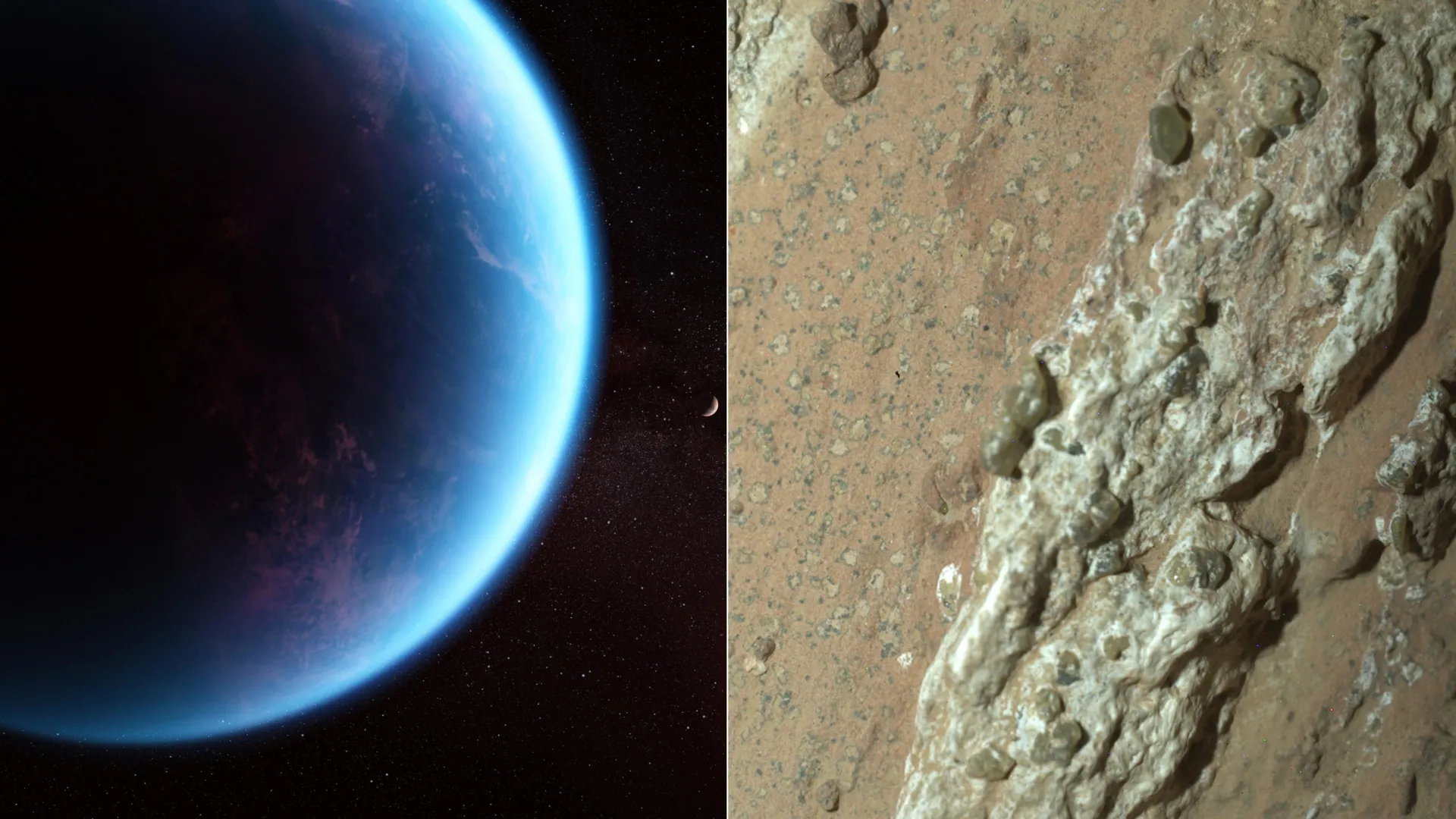
The modern wave of excitement began in earnest in early 2025, centering on the distant exoplanet K2-18b. Located roughly 120 light-years away in the constellation Leo, the sub-Neptune planet has long been a target for atmospheric characterization. In April 2025, an international team of astronomers published a study in Astrophysical Journal Letters detailing observational data gathered by the James Webb Space Telescope (JWST). The data suggested the presence of carbon-bearing molecules, specifically noting potential traces of dimethyl sulfide (DMS) and dimethyl disulfide (DMDS). On Earth, these volatile sulfur compounds are almost exclusively produced by living organisms, primarily marine phytoplankton.
The announcement triggered widespread media coverage. Prominent university press releases and science journalists framed the detection as potentially the strongest indirect hint of biological activity ever observed on a world outside our solar system.
Just months later, attention shifted closer to home. In September 2025, NASA’s Perseverance rover made headlines from the Jezero Crater on Mars. Scientists operating the mission announced that a rock sample nicknamed "Cheyava Falls" displayed striking physical characteristics: distinct, light-colored mineral rings featuring dark rims, colloquially dubbed "leopard spots." On Earth, similar chemical patterns and mineral configurations are frequently formed by microbial metabolic processes that alter rock chemistry.
During a formal NASA briefing, agency leadership characterized the discovery as the closest humanity had ever come to identifying a definitive biosignature on the Red Planet. The confluence of these two announcements created an unprecedented atmosphere of anticipation, reinforcing the public perception that the discovery of alien life was just around the corner.
Quantifying Expert Opinion: The Astrobiology Survey
Despite the celebratory tone of press briefings and news outlets, the broader scientific community’s reaction was largely undocumented until researchers at Durham University’s Centre for Scientific Community Opinion Polling and Evaluation (C-Scope) initiated a systematic inquiry. Within days of each major announcement, the research team surveyed hundreds of astrobiologists worldwide to gauge professional confidence regarding the validity of the claims.
The results painted a starkly conservative picture of expert consensus. When asked whether scientists had probably found extraterrestrial life on K2-18b, a mere 6.6% of surveyed astrobiologists answered in the affirmative. Nearly two-thirds (roughly 66%) explicitly disagreed with the interpretation that life had been detected, while 28.0% adopted a neutral stance, indicating that the data were fundamentally inconclusive.
When evaluated against the Mars Cheyava Falls discovery, confidence levels shifted upward, though caution remained the dominant posture. Approximately 15.1% of surveyed experts agreed that the Martian sample likely represented evidence of past life. Disagreement dropped significantly to 44.6%, while the proportion of neutral responses rose to 40.3%.
A deeper statistical breakdown revealed a vital trend that simple agreement-versus-disagreement metrics obscure. While outright rejection of the K2-18b claim was high—with 35.1% of respondents strongly disagreeing—strong disagreement plummeted to just 11.1% in the case of Mars. Rather than shifting from "no" to "yes," expert opinion migrated from outright skepticism toward a more open, yet fundamentally tentative, middle ground.
Differentiating Remote Atmospheres from In-Situ Geology
The disparity in how astrobiologists evaluated the two discoveries highlights the complex nature of biosignature detection. The K2-18b finding relied entirely on transmission spectroscopy—analyzing starlight filtered through the planet’s distant atmosphere. While mathematically rigorous, remote sensing introduces immense variables, including potential false positives driven by photochemical reactions that do not require biological catalysts.
Conversely, the Mars sample offered physical proximity. Perseverance was able to drill into the Cheyava Falls rock, utilizing onboard spectrometers and microscopic imagers to examine mineral structures in fine detail. Yet, even with direct physical access, planetary scientists are acutely aware of the phenomenon known as false biosignatures. Decades of geological research have demonstrated that non-biological, abiotic processes—such as serpentinization, hydrothermal alteration, and mineral precipitation—can mimic the intricate patterns and chemical signatures left behind by ancient microbes.
Consequently, the primary challenge in astrobiology is rarely imagining how an alien biosphere could generate a specific signal; rather, it is exhaustively ruling out every conceivable geological, chemical, or physical mechanism that could produce the same result naturally.
The Flaws of Binary Scientific Discourse
The disconnect between public perception and expert opinion exposes a systemic issue in how scientific breakthroughs are communicated to society. Modern media and public policy discussions routinely rely on binary constructs, treating complex fields as monolithic entities that either endorse or reject a hypothesis. Phrases like "the science says" or "researchers believe" imply a definitive consensus that rarely exists in real-time as new, ambiguous data emerge.
When surveys reveal large neutral blocs—such as the 28% and 40% seen in the astrobiology polls—it signifies more than mere indecision. It often reflects a mature methodological humility. Scientists may view the data as genuinely preliminary, recognize that variables are poorly constrained, or deem the hypothesis too speculative to support definitively either way. Flattening these nuanced gradations into a simple "pro-alien" or "anti-alien" dichotomy undermines public scientific literacy and sets unrealistic expectations for the pace of empirical discovery.
Broader Implications Beyond Astrobiology
The necessity of accurately measuring expert opinion extends far beyond the search for microbial life. In fields characterized by high uncertainty and rapid developments—such as climate modeling, epidemiological forecasting, artificial intelligence governance, and advanced medical therapeutics—public trust hinges on transparency regarding what the scientific community actually knows versus what remains speculative.
In many cases, systematic consensus tracking is absent, leaving public discourse vulnerable to the loudest voices, selective quotations, or institutional press releases designed to maximize visibility and funding. Initiatives like C-Scope represent a growing academic effort to introduce empirical rigor to the study of scientific consensus itself, ensuring that decision-makers and the public understand not just individual breakthroughs, but the collective confidence of the researchers behind them.
As humanity continues to push the boundaries of exploration—whether scanning distant exoplanetary atmospheres or analyzing core samples from neighboring worlds—the path to discovery will inevitably be paved with ambiguity, debate, and incremental revision. Acknowledging this complexity does not diminish the wonder of the scientific enterprise; rather, it honors the rigorous skepticism required to truly understand our place in the universe.