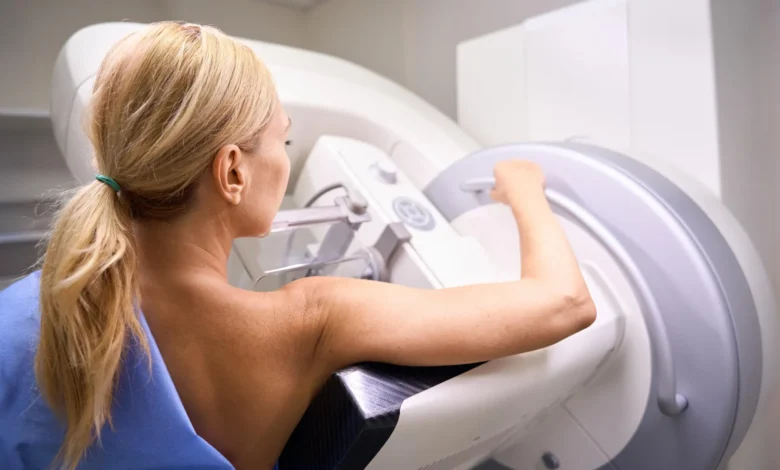
Breast cancer screening has long been viewed as a cornerstone of modern public health oncology, designed to catch malignancies before they progress into life-threatening conditions. However, the medical community has grappled for decades with an unintended side effect of widespread detection known as overdiagnosis. This phenomenon occurs when a mammogram identifies a tumor that is indolent, meaning it would never have grown, caused symptoms, or threatened a patient’s life had it been left undiscovered. Historically, some randomized controlled trials estimated that between 30% and 50% of all breast cancers detected through routine screening fell into this category, generating intense international debate over the true cost-benefit ratio of population-wide screening programs.
Now, a major new collaborative study published by an international team of epidemiologists and researchers is challenging those high figures. By reassessing historical data from all major randomized mammography trials and comparing them with real-world public health data from Denmark, the research team has concluded that the true rate of overdiagnosis is likely below 5%. This dramatic downward revision promises to reshape international clinical guidelines, influence public health communication, and alleviate patient anxiety surrounding unnecessary treatments.
Main Facts and the Core Findings of the New Study
The core revelation of the study centers on a methodological re-evaluation of historical data. For years, medical statisticians relied on early randomized controlled trials to gauge the prevalence of overdiagnosis. According to the new findings, these earlier estimates were significantly skewed because they failed to fully account for the temporal dynamics of cancer detection—specifically, how the introduction of screening temporarily spikes diagnosis rates before long-term balancing occurs.
When the researchers mapped the data from all eight historical randomized trials against modern, real-world reference data from Denmark—where regional rollout variations created a natural laboratory spanning decades—the numbers aligned differently. The additional cancer cases detected in the historical trials closely mirrored the patterns observed in Denmark, where the established overdiagnosis rate sits well beneath 5%.
According to lead researchers including Professor Sisse Helle Njor from the University of Southern Denmark and Lillebælt Hospital, Senior Epidemiologist Matejka Rebolj from Queen Mary University of London, and Professor Emerita Elsebeth Lynge from the University of Copenhagen, the wide divergence between historical trials and modern reality comes down to trial maturity and post-trial screening contamination.
A Detailed Chronology of Mammography Trials and Public Health Evolution
To understand how the medical community arrived at historical estimates of up to 50% overdiagnosis, it is essential to examine the chronology of breast cancer screening research.
The journey of population-based mammography began in the mid-20th century. Between the 1960s and 1990s, several landmark randomized controlled trials were launched globally to determine whether routine X-ray imaging could reduce breast cancer mortality. These foundational studies included:
- The Health Insurance Plan (HIP) of Greater New York trial, initiated in the 1960s.
- The Malmö Mammography Screening Trial in Sweden, starting in the mid-1970s.
- The Two-County Trial in Sweden, also launched in the late 1970s.
- The Edinburgh Trial in the United Kingdom, initiated in the 1970s.
- The Canadian National Breast Screening Study, launched in the 1980s.
- The Stockholm and Gothenburg trials in Sweden during the 1980s.
- The UK Age Trial, which commenced in the 1990s.
During the execution and initial follow-up periods of these trials, researchers observed a sharp spike in breast cancer incidence immediately following the introduction of screening. In a closed study environment, statisticians expected that this initial surge of early detections would eventually be followed by a noticeable deficit in diagnoses years later, as the pool of advanced cancers was depleted.
However, many of these historical trials concluded or published their primary assessments before that long-term balancing deficit could fully materialize. Furthermore, women randomized into control groups frequently gained access to mammography outside the trial parameters as screening became commercially available, further muddying the statistical waters. Without accounting for these confounding factors, statisticians decades ago interpreted the early diagnostic spikes as massive overdiagnosis, leading to the widely cited 30% to 50% benchmarks that have influenced healthcare policy for generations.
The Danish Reference Model and Real-World Validation
To correct for these historical distortions, the research team turned to Denmark as an empirical touchstone. Denmark provided a uniquely valuable real-world dataset because organized, regional breast cancer screening programs were rolled out incrementally, with some geographical areas launching screening programs 17 years earlier than others.
This staggered implementation created a robust epidemiological framework. It allowed researchers to track precisely how breast cancer incidence shifted immediately following the introduction of screening and how those curves flattened, inverted, and evolved over a period spanning decades.
By comparing breast cancer incidence at matching chronological points in time between the historical randomized trials and Denmark’s routine screening programs, the team could isolate the true variables at play. They examined both invasive breast cancer and ductal carcinoma in situ (DCIS)—an early, non-invasive form of abnormal cell growth in the milk ducts that is frequently caught on mammograms and heavily debated regarding its clinical trajectory.
The analysis revealed that when trial data are evaluated with full consideration of timing, lead time bias, and post-trial screening contamination, the data naturally reconcile. The mathematical models point consistently to an overdiagnosis rate of less than 5%.
Supporting Data and Methodological Parameters
The study’s comprehensive re-analysis encompassed all eight major randomized mammography trials conducted globally, integrating thousands of patient outcomes across diverse healthcare systems. The investigative team specifically focused on three primary distortion factors that historically plagued overdiagnosis calculations:
- Lead-Time and Shift Effects: Mammography advances the date of diagnosis. When a screening program starts, it immediately pulls future cancer diagnoses into the present, creating a transient surge in incidence numbers. If follow-up intervals are too short, this statistical shift is misattributed to overdiagnosis.
- Contamination of Control Groups: In many historical trials, women assigned to the control group eventually received mammograms through opportunistic screening programs as the technology commercialized. This narrowed the mortality and incidence gap between study arms, skewing relative risk calculations.
- Trial Maturity and Duration: Insufficient observation windows failed to capture the natural compensatory drop in advanced cancer diagnoses that must logically follow an early diagnostic spike.
By systematically stripping away these methodological artifacts, the researchers established that the spectral phantom of widespread overdiagnosis was largely a byproduct of premature data interpretation rather than biological reality.
Official Responses and Expert Perspectives from the Medical Community
The publication of these findings has prompted thoughtful reactions from public health officials, epidemiologists, and oncology specialists worldwide.
"The aim of our study was to bring together the evidence from all randomized controlled trials to get a clearer picture of the extent of overdiagnosis in breast cancer screening," noted Professor Sisse Helle Njor. "Randomized trials have often been cited as evidence that overdiagnosis is a substantial problem. Our study shows that this interpretation is not as straightforward as it may seem."
The implications of correcting this narrative are profound for how physicians counsel patients. For decades, oncologists and primary care physicians have had to navigate uneasy conversations with patients who expressed fear not only of developing cancer, but of undergoing aggressive medical interventions—such as surgery, radiation, or hormone therapy—for tumors that might never have harmed them.
"Taken together, we believe some previous high estimates of overdiagnosis, which influenced screening guidelines and communication, were based on evidence before trial data had fully matured," explained Senior Epidemiologist Matejka Rebolj. "When interpreted in their full temporal context, randomized trial data are consistent with overdiagnosis of less than five percent, rather than with estimates nearing 50%."
Professor Emerita Elsebeth Lynge emphasized the mechanics of the diagnostic shift: "When screening is introduced, the number of breast cancer diagnoses initially rises because cancers are detected earlier than they would have been without screening. Over time, this should be followed by a drop, as some of these cancers would otherwise have been diagnosed later. If researchers do not take these factors into account, the initial increase can be mistaken for overdiagnosis."
Broader Impact, Clinical Implications, and Patient Guidance
The resolution of this decades-long scientific debate carries significant weight for women navigating preventative healthcare decisions. While the vast majority of women participating in screening programs will not develop breast cancer, the psychological barrier of potential overdiagnosis has occasionally deterred participation.
Public health advocates hope that resetting the overdiagnosis baseline to under 5% will provide definitive reassurance. By confirming that the risk of unnecessary treatment is exceptionally low, healthcare providers can place renewed emphasis on the proven, life-saving benefits of early detection. Detecting breast cancer in its nascent stages drastically reduces premature mortality, simplifies treatment regimens, and preserves patient quality of life.
Furthermore, this study provides a standardized analytical framework for future evaluations of emerging screening technologies—such as 3D mammography (tomosynthesis), automated breast ultrasound, and AI-driven diagnostic tools. Ensuring that overdiagnosis metrics are calculated with temporal maturity and methodological rigor will prevent similar panics or overestimations in future oncology advancements.
Funding for this pivotal research was provided by prominent scientific institutions, with Casper Urth Pedersen supported by the Novo Nordisk Foundation and Matejka Rebolj supported by Cancer Research UK, underscoring the international collaborative effort required to untangle one of modern medicine’s most persistent statistical puzzles.
Ultimately, this rigorous reappraisal bridges a historic gap between trial data and real-world outcomes, offering a clearer, more reassuring path forward for both medical professionals and the millions of women relying on routine mammography to safeguard their health.