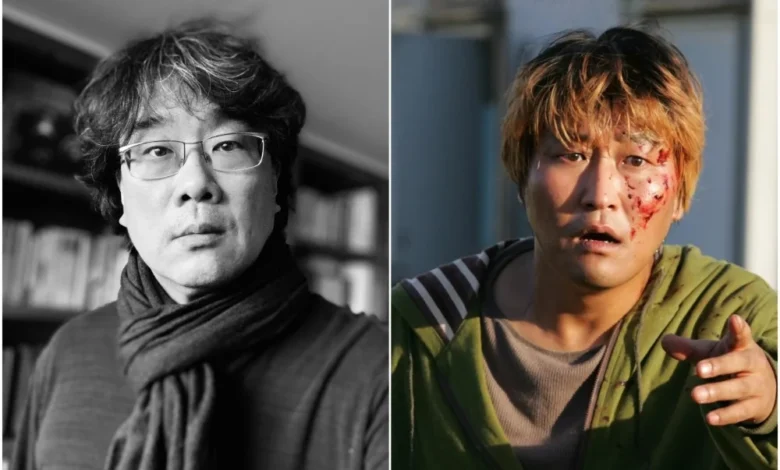
Two decades after it first captivated international audiences and redefined the modern monster movie, Oscar-winning director Bong Joon Ho’s genre-defying masterpiece The Host is returning to the big screen. Magnolia Pictures has announced a nationwide theatrical re-release of the film, featuring a meticulous 4K restoration that hits theaters on November 20. The special event release will also feature exclusive screenings on November 21 and 23, accompanied by an in-depth, pre-recorded conversation between Bong and acclaimed filmmaker Edgar Wright.
For Bong, the milestone serves as both a nostalgic look backward and a sobering reminder of how cyclical global politics can be. Reflecting on the film’s longevity, the director expressed astonishment at the passage of time. "I can’t believe it’s been 20 years since the release of the film. Time flies," Bong noted in an interview. However, beyond the technical achievements of the new print, the auteur is struck by how the thematic underpinnings of his 2006 hit have only sharpened with age, mirroring contemporary political fractures and global crises.
Plot Overview and Production History
Originally premiering at the 2006 Cannes Film Festival to widespread critical acclaim, The Host blends dark family comedy, sharp political satire, and creature-feature horror. The narrative centers on Gang-du, played by frequent Bong collaborator Song Kang-ho, a hapless man who dozes off on the job at his modest snack kiosk beside Seoul’s bustling Han River.
Chaos erupts when a grotesque, mutant creature crawls out of the murky water, rampages through terrified crowds on the riverbank, and abducts Gang-du’s schoolgirl daughter, Hyun-seo, portrayed by Ko A-sung. Soon after, authorities declare the monster to be the primary carrier of an unknown, highly contagious virus. When Gang-du receives a desperate phone call from Hyun-seo, confirming she is alive inside a quarantined military zone, he and his estranged family members—played by veteran actor Byun Hee-bong, Park Hae-il, and Bae Doo-na—embark on a perilous, unauthorized mission to breach the sealed-off riverbanks and rescue her.
The production was a massive undertaking for its time. New Zealand’s renowned Weta Workshop crafted detailed physical models of the creature, while visual effects house The Orphanage handled digital animation and compositing. The collaborative international effort resulted in a creature that felt tactile, terrifying, and deeply integrated into the gritty urban landscape of Seoul.
The Satire of Official Misinformation
While framed as a monster movie, The Host was born out of very real-world anxieties. Bong wrote the screenplay with the global SARS outbreak in mind, channeling public fear and institutional paranoia. Crucially, the film includes a pointed satirical sequence in which lawmakers concede that the supposed virus spreading across South Korea was entirely fabricated—a direct nod to the geopolitical misinformation campaigns surrounding the Iraq War, which was launched under the false pretext of uncovering weapons of mass destruction.
Two decades later, Bong observes that humanity has cycled through further public health emergencies, including the COVID-19 pandemic, alongside a continuous cascade of modern military conflicts.
"Now we’re in the thick of ongoing conflicts, and whether it’s good history or bad history, it seems like we as a community, as a whole, are repeating our mistakes," Bong reflected. "Although the film has stayed the same, the history is repeating itself and making the film relevant again."
The Technical Restoration Process
The impetus behind the 4K restoration was not merely to modernize the image for digital projectors, but to faithfully recreate the organic texture of a fresh 35mm film print as it appeared at Cannes in 2006. Notably, The Host was shot on Fuji photographic stock rather than the industry-standard Kodak. Working alongside cinematographer Kim Hyung-ku, Bong sought to resurrect the distinct, subtle color palette and grain structure characteristic of that specific film stock.
"Ironically, we were using digital technology to enhance the film look of the movie," Bong explained. Because the visual effects were originally executed in 2005 and 2006—long before 4K workflows became standard—those digital assets had to be carefully upscaled. The restoration team dedicated significant effort to ensuring that the creature still blended seamlessly with the live-action actors and natural environments.
While viewing the newly remastered cut, Bong admitted he still notices minor imperfections in the CGI alongside artistic choices that leave him slightly dissatisfied. Yet, he harbors no desire to alter his past work.
"I believe that the film is a record of what I was as a filmmaker at the time, and so I do not have any wishes to correct that," he stated. "Just like we don’t edit or rewrite our journals, I feel like it should just be left as it is."
Bong revealed that he briefly entertained the impulse to excise a couple of shots—a temptation famously indulged by directors like Ridley Scott when revisiting Alien in 1979—ultimately deciding against it. "I also had that kind of impulse, but luckily I was able to hold myself back," Bong said, keeping the exact identity of those debated cuts a secret.
Sound Design and Immersive Audio
Audio engineering has always played a critical role in Bong’s filmography. For The Host, the sound work was completed at Livetone in Seoul, a studio where Bong has collaborated with the same sound supervisor for 25 years—a rare constant in an industry defined by shifting crews. The facility still houses the original sound library from the production.
The most demanding challenge of the original sound design was formulating the creature’s vocalizations. To achieve the haunting, amphibious roars of the monster, the sound team recorded and heavily processed the vocalizations of sea lions, blending them with raw vocal performances delivered by Korean actor Oh Dal-su.
While Bong’s more recent features, from Okja onward, have been mixed in advanced Dolby Atmos formats—including his history-making 2019 masterpiece Parasite, which won four Academy Awards including Best Picture—the director noted that a decision regarding whether the North American theatrical release of the restored film will feature a Dolby Atmos upgrade is still being finalized. Meanwhile, Bong has expressed little interest in remastering his post-Okja filmography, given that those projects were natively captured in 4K and finalized in immersive sound formats. He has, however, occasionally curated special black-and-white cuts of films like Mother and Parasite for festival screenings, expressing deep admiration for monochrome cinema.
Broader Impact and Future Projects
The re-release of The Host arrives at a fascinating juncture in Bong Joon Ho’s illustrious career. Following his groundbreaking sweep at the 92nd Academy Awards with Parasite—which shattered barriers as the first non-English-language film to win Best Picture—the director has maintained a diverse and ambitious production schedule.
Following his upcoming animated feature Ally, Bong is set to return to his cinematic roots. He has confirmed reports that he will pivot back to a slate of gritty crime and horror films, signaling a deliberate creative homecoming.
"I want to return home," Bong remarked regarding his upcoming genre projects.
As audiences prepare to experience The Host in theaters once more, the re-release offers a valuable cinematic lesson. Beyond its technical mastery and thrilling creature-feature mechanics, the film endures because it captures the timeless human anxieties surrounding institutional failure, familial devotion, and the stubborn persistence of truth in an era of misinformation. Through this 4K restoration, a modern classic is poised to terrify and provoke a brand-new generation of moviegoers.