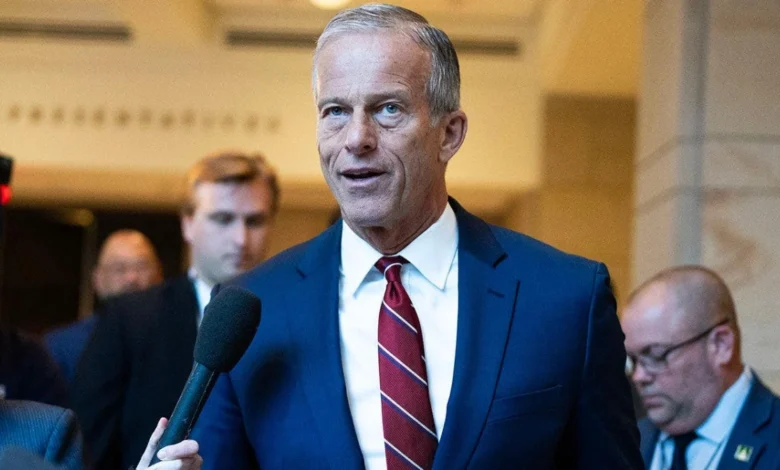
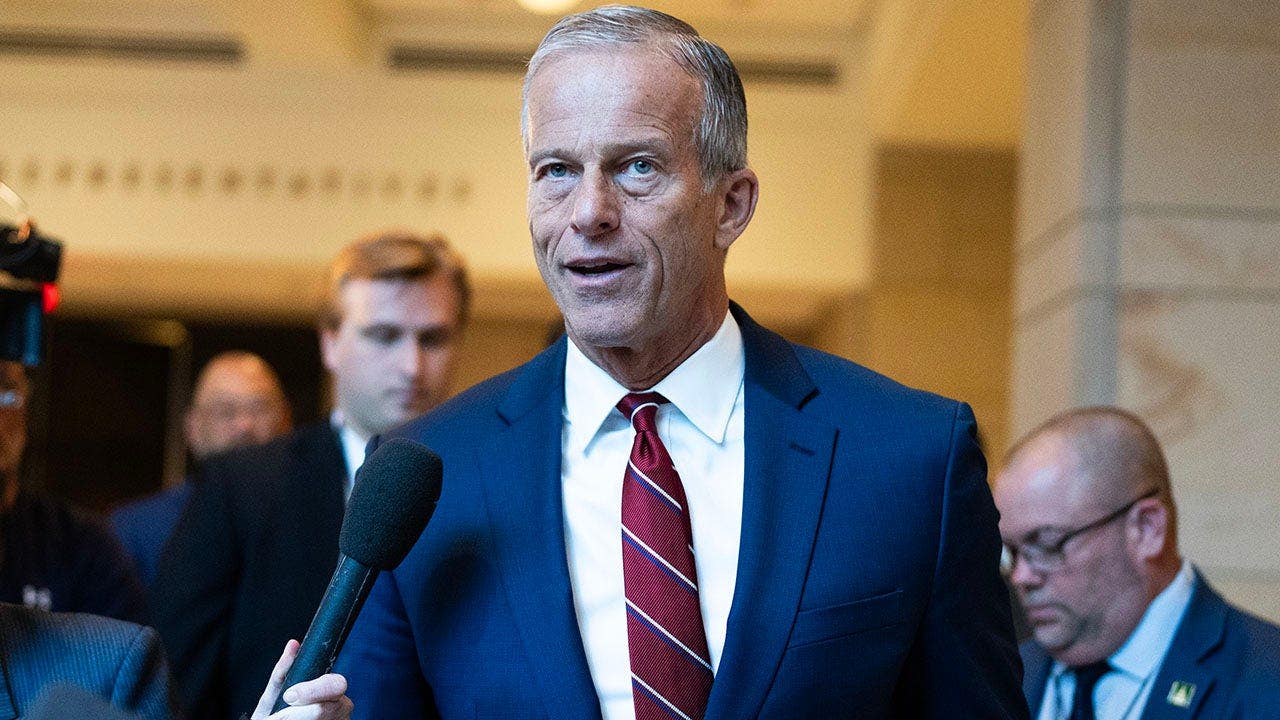
The United States Senate Republican Conference has reaffirmed its leadership structure, opting for continuity in the wake of a challenging midterm election cycle that saw the party face significant setbacks. Despite a concerted push from a cohort of conservative senators to delay leadership elections and conduct a formal autopsy of the party’s performance, Senate Majority Leader John Thune of South Dakota successfully secured another term at the helm of the GOP conference. The decision, finalized behind closed doors in the historic Old Senate Chamber, effectively silenced the calls for an immediate leadership shakeup, though the proceedings revealed deep-seated fractures within the party’s legislative strategy and ideological direction.
The seven-hour meeting served as a pressure cooker for a caucus reeling from electoral losses. While proponents of the status quo argued for stability during the precarious lame-duck session, a faction of senators—led by Ron Johnson of Wisconsin—insisted that the results of the midterms constituted a mandate for institutional change. The motion to delay the elections, which would have provided the caucus time to conduct a comprehensive post-mortem analysis of their legislative record, was ultimately defeated by a 31 to 15 vote.
A Chronology of the Leadership Showdown
The unrest within the Senate GOP began immediately following the certification of the midterm results. As the political landscape shifted, a group of senators, including Rick Scott of Florida, Ted Budd of North Carolina, Mike Lee of Utah, John Kennedy of Louisiana, Jim Banks of Indiana, and Dave McCormick of Pennsylvania, coalesced around the idea that the party could not move forward without a fundamental re-evaluation of its recent trajectory.
On the morning of the vote, the atmosphere in the Capitol was tense. Observers noted that the decision to hold the election in the Old Senate Chamber—a room typically reserved for ceremonial functions—symbolized the gravity of the internal debate. The meeting, which began in the morning, stretched well into the afternoon as members debated whether to proceed with an immediate vote or to pause for a deliberative session on policy and messaging.
By the time the vote was called to proceed, the opposition’s momentum had stalled. Without a formal alternative candidate presented to the caucus, the path for the existing leadership team, which includes the newly elected Bernie Moreno of Ohio, became clear. The secret ballot confirmed the party’s preference for maintaining the current structure, bringing an abrupt end to the organized rebellion.
The Anatomy of the Dissent
The dissenters, while unsuccessful in their bid to delay, provided a stark critique of the party’s current management. Senator Ron Johnson emphasized that his grievances were not rooted in personal animosity toward Senator Thune, but rather in a procedural and philosophical disagreement. "This has never been anything against John Thune," Johnson stated following the vote. "I think he has been very unfairly attacked by our base, and I don’t agree with that. What I didn’t agree with was holding the election right away, giving nobody an opportunity to really challenge any leadership position."
Johnson’s frustration was echoed by Senator Rick Scott, who has historically positioned himself as a challenger to the established leadership hierarchy. Scott argued that the Republican Party has failed to align its legislative actions with the expectations of its base. Scott’s proposed agenda for the party included a series of aggressive policy goals: implementing an ironclad schedule for confirming judicial nominees, curtailing the use of massive omnibus spending bills, instituting a ban on congressional stock trading, and prioritizing the National Defense Authorization Act (NDAA). Furthermore, he urged the party to revisit the SAVE America Act and pursue a balanced budget through the reconciliation process—a legislative tool that allows for expedited passage of certain budgetary measures.
Broader Policy Critiques and Congressional Performance
The internal debate transcended mere leadership roles, touching upon the substantive record of the Senate GOP over the past two years. Senator Josh Hawley of Missouri provided one of the most vocal critiques of the party’s recent legislative accomplishments, suggesting that the very actions the caucus touted as successes may have alienated the electorate.
Hawley pointed to specific policy outcomes that he argued were detrimental to the party’s standing with working-class voters. "When you cut Medicaid, but you fund data centers, when you cut rural hospital funding, but you fund Planned Parenthood, when you let the cost of healthcare for working people go through the roof, but you can’t do anything for them on other issues of affordability, from fertilizer to gas—yeah, you know what? The public doesn’t like that very much," Hawley said.
This sentiment underscores a growing rift between the establishment wing of the party, which often focuses on traditional legislative procedures and institutional norms, and the populist wing, which is increasingly focused on cultural grievances and the economic impact of federal spending.
Data and Political Implications
The context for this internal struggle is a set of midterm results that many Republicans characterize as a "disaster." The loss of key seats and the failure to make significant gains in critical battleground states have forced the party to confront the reality of its messaging.
Statistically, the Senate GOP entered this cycle with high hopes of securing a comfortable majority, buoyed by polling data that suggested widespread public dissatisfaction with the prevailing economic conditions, including inflation and energy costs. However, the inability of the party to translate these issues into broad electoral success has created a vacuum of accountability.
The defeat of the motion to delay the vote by a 31-15 margin suggests that while the dissenters represent a significant minority of the caucus, the majority remains committed to the current institutional path. This result provides a temporary sense of stability for the leadership, but it leaves the underlying policy disagreements unresolved.

The Road Ahead: The Lame-Duck Challenge
The Senate now enters a "brutal" lame-duck session, as characterized by some members, with a heavy legislative calendar and a looming government funding deadline. The leadership will be tasked with navigating these final weeks of the session while attempting to unify a caucus that has publicly aired its grievances.
The immediate priorities include:
- Government Funding: Preventing a federal government shutdown by reaching a compromise on spending legislation.
- Judicial Confirmations: Managing the pipeline of judicial nominees in the final weeks of the current administration.
- Budgetary Reconciliation: Addressing the long-term fiscal trajectory of the federal government, a point of contention for conservative hardliners.
The failure to delay the leadership election means that there will be no immediate change in the party’s negotiation strategy. The leadership team will continue to operate under the assumption that their current approach to legislative compromise is the most viable path forward. However, the vocal opposition from senators like Johnson, Scott, and Hawley suggests that any future legislative maneuvering will be subject to intense internal scrutiny.
Analysis of Party Cohesion
The outcome of the leadership vote highlights a persistent challenge for the Republican Party in the post-midterm era: reconciling the demands of its diverse ideological base with the requirements of effective governance. While the "rebellion" failed to unseat leadership, the intensity of the debate suggests that the party is in the midst of a transition period.
The decision to stick with the status quo reflects a desire for continuity and a belief that, despite the electoral losses, the current leadership is best equipped to handle the complexities of the Senate. Yet, the public nature of the dissent indicates that the "family conversation" requested by Senator Hawley is likely to continue. Whether this internal debate leads to a shift in policy or remains a series of isolated protests will be a central theme of the next Congress.
As the Senate GOP moves into this next phase, the focus will shift from the personnel of the leadership to the substance of their output. The party’s ability to deliver on the priorities demanded by its vocal minority—such as addressing the omnibus spending process or taking a more aggressive stance on judicial and regulatory issues—will determine whether this leadership victory marks the start of a period of renewed focus or a continuation of the friction that defined the midterm election cycle. For now, the Senate GOP remains firmly in the hands of the established leadership, but the window for delivering on conservative promises has narrowed significantly, leaving little margin for error in the months ahead.