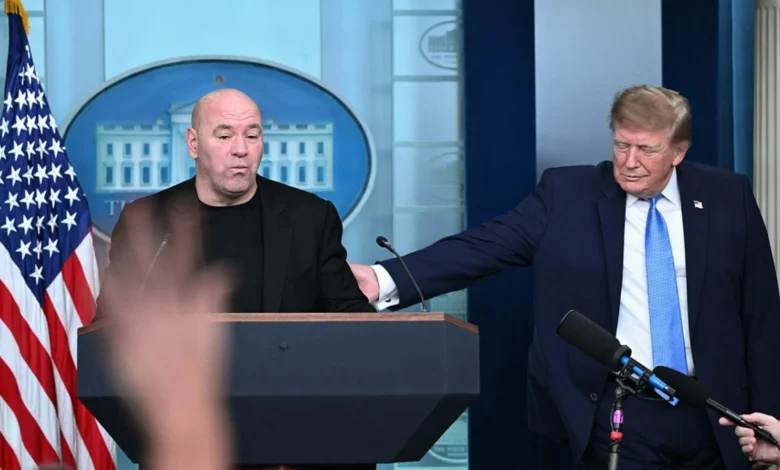
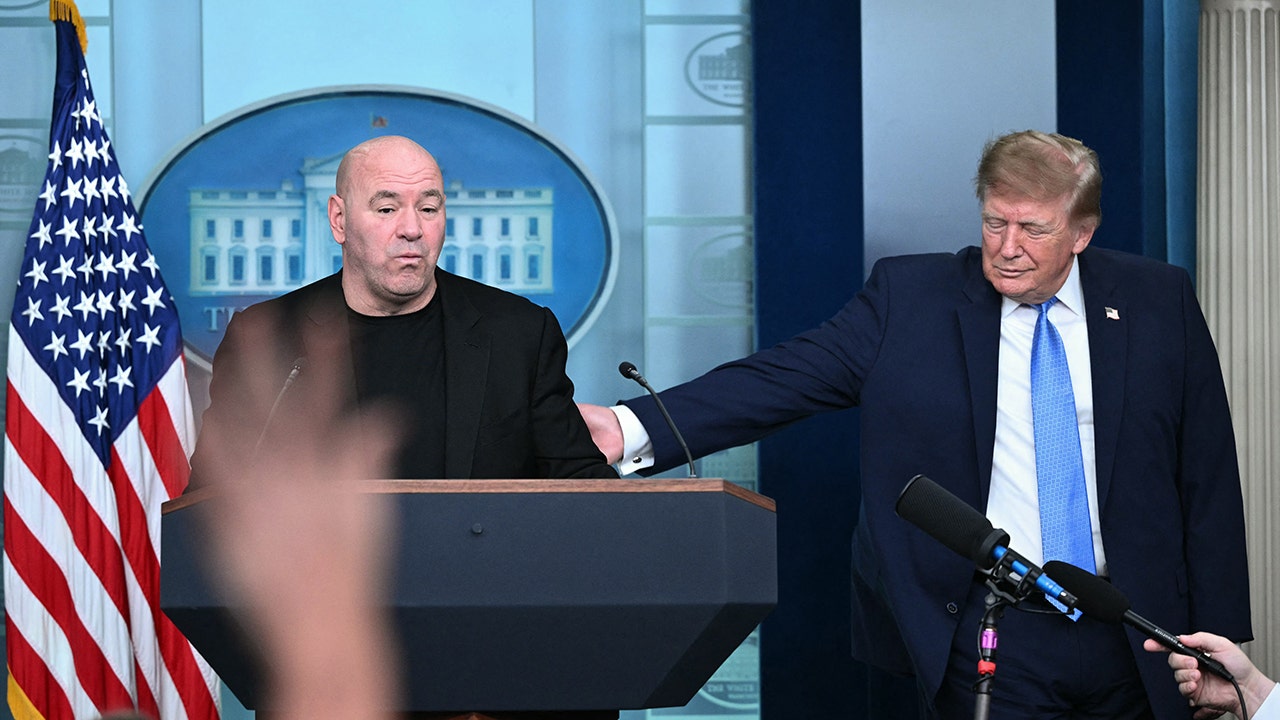
President Donald Trump addressed a swirl of speculation during a White House press briefing on Monday, officially clarifying that his recent public remarks concerning the appointment of UFC CEO Dana White as White House Press Secretary were intended as a lighthearted joke rather than a formal policy consideration. The clarification came as the President invited the longtime sports executive to join him at the podium, effectively silencing a news cycle that had gained significant momentum over the preceding 24 hours.
The President’s surprise appearance at the briefing was designed to provide a firsthand account of the origins of the rumor. According to the President, the comment was made during a period of frustration following a difficult day of media relations. "We were having a very bad press day, and I said: ‘I don’t know why I thought of his name.’ He’s been my friend for a long time," Trump told reporters. "I said: ‘You know, I think I’m going to get Dana White to be my new press secretary.’ I said it to a group of the press and that was it. I was sort of kidding, and then they wrote the story as though I wasn’t kidding."
The Chronology of a Viral Speculation
The speculation began following private conversations that were subsequently reported by media outlets as potential staffing shifts. Dana White, who was in London overseeing a Zuffa Boxing event when the reports surfaced, described the experience as a chaotic turn of events. Upon arriving at the White House for the briefing, White emphasized that he had no intention of transitioning into a government role.
"I have zero political aspirations," White stated clearly to the gathered press corps. "I was at a fight for Zuffa Boxing in London when he called me and told me that he had done this, and the last 24 hours of my life have been insane." White’s presence served to solidify the narrative that while the two men share a deep personal and professional bond, their working relationship remains firmly rooted in their respective industries of sports, entertainment, and politics, rather than an administrative integration.
The Dynamics of a Long-Standing Partnership
The friendship between Donald Trump and Dana White is well-documented, spanning over two decades. Their association predates the modern era of the UFC, with Trump having been one of the first major venue owners to open his properties to UFC events during the sport’s nascent years, when it faced significant regulatory hurdles and mainstream skepticism.
This historical support has fostered a loyalty that remains evident in their public interactions. When asked by a reporter to evaluate a hypothetical scenario involving a cage match between President Trump and former President Joe Biden, White pivoted to a more somber assessment of the President’s character.
"He’s the toughest, most resilient human being that I’ve ever met in my entire life," White said, reflecting on his observations of Trump over the past decade. "Many times during the last eight or 10 years, I have told him: ‘Why? Why do you keep doing this?’ But as tough and as resilient as I thought he was, after he got shot, he proved he is a one-of-one unique human being."
White’s comments highlight the personal resonance of the assassination attempt on the President and how that event solidified his standing among his inner circle. When pressed further on the hypothetical physical confrontation, White dismissed the premise entirely, stating, "It would be very bad. Yeah, I think it would be very bad… I can’t believe you actually have questions for me."
Contextualizing the Press Secretary Role
The role of White House Press Secretary is one of the most visible and high-pressure positions in the executive branch. Historically, the position requires an individual to navigate complex policy agendas, manage an adversarial press corps, and maintain message discipline under constant scrutiny.

The brief flirtation with the idea of a non-traditional candidate like Dana White—who has built a reputation on high-stakes promotion, aggressive marketing, and a blunt communication style—reflects a growing trend in American politics where the lines between celebrity, media personality, and government official are increasingly blurred. While White is an expert in managing narratives for the UFC, the transition to the Brady Briefing Room would have represented a radical departure for any private-sector executive.
Broader Implications of the Briefing
The lighthearted nature of the briefing did not prevent the discussion from veering into policy territory. Following the clarification on his potential role, White was asked for his thoughts on the potential posthumous pardon of Pete Rose, the legendary Cincinnati Reds player who remained a controversial figure in Major League Baseball until his death in 2024.
Pete Rose, known as the "Hit King," was long barred from the National Baseball Hall of Fame due to his involvement in betting on baseball games. In 2025, MLB Commissioner Rob Manfred made the significant decision to remove Rose and 16 other deceased individuals from the permanently ineligible list, a move that sparked renewed debate regarding his legacy. President Trump reiterated his long-held view that a pardon or formal recognition of Rose’s career achievements is warranted, suggesting that the current status of the player’s legacy is a "disservice."
Fact-Based Analysis of Executive Communication
The events of the day underscore the power of the presidential "bully pulpit" and the speed at which off-the-cuff remarks can be interpreted as official policy. In the digital age, a joke made in a private setting or an informal meeting with the press can evolve into a global news story within minutes.
For the administration, the episode serves as a reminder of the heightened expectations for clarity. The fact that the President personally addressed the rumor at a formal briefing indicates a desire to manage the narrative surrounding his cabinet and staff appointments with precision. By bringing White to the podium, the President utilized a "trust, but verify" approach—allowing the subject of the rumor to confirm the reality of the situation personally.

Conclusion: The Intersection of Sports and Policy
The appearance of Dana White at the White House continues a tradition of the administration engaging with figures from the sports and entertainment worlds. However, this specific instance serves as a clear delineation between the President’s personal circle of advisors and the formal structure of his administration.
As the current administration continues to navigate its agenda, the role of the press secretary remains a critical component of its communications strategy. With the rumors of a celebrity appointment effectively put to rest, the focus of the executive office is expected to return to the pressing legislative and diplomatic matters that define the current term. The episode underscores the unique nature of the Trump presidency, where personal relationships with public figures often intersect with the formal functions of the White House, creating a political landscape that remains as unpredictable as the sports events that Dana White manages.
For observers of the American political system, the incident provides a case study in the evolution of modern political discourse—where the distinction between a personal quip and a formal announcement remains a constant point of friction, yet one that can be managed through direct communication and, when necessary, a touch of humor. Moving forward, the focus will likely remain on the administration’s policy goals, with the Dana White incident serving as a brief, albeit high-profile, detour in the national conversation.