In a significant leadership shift on Capitol Hill following a bruising midterm election cycle, House Republicans have elected hardline Ohio Congressman Jim Jordan as their next minority leader. Jordan secured a decisive 106-73 victory over current House Majority Leader Steve Scalise in a closed-door vote held on Tuesday. The outcome marks a definitive turn toward the party’s ideological wing as the Grand Old Party (GOP) prepares to cede control of the lower chamber to the Democrats in the upcoming year.
Jordan, who will assume his new post in January, replaces outgoing House Speaker Mike Johnson. Johnson previously announced that he would not seek the minority leadership post after Republicans lost their majority hold, clearing the path for an intense internal party contest. Jordan’s ascent underscores a broader strategic realignment for House Republicans as they recalibrate to operate as the minority opposition against a newly empowered Democratic majority led by presumptive Speaker Hakeem Jeffries.
Internal Dynamics and Leadership Contests
The closed-door leadership elections on Capitol Hill laid bare the deep fractures within the Republican caucus following a difficult midterm election cycle. While Jordan easily bested Scalise for the minority leader position, upper-chamber Republicans took a different path, re-electing Senator John Thune of South Dakota as Senate minority leader. Thune ran unopposed in a closed-door session as Senate Republicans strategized over how to regroup after losing further ground in the upper house, where Democrats are projected to hold at least a 10-seat majority in the new Congress.

Thune emphasized party unity following his reselection, stating, “We remain united in our commitment to advancing conservative priorities, working with President Trump and our colleagues in the House, and holding the line against Democrats’ efforts to enact their far-left, liberal agenda.”
Conversely, the Democratic caucus faces its own internal negotiations. Senate Majority Leader Chuck Schumer expressed confidence that he possesses the requisite votes to retain his leadership role. However, his path is not entirely frictionless. Independent Senator Bernie Sanders, who caucuses with the Democrats, publicly declared that he would not support Schumer, calling for a vigorous debate regarding the ideological trajectory of the party. First-term Michigan Senator Elissa Slotkin similarly withheld her endorsement, demanding a concrete and distinct strategic plan before committing her vote.
Jordan’s Background, Controversies, and Legislative Profile
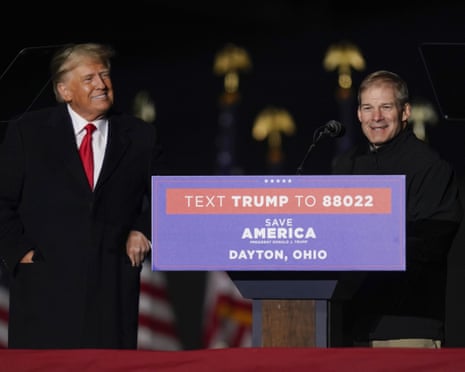
At 62 years of age, Jim Jordan has established himself over his two decades in Congress as one of the most pugnacious and uncompromising figures in American conservative politics. A founding member and former chair of the hardline House Freedom Caucus, Jordan has consistently operated as a fierce legislative ally to President Donald Trump. His tenure as chair of the House Judiciary Committee has been characterized by aggressive oversight, partisan investigations, and unwavering defense of the Trump administration.
Jordan’s political trajectory, however, is heavily intertwined with several high-profile national controversies. Following the 2020 presidential election, Jordan was a prominent amplifier of claims that the election had been stolen from Donald Trump. Investigative findings from the House committee that probed the January 6, 2021, attack on the US Capitol identified Jordan as a central figure in the administration’s multipronged efforts to contest and overturn the certification of the vote. Although subpoenaed by the committee, Jordan refused to comply, prompting a congressional ethics inquiry that ultimately concluded he had violated internal House conduct standards without issuing formal disciplinary penalties.
Furthermore, Jordan’s legacy faces persistent scrutiny stemming from his tenure as an assistant wrestling coach at Ohio State University between 1987 and 1995. During those years, Jordan worked alongside team doctor Richard Strauss, who was later accused of widespread sexual abuse. An independent 2019 report commissioned by the university concluded that Strauss had abused at least 177 male student-patients. While Jordan has consistently denied any personal awareness of Strauss’s actions, former wrestlers have publicly disputed his claims, arguing that leadership figures were directly informed of the misconduct at the time—allegations that critics argue cast a shadow over his fitness for high legislative office.
The Hegseth Impeachment Battle and Administration Friction
Simultaneously, the legislative branch is consumed by a high-stakes standoff concerning Defense Secretary Pete Hegseth. Outgoing Republican Representative Thomas Massie of Kentucky introduced eight articles of impeachment against Hegseth, citing alleged abuses of power, unauthorized military actions related to the ongoing war in Iran, and failures to adhere to the War Powers Resolution.
The impeachment push triggered an immediate and ferocious counter-offensive from the executive branch and congressional leadership. Hegseth convened a combative press conference at the Pentagon, branding the impeachment effort a “political spectacle” and a personal manifesto driven by a “disgruntled and defeated congressman.” Massie, an intra-party critic who lost his primary earlier this year, defended the measures, accusing the administration of deploying military assets to secure corporate oil interests and attempting to obscure the bombing of a school in Iran.
Top administration officials swiftly rallied behind the embattled defense secretary. Vice President JD Vance dismissed the impeachment proceedings on social media as an absurd waste of legislative energy, arguing that the effort was born out of frustration with Hegseth’s aggressive restructuring of the Pentagon bureaucracy rather than legitimate constitutional grievances. Outgoing House Speaker Mike Johnson echoed these sentiments, labeling the motion a “political gambit for attention” that sends a damaging signal to international allies and adversaries alike during a period of global conflict.

Broader Legislative Landscape and Oversight Implications
As Washington prepares for the transition of power in January, the intersection of a Democratic-led House, a Republican minority under Jordan’s leadership, and a tense executive branch sets the stage for severe legislative gridlock and intense investigative maneuvering.
House Democrats have signaled that they intend to maintain aggressive oversight, pointing to unresolved controversies such as the Department of Justice’s handling of investigations into the late convicted sex offender Jeffrey Epstein and his associate Ghislaine Maxwell. A recent 136-page report released by House Oversight Republicans criticized federal agencies for historic institutional failures that allegedly allowed Epstein’s trafficking operations to persist unchecked past 2005, while simultaneously clearing President Trump of any direct involvement. Democratic lawmakers, however, have dismissed the majority report as incomplete, vowing to press forward with public hearings and demands for unredacted documentation.
For Jim Jordan, the transition to minority leader demands a delicate strategic pivot. As the primary spokesperson for House Republicans, he will be tasked with rallying an 80-seat minority against a unified Democratic legislative majority while simultaneously managing the expectations of President Trump. Balancing legislative obstruction with the necessity of party unity will define Jordan’s leadership as the 110th Congress inaugurates a turbulent new chapter in American governance.