
Augmented Reality (AR) and Virtual Reality (VR) Technology: Transforming Industries and Human Experience
Augmented Reality (AR) and Virtual Reality (VR) represent two distinct yet increasingly converging branches of immersive technology, fundamentally reshaping how humans interact with digital information and simulated environments. AR overlays computer-generated imagery, audio, and other sensory data onto the real world, enhancing or augmenting the user’s perception. VR, conversely, creates entirely artificial, immersive digital environments that users can interact with, typically through specialized headsets that block out the real world. The core difference lies in their relationship with reality: AR adds to it, while VR replaces it. This distinction, however, belies the growing synergy between the two, with advancements in one often fueling progress in the other, leading to a proliferation of applications across a vast spectrum of industries.
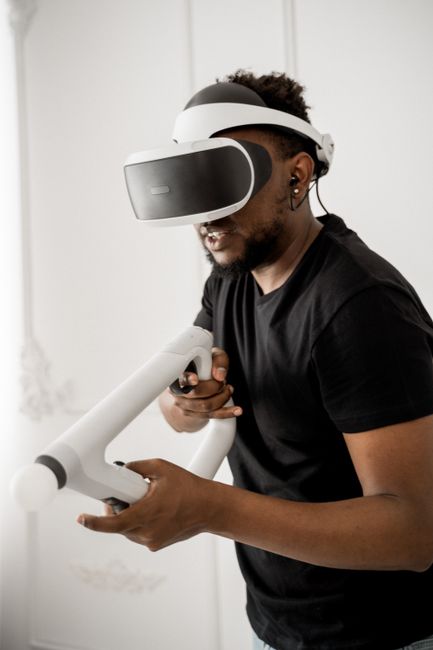
The foundational technology underpinning both AR and VR involves sophisticated hardware and software components. For VR, key hardware includes head-mounted displays (HMDs) that present stereoscopic images to create a sense of depth, often coupled with motion tracking systems that translate user movements into the virtual environment. Controllers, gloves, or even full-body suits provide input mechanisms for interaction. Display technologies are critical, with advancements in resolution, refresh rates, and field of view (FOV) directly impacting immersion and reducing motion sickness. Software development kits (SDKs) and game engines like Unity and Unreal Engine are essential for creating compelling VR experiences, enabling developers to build virtual worlds, script interactions, and optimize performance. For AR, the hardware landscape is more diverse, encompassing smartphones and tablets with integrated cameras and sensors, specialized AR glasses (e.g., Microsoft HoloLens, Magic Leap), and projection-based systems. Computer vision algorithms are paramount for AR, enabling devices to understand and map the real-world environment, recognize objects, and anchor virtual content accurately. Spatial mapping, SLAM (Simultaneous Localization and Mapping), and object recognition are critical functions that allow AR devices to perceive and interact with their surroundings. Software development for AR often involves frameworks like ARKit (Apple) and ARCore (Google), which provide tools for building AR applications on mobile platforms.
The applications of AR and VR are not confined to entertainment; they are proving to be transformative forces in numerous sectors. In education and training, VR offers unparalleled opportunities for experiential learning. Medical students can practice complex surgical procedures in risk-free virtual operating rooms, pilots can undergo flight simulations, and technicians can be trained on intricate machinery without the need for physical equipment or the risk of damage. AR can overlay instructions, diagrams, and real-time data onto the real world, providing on-the-job training and troubleshooting assistance. For example, a technician repairing a complex piece of equipment could see step-by-step instructions superimposed over the actual device through AR glasses. This not only accelerates learning but also improves retention and reduces errors.
The healthcare industry is another significant beneficiary. VR is being employed for pain management, with patients immersed in distracting virtual environments to alleviate discomfort during procedures or chronic pain. It’s also used in physical therapy and rehabilitation, allowing patients to perform exercises in engaging virtual settings that can be tailored to their recovery progress. For mental health, VR therapy can help individuals confront phobias (e.g., fear of heights, public speaking) in controlled virtual environments, facilitating gradual desensitization. AR assists surgeons by overlaying patient data, such as MRI scans or vital signs, directly onto their field of view during surgery, improving precision and reducing the need to look away from the patient. Diagnostic imaging can also be visualized in 3D, offering a more intuitive understanding of anatomical structures.
Manufacturing and design are experiencing significant disruption. VR allows for virtual prototyping, enabling engineers and designers to visualize and interact with 3D models of products before they are physically manufactured, reducing costs and accelerating the design cycle. Assembly line workers can be trained on complex tasks in VR, and AR can guide them through assembly processes in real-time on the factory floor, minimizing errors and increasing efficiency. For example, an AR system could highlight the correct components and sequence of assembly for a particular product. Remote collaboration becomes more effective with VR, allowing teams from different locations to meet in virtual design spaces and interact with shared 3D models.
The retail and e-commerce sectors are leveraging these technologies to enhance customer experiences. AR allows shoppers to virtually "try on" clothes, visualize furniture in their homes, or see how makeup products would look on them before making a purchase, bridging the gap between online and in-store shopping and reducing return rates. VR can create immersive virtual showrooms, allowing customers to explore products and brands in engaging digital environments. This offers a more personalized and interactive shopping experience that can drive customer loyalty.
Architecture, Engineering, and Construction (AEC) are witnessing a paradigm shift. Architects and clients can walk through photorealistic virtual models of buildings before construction begins, allowing for better visualization, design refinement, and identification of potential issues. AR can be used on construction sites to overlay building plans and 3D models onto the real-world environment, assisting with accurate placement of structures and identifying clashes between different building systems. This improves coordination and reduces costly rework.
Entertainment and gaming remain primary drivers of AR/VR development. VR offers unparalleled immersion in video games, allowing players to step directly into virtual worlds and interact with them in entirely new ways. AR enhances mobile gaming, bringing digital characters and challenges into the real world. Beyond gaming, VR is being used for immersive storytelling, virtual tourism, and creating unique live event experiences. Imagine attending a concert virtually, with the ability to be on stage or in the front row.
The underlying technologies are continuously evolving, driving the widespread adoption of AR and VR. Display technology is improving with higher resolutions (e.g., 4K and beyond per eye), wider fields of view (approaching human peripheral vision), and reduced latency, all contributing to greater visual fidelity and comfort, mitigating motion sickness. Processing power on both standalone headsets and mobile devices is increasing, enabling more complex graphics and interactions. Sensing technologies, including advanced cameras, depth sensors (LiDAR), and inertial measurement units (IMUs), are becoming more precise, allowing for more accurate tracking of user movements and a deeper understanding of the physical environment in AR. Connectivity, particularly the rollout of 5G networks, is crucial for enabling seamless streaming of high-fidelity AR/VR content and facilitating real-time multiplayer experiences and cloud-based processing. Artificial intelligence (AI) plays a vital role, particularly in AR for object recognition, scene understanding, and creating more intelligent and responsive virtual agents. AI is also instrumental in optimizing VR environments and personalizing user experiences.
The evolution of AR and VR hardware is marked by a trend towards more compact, lightweight, and untethered devices. Early VR headsets were often bulky and required powerful external PCs. Today, standalone VR headsets offer a complete, self-contained experience. AR glasses are becoming sleeker and more wearable, moving closer to mainstream consumer adoption. Hand and eye tracking are becoming increasingly sophisticated, offering more natural and intuitive ways to interact with virtual and augmented environments, reducing reliance on traditional controllers. Haptic feedback technologies are advancing, aiming to provide a more tangible sense of touch and interaction within immersive experiences.
Software development and content creation are also undergoing rapid evolution. WebXR is an emerging standard that aims to bring AR and VR experiences to web browsers, making them more accessible without the need for dedicated applications. Cross-platform development tools are becoming more prevalent, allowing developers to create content that works across a wider range of AR/VR devices. The creation of realistic 3D assets and environments is becoming more efficient with the use of AI-powered tools and advancements in photogrammetry. User interface (UI) and user experience (UX) design for immersive environments present unique challenges, requiring new paradigms for navigation, interaction, and information presentation. Designers are focusing on intuitive gestures, gaze-based interactions, and spatial audio to create engaging and user-friendly experiences.
The business models surrounding AR and VR are also diversifying. Beyond direct hardware sales, we see subscriptions for premium content and services, in-app purchases for virtual goods, and enterprise solutions tailored to specific industry needs. Advertising in AR/VR is also an emerging area, with opportunities for immersive product placements and interactive brand experiences. The growth of the metaverse, a persistent, interconnected set of virtual spaces, is heavily reliant on advancements in AR and VR, promising new forms of social interaction, commerce, and entertainment.
Despite the rapid progress, several challenges and future directions remain critical for widespread adoption. Cost remains a barrier for many consumer-grade AR glasses, although mobile AR is highly accessible. Content availability is a persistent challenge; while the library of AR/VR experiences is growing, a critical mass of compelling, high-quality content across various domains is still needed to drive mainstream adoption. User comfort and safety, particularly regarding motion sickness and the potential for prolonged use of VR headsets, continue to be areas of research and development. Privacy and data security are also significant concerns, as immersive technologies can collect a wealth of personal data about user behavior and environments. Interoperability between different AR/VR platforms and devices is crucial for a cohesive and seamless user experience.
Future developments are likely to focus on further miniaturization of hardware, increased power efficiency, and improved resolution and FOV. The integration of AI will become even more pronounced, leading to more intelligent and adaptive immersive experiences. The convergence of AR and VR, often referred to as Mixed Reality (MR), will become more prominent, blurring the lines between augmented and virtual worlds. As these technologies mature, they hold the potential to redefine human interaction, learning, work, and leisure, ushering in a new era of digital experience. The ongoing advancements in display technology, sensor fusion, AI, and haptics will undoubtedly lead to more realistic, intuitive, and impactful AR and VR applications, solidifying their position as transformative technologies of the 21st century. The journey from niche technologies to mainstream tools is well underway, promising a future where our interaction with the digital world is increasingly integrated with, and at times indistinguishable from, our physical reality.

