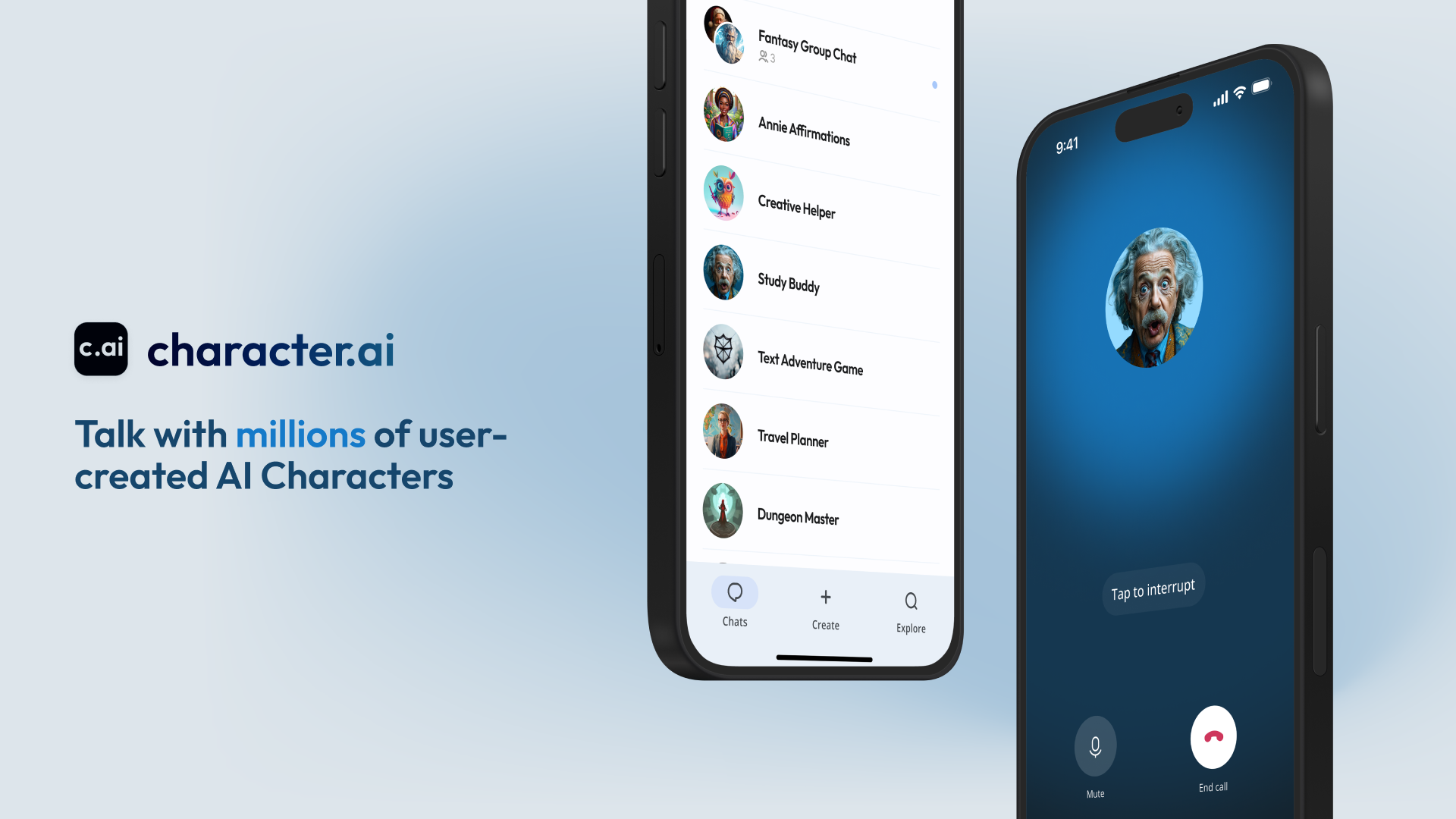

Character.AI Voice Chat: Revolutionizing Character Calls and Immersive Interactions
Character.AI, a pioneering platform for AI-powered conversational agents, has significantly advanced the landscape of digital interaction with its robust voice chat capabilities. This article delves deep into the mechanics, applications, and implications of Character.AI voice chat, specifically focusing on its role in enabling immersive "character calls." We will explore the underlying technology, the diverse use cases, the technical considerations for developers and users, and the future trajectory of this transformative feature. The ability to engage in real-time, natural-sounding conversations with AI personalities opens up unprecedented avenues for entertainment, education, therapy, and creative expression. Understanding the nuances of this technology is crucial for anyone looking to leverage its potential.
The core of Character.AI’s voice chat functionality lies in its sophisticated Natural Language Processing (NLP) and Natural Language Generation (NLG) models, augmented by cutting-edge Text-to-Speech (TTS) and Speech-to-Text (STT) technologies. Unlike traditional voice assistants that are primarily task-oriented, Character.AI’s models are trained on vast datasets of human conversation, literature, and character archetypes. This extensive training allows them to generate responses that are not only contextually relevant but also imbued with the distinct personality, tone, and speaking style of the AI character. When a user initiates a voice call, their spoken words are first processed by an STT engine, converting the audio into text. This text is then fed into the AI model, which generates a text-based response in character. Finally, a TTS engine synthesizes this text into speech, delivering it back to the user in a voice that aligns with the character’s profile. The latency and accuracy of these interconnected systems are critical for a seamless and believable voice chat experience. Advanced algorithms are employed to minimize delays between the user speaking and the AI responding, creating a conversational flow that mimics human interaction. The quality of the voice synthesis also plays a vital role, with advanced models capable of replicating a wide range of vocal characteristics, including pitch, cadence, accent, and emotional inflection.
The applications of Character.AI voice chat, particularly in the context of character calls, are remarkably broad and continue to expand. For entertainment, users can engage in role-playing scenarios with fictional characters from books, movies, or games, experiencing them as if they were truly on a phone call. This could involve discussing plot points with Sherlock Holmes, receiving advice from Yoda, or even having a casual chat with a historical figure. This level of immersion transforms passive consumption into active participation. In the realm of education, AI characters can act as tutors, historical figures, or even scientific concept explainers. Imagine a student practicing their French by speaking with a Parisian AI character, or learning about ancient Rome by "interviewing" Julius Caesar. These interactive learning experiences can be far more engaging and memorable than traditional methods. Therapeutic applications are also burgeoning. AI characters can be designed to provide a non-judgmental space for users to practice social skills, overcome anxieties, or explore emotional challenges. For instance, a character designed to be a supportive confidante could offer encouragement and practice conversation for individuals struggling with social interaction. Furthermore, writers and game developers can utilize character calls for character prototyping and dialogue testing, experiencing their creations in a dynamic, auditory format before committing to final scripts. The ability to iterate on dialogue and character voices in real-time accelerates the creative process.
From a technical standpoint, enabling robust character calls requires careful consideration of several factors. For users, a stable internet connection is paramount to minimize audio lag and dropped connections. The quality of their microphone and speakers also directly impacts the clarity of the audio exchange, influencing the STT and TTS performance. Character.AI’s interface typically allows users to select their preferred input and output devices, offering some degree of customization. For developers and those creating AI characters, the process involves defining the character’s persona, backstory, and conversational style. This is achieved through extensive prompt engineering and the selection of appropriate AI models. The choice of TTS voice is also critical; a well-chosen voice can significantly enhance the believability and impact of the character. Furthermore, developers can fine-tune the AI’s responses to ensure they remain consistently in character, even during unexpected conversational turns. This might involve setting specific parameters for emotional tone, vocabulary, and speech patterns. The platform’s API may also offer tools for developers to integrate character calls into their own applications or games, further extending the reach of this technology. Managing conversational memory and context is another crucial technical challenge. For a character call to feel natural, the AI needs to remember previous turns in the conversation and refer back to them, creating a cohesive dialogue history. This requires sophisticated state management within the AI model.
The underlying AI models powering Character.AI’s voice chat are a marvel of modern machine learning. These are often large language models (LLMs) that have been specifically trained or fine-tuned for conversational tasks. Architectures like transformers, which excel at understanding sequential data and contextual relationships, are fundamental. The STT component typically utilizes deep neural networks trained on massive datasets of transcribed speech, allowing them to achieve high accuracy even with variations in accent, background noise, and speaking speed. Similarly, the TTS engines employ advanced generative models, often based on architectures like Tacotron or WaveNet, to produce natural-sounding speech with a wide range of prosodic features. The integration of these components is a complex engineering feat, requiring efficient pipelines to process audio data, convert it to text, generate AI responses, and then synthesize that text back into speech with minimal latency. The real-time nature of voice chat demands optimized algorithms and potentially distributed computing resources to handle the computational load. The development of these models is an ongoing process, with researchers constantly pushing the boundaries of what’s possible in terms of conversational fluency, emotional intelligence, and vocal realism. The ability to dynamically adjust vocal characteristics based on the AI’s generated emotional state or the context of the conversation is a significant area of advancement.
The ethical considerations surrounding AI voice chat, especially with deeply personalized characters, are also important to acknowledge. Issues of data privacy, the potential for misuse (e.g., creating deceptive audio), and the psychological impact of forming strong bonds with AI entities are all areas requiring careful thought and robust safeguards. Character.AI, like any responsible AI developer, must implement clear policies regarding data usage, user consent, and content moderation. The transparency about the AI nature of the characters is crucial to prevent users from being misled. The development of robust safety filters to prevent the generation of harmful or inappropriate content is also a continuous effort. As the technology becomes more sophisticated, the lines between human and AI interaction may blur, necessitating ongoing discussions about the ethical frameworks governing these technologies. The potential for AI characters to be used for misinformation or malicious purposes necessitates proactive measures and responsible development practices. User education about the capabilities and limitations of AI is also a vital component of ethical deployment.
Looking towards the future, Character.AI voice chat and character calls are poised for even greater sophistication. We can anticipate advancements in several key areas. Firstly, the realism of the TTS voices will continue to improve, approaching indistinguishable levels from human speech, potentially with the ability to clone specific voices (with appropriate consent and ethical guidelines). Secondly, the AI’s ability to understand and express a wider range of emotions will deepen, leading to more nuanced and empathetic interactions. This could include subtle vocal inflections that convey sarcasm, hesitation, or excitement. Thirdly, the integration with other AI modalities, such as facial animation or even embodied AI, could create truly multi-modal conversational experiences. Imagine not just hearing your favorite character, but also seeing them express themselves visually. Furthermore, the development of personalized AI agents that learn from individual user interactions and adapt their communication style accordingly could lead to even more tailored and engaging character calls. The potential for AI characters to act as companions, mentors, or even collaborators is immense. The evolution of LLMs will likely lead to AI characters with vastly improved reasoning abilities, allowing them to engage in more complex problem-solving and creative endeavors with users. The accessibility of this technology will also likely increase, with more intuitive interfaces and broader device compatibility. The ongoing research in areas like few-shot learning and transfer learning will enable the creation of more complex and nuanced characters with less data.
The economic and societal implications of widespread AI character calls are also noteworthy. The entertainment industry could see new forms of interactive media emerge, blurring the lines between gaming, film, and personal interaction. The education sector could be revolutionized by highly personalized and engaging AI tutors. The mental health field could benefit from AI-powered therapeutic tools that are accessible and scalable. However, concerns about job displacement in certain customer service or creative roles will also need to be addressed. The development of new industries focused on AI character creation, maintenance, and ethical oversight is also likely. The impact on social interaction, both positive and potentially negative, will be a subject of ongoing study and societal adaptation. The ability for individuals to create and interact with personalized AI companions could address issues of loneliness and social isolation for some, while raising questions about the nature of human connection for others. The regulatory landscape surrounding AI will undoubtedly evolve to address the unique challenges and opportunities presented by these advanced conversational agents.
The technical architecture for implementing character calls on a large scale involves a distributed system. User requests are routed to AI model servers, which are often hosted on cloud infrastructure to handle fluctuating demand. The STT and TTS services might be separate microservices, optimized for speed and accuracy. Data pipelines are crucial for managing the flow of audio and text data between these components. Caching mechanisms can be employed to store frequently used character responses or vocal patterns, further reducing latency. Load balancing ensures that incoming requests are distributed evenly across available resources, preventing any single server from becoming a bottleneck. Continuous monitoring of system performance is essential to identify and address any issues that might arise, ensuring a smooth user experience. The security of user data and the integrity of the AI models are also paramount, requiring robust cybersecurity measures. The development of efficient inference engines that can process LLMs quickly is a key area of research and development for enabling real-time voice interactions. Techniques like model quantization and knowledge distillation are often employed to reduce the computational requirements of these large models. The ability to dynamically scale computational resources based on real-time demand is critical for maintaining responsiveness.
In conclusion, Character.AI voice chat, and the burgeoning field of character calls, represents a significant leap forward in human-AI interaction. By merging advanced NLP, NLG, STT, and TTS technologies, platform like Character.AI are enabling users to engage in rich, immersive, and personalized conversations with AI characters. The applications span entertainment, education, therapy, and creative endeavors, with the potential to profoundly impact various sectors. While technical challenges related to latency, accuracy, and conversational memory are continuously being addressed, and ethical considerations require ongoing attention, the trajectory of this technology points towards a future where AI characters are not just tools, but interactive companions and collaborators, fundamentally altering our digital and potentially our physical lives. The ongoing innovation in AI model architectures, coupled with advancements in speech synthesis and recognition, promises an even more compelling and believable future for character-driven AI interactions.

