For three decades, the global scientific community labored under a singular, accepted consensus regarding mevalonate kinase deficiency, a harrowing and profoundly debilitating rare genetic disorder characterized by agonizing, recurrent inflammatory episodes. Clinicians and immunologists worldwide pointed their research efforts toward macrophages—the immune system’s primary coordinating cleanup cells—believing them to be the chief culprits behind the uncontrollable and occasionally life-threatening systemic fevers that plague MKD sufferers.
That foundational medical orthodoxy has now been thoroughly dismantled. In a landmark study published in the peer-reviewed journal Immunity, a dedicated team of researchers at the Garvan Institute of Medical Research in Sydney, Australia, has revealed that the true architect of the disease is an entirely different class of immune defender: natural killer (NK) cells. This paradigm-shifting discovery not only upends 30 years of established immunological teaching but has already paved the way for a compassionate-use treatment intervention utilizing existing pharmaceuticals, offering a glimmer of hope to patients who have exhausted all conventional therapeutic avenues.
Unraveling a Decades-Old Medical Mystery
Mevalonate kinase deficiency is a lifelong genetic condition that impacts hundreds of children and adults globally, though pediatricians and geneticists strongly suspect that countless additional cases remain undiagnosed or misattributed due to the symptom complexity of rare autoinflammatory illnesses. For those diagnosed, the clinical picture is harrowing. Patients experience cyclical, highly unpredictable attacks featuring soaring fevers, painful skin rashes, severe arthralgia (joint pain), and debilitating abdominal inflammation. In its most severe manifestations, the disease can trigger systemic complications that prove fatal.
Historically, the therapeutic landscape for MKD has been sparse and frustratingly inadequate. For approximately thirty years, biomedical investigations centered almost exclusively on macrophages. Standard treatments were engineered around the singular objective of blocking specific inflammatory signaling proteins—such as interleukin-1—released by these phagocytic cells. Yet, clinical reality exposed the limitations of this hypothesis: roughly half of all MKD patients fail to respond adequately to these targeted therapies. This stubborn therapeutic ceiling left a profound clinical void, driving researchers to search for missing links in the pathogenic chain.
To investigate what might be missing from the prevailing explanation, the Garvan team, led by senior author Professor Mike Rogers and lead researcher Dr. Marcia Munoz, undertook a rigorous investigative path. They meticulously examined primary blood samples harvested from diagnosed MKD patients and cross-referenced their findings against sophisticated preclinical models of the disorder.
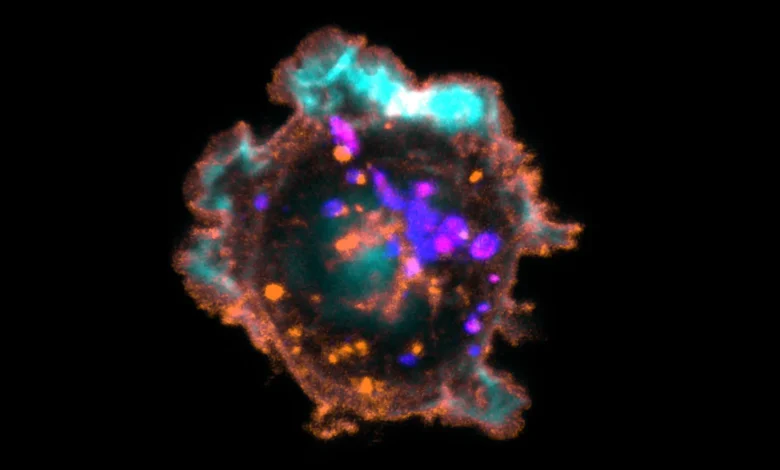
What they discovered was a profound, previously unrecognized functional defect in natural killer cells. Typically, NK cells serve as elite tactical units within the innate immune system, functioning as an essential early defense line against viral infections and cellular anomalies. In healthy individuals, these cells rapidly identify, engage, and destroy infected host cells before a pathogen can establish a systemic foothold.
In patients afflicted with MKD, however, this intricate cellular machinery breaks down completely. The research team observed that NK cells fail to achieve proper physiological maturation. Consequently, they struggle immensely with their most critical duty: the targeted destruction of virus-infected cells.
The Cellular Mechanics of Misfiring
The biological fallout of this NK cell failure extends far beyond a compromised capacity to combat viral pathogens. When these natural killer cells encounter an infected target and fail to execute their destructive mandate, a compensatory cascade is triggered—one with catastrophic inflammatory consequences.
"We found that these immune cells are essentially misfiring," explains Professor Rogers, who also serves as a Conjoint Professor at St Vincent’s Clinical School within the Faculty of Medicine and Health at UNSW Sydney. "NK cells are loaded with toxic ammunition, stored in granules that are released to kill infected cells. However, in MKD these toxic granules can’t be released from NK cells and remain trapped inside. When an NK cell fails to kill its target, it compensates by shouting for help, pumping out large amounts of interferon gamma—a powerful inflammatory signal. This activates other immune cells and causes the dangerous fever and widespread inflammation seen in patients."
This cellular frustration leads to a hyper-secretion of interferon gamma, a potent cytokine that acts as an inflammatory megaphone. Rather than neutralizing the threat locally, the trapped immune cells inadvertently sound a systemic alarm, pulling naive macrophages, neutrophils, and T-cells into a chaotic, uncoordinated inflammatory onslaught. The result is the hallmark clinical presentation of MKD: severe, systemic flare-ups that ravage joints, skin, and gastrointestinal tissues.
Dr. Marcia Munoz, Group Leader in the Rogers Lab, a Conjoint Senior Lecturer at St Vincent’s Clinical School, UNSW Sydney, and the study’s lead researcher, emphasizes the magnitude of this conceptual shift.
"This really turns on its head 30 years of dogma about what was thought to be the underlying mechanism of disease," Dr. Munoz notes. "In MKD, the primary problem is in NK cells and not in macrophages, as previously believed."
To rigorously test this novel hypothesis and establish causal pathways, the Garvan researchers formed a vital collaborative partnership with Professor Mariapia Degli-Esposti and her specialized team of immunologists at Monash University. Utilizing advanced preclinical models, the collaborative group mapped the direct causal chain linking malfunctioning natural killer cells to the severe multi-organ pathology characteristic of MKD. Their empirical data demonstrated conclusively that when the innate immune system fails to effectively clear viral challenges due to NK cell paralysis, the compensatory inflammatory fallout inflicts extensive collateral damage on healthy host organs.
Bridging the Gap: From Laboratory Bench to Clinical Bedside
Scientific breakthroughs in immunology frequently require years or even decades to translate from abstract journal publications into concrete patient interventions. In the case of the Garvan Institute’s NK cell discovery, however, the translation was immediate and life-altering, driven by clinical urgency.
Working in close partnership with pediatric specialists and immunologists at the Royal Children’s Hospital in Melbourne, the research consortium sought to exploit their newfound understanding of the disease’s signaling pathways to help a severely ill infant. The young patient was suffering from relentless, treatment-refractory MKD flare-ups that defied standard care protocols.
The team turned their attention to baricitinib, a pharmaceutical agent belonging to a broad class of drugs known as Janus kinase (JAK) inhibitors. JAK inhibitors operate by precisely disrupting intracellular signaling cascades utilized by various cytokines, most notably those mediating the biological activity of interferon gamma. While baricitinib is more commonly prescribed to manage other immune-mediated inflammatory pathologies—such as moderate-to-severe rheumatoid arthritis and chronic atopic dermatitis (eczema)—its mechanism of action aligned perfectly with the Garvan team’s molecular target.
Under careful clinical supervision, medical practitioners integrated baricitinib into the infant’s existing therapeutic regimen. The clinical response was swift and encouraging. The frequency and intensity of the child’s debilitating inflammatory flare-ups dropped precipitously. Crucially, the severe, treatment-resistant inflammation that had previously compromised the infant’s gastrointestinal tract began to heal.
While clinical researchers and pharmacologists uniformly caution that data derived from a single compassionate-use case cannot definitively establish broader therapeutic efficacy across an entire patient population, the early clinical signals are undeniably promising. The successful intervention provides an invaluable empirical foundation for future clinical trials specifically tailored to evaluate JAK inhibitors—and other targeted therapeutics designed to neutralize interferon gamma activity—in MKD patients, with a particular focus on individuals who have derived no benefit from conventional interleukin-1 blocking agents.
Broader Implications: Prenylopathies and the End of Diagnostic Odysseys
The ripple effects of the Garvan Institute’s discovery extend far beyond the clinical confines of mevalonate kinase deficiency. Medical geneticists have long recognized that MKD sits within a broader constellation of rare inherited conditions collectively designated as "prenylopathies." These disorders all stem from disruptions within the same fundamental metabolic pathway—the isoprenoid biosynthesis pathway—that leads to defective protein prenylation.
Preliminary data emerging from the current study suggest that these related genetic disorders may share a remarkably similar underlying immunopathology. Specifically, researchers suspect that other prenylopathies may likewise feature dysfunctional natural killer cells that fail in their cellular duties and consequently overproduce pathological waves of inflammatory cytokines.
If subsequent multicenter studies and expanded clinical cohorts confirm this shared disease mechanism, the implications for rare disease diagnostics and therapeutics will be profound. Clinicians may soon possess a unified diagnostic framework that bridges multiple disparate genetic syndromes, streamlining identification and cutting through the frustrating diagnostic delays that plague families.
For many rare disease sufferers, the path to an accurate diagnosis resembles a multi-year or even multi-decade trial of error, commonly referred to in clinical circles as a "diagnostic odyssey." Patients bounce endlessly between rheumat
ology, immunology, and genetics clinics, accumulating symptom-suppressing prescriptions without ever addressing the root cellular dysfunction.
"Confirming this link could help end the diagnostic odyssey many patients endure for years or even decades before receiving effective treatment," Professor Rogers concludes.
As the Garvan Institute team prepares the groundwork for forthcoming clinical trials, the medical community stands on the precipice of a new era in autoinflammatory disease management. By daring to question a thirty-year scientific consensus and peering deeper into the micro-anatomy of the immune system, Australian researchers have not only rewritten the textbooks on mevalonate kinase deficiency—they have handed clinicians the precise molecular keys needed to unlock targeted, life-changing therapies for some of medicine’s most vulnerable patients.