The burgeoning capabilities of artificial intelligence in creative fields have taken center stage with a controversial declaration from tech mogul Elon Musk. Musk, the driving force behind SpaceX and Tesla, has publicly challenged the artistic merits of Christopher Nolan’s recent film, "The Odyssey," by vowing that his AI tool, Grok, will produce a "historically accurate and true to the art of Homer" full-length adaptation before the end of the year. This ambitious pronouncement, coupled with the release of a three-minute AI-generated clip adapted from the epic poem, has sent ripples of concern and criticism through the film community, with prominent directors and industry figures voicing their opposition.
The initial spark for this debate was ignited when Musk shared a preview of Grok’s cinematic aspirations. The AI-generated clip, produced by a user on Musk’s platform X (formerly Twitter), showcased a brief segment purportedly derived from Homer’s ancient Greek epic. This demonstration, intended to highlight Grok’s creative potential, instead drew immediate fire from seasoned filmmakers who questioned the very foundation of AI-generated art and its understanding of narrative, historical context, and artistic nuance.

A Director’s Scathing Rebuttal
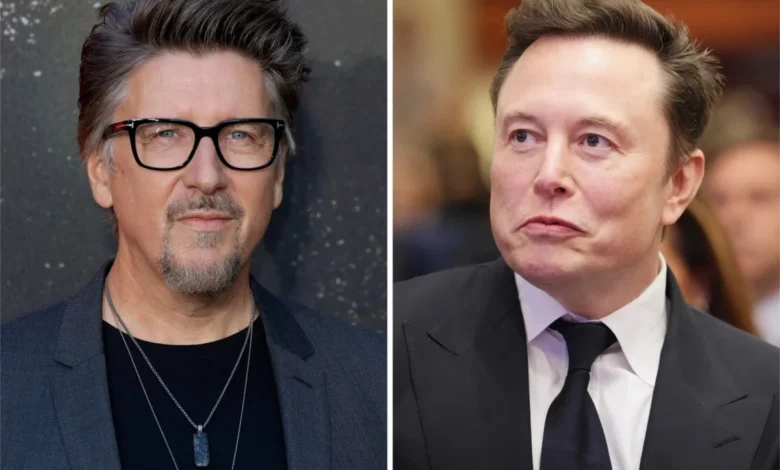
Among the most vocal critics is Scott Derrickson, the acclaimed director behind "Doctor Strange" and "The Black Phone." Derrickson did not mince words when directly addressing Musk on X, the platform where the controversy largely unfolded. "Clearly @elonmusk doesn’t know shit about cinema & he stopped reading in his 20s," Derrickson posted, a sentiment that encapsulates a broader fear within the industry that AI, while capable of technical feats, lacks the human understanding and lived experience essential for compelling storytelling. He further asserted, "His opinions on art are worthless," a direct repudiation of Musk’s pronouncements on artistic value and historical accuracy.
This sharp rebuke from a respected filmmaker like Derrickson underscores a fundamental tension: the perceived objectivity of AI versus the subjective, often deeply personal, nature of artistic creation. While AI can process vast datasets and generate content based on learned patterns, it has yet to demonstrate the capacity for genuine emotional depth, thematic exploration, or the intuitive storytelling that defines masterful cinema.

The Genesis of Musk’s Discontent
Musk’s animosity towards Nolan’s "The Odyssey" predates the AI-generated film announcement. His criticism has largely centered on what he perceives as "woke" casting decisions, a term often used to denote progressive social and political themes. In March, Musk specifically targeted Nolan, labeling him an "anti-White racist" for casting Lupita Nyong’o as Helen of Troy. Musk’s assertion was that Nolan made this choice to garner awards, an accusation that suggests a belief that artistic integrity has been compromised for superficial recognition. He further claimed that Nolan "has lost his integrity" and that the casting was an "insult" to Homer.
The controversy did not end with Nyong’o’s casting. Musk also drew attention to Elliott Page’s role as Sinon in "The Odyssey," reposting comments that appeared to mock the transgender actor’s masculinity. This pattern of criticism suggests a broader ideological opposition to what Musk views as a departure from traditional narratives and societal norms in contemporary filmmaking.

A Pattern of Cinematic Critique
"The Odyssey" is not the first film to face Musk’s public censure on X. He has previously expressed disdain for Greta Gerwig’s "Barbie," criticizing its feminist themes, and has also voiced objections to Disney’s "Snow White" reboot, particularly in light of Rachel Zegler’s casting as the titular princess. These instances highlight a consistent theme in Musk’s public commentary on cinema: a strong, often critical, stance against what he perceives as ideological agendas in filmmaking that deviate from his own conservative viewpoints.
Interestingly, despite the "anti-woke" backlash that "The Odyssey" has faced, including from prominent figures like Musk, the film has achieved significant commercial success. Starring Matt Damon, the epic opened to a staggering $264 million worldwide and continues to draw audiences months after its release, suggesting that the film’s artistic and narrative choices have resonated with a substantial segment of the moviegoing public. This disconnect between Musk’s criticisms and the film’s box office performance raises questions about the actual influence of such online commentary on audience reception.

The AI Frontier: A Chronology of Disruption
The current debate is situated within a broader, rapidly evolving landscape of artificial intelligence and its integration into creative industries.
- Early 2020s: Advancements in generative AI models, such as large language models (LLMs) and diffusion models for image and video generation, begin to gain significant traction. These technologies demonstrate an unprecedented ability to create novel content based on textual prompts.
- 2024: The increasing sophistication of AI tools leads to their application in various artistic domains, including writing, music composition, and visual arts. Concerns about copyright, authorship, and the potential displacement of human artists begin to surface more prominently.
- Late 2025: Elon Musk’s company, xAI, announces the development of Grok, an AI chatbot designed to provide conversational and creative outputs, integrated into the X platform. Musk begins to articulate a vision for AI’s role in historical and artistic reinterpretation.
- Early 2026: Musk intensifies his criticism of Christopher Nolan’s "The Odyssey," focusing on casting choices and perceived ideological deviations. He begins to foreshadow the development of an AI-generated film project.
- July 2026: Musk makes the definitive statement regarding Grok’s capability to produce a full-length, historically accurate "The Odyssey" film and shares a preview clip, igniting widespread industry debate and professional condemnation.
Supporting Data and Industry Perspectives

The economic implications of AI in filmmaking are a subject of ongoing analysis. While the exact cost of producing a full-length AI-generated film like the one Musk envisions is yet to be seen, the potential for reduced labor costs compared to traditional production methods is a significant factor. Industry analysts suggest that AI could revolutionize pre-production tasks such as script analysis, storyboard generation, and even preliminary animation. However, the ethical and artistic implications of replacing human creative input remain a major point of contention.
The Writers Guild of America (WGA) and the Screen Actors Guild – American Federation of Television and Radio Artists (SAG-AFTRA) have both raised concerns about the use of AI in their respective fields during recent labor negotiations. Their primary anxieties revolve around AI being used to generate scripts or replicate actors’ performances without fair compensation or consent, potentially devaluing human talent and creating a race to the bottom in terms of creative labor.
Analysis of Implications: The Future of Storytelling

Elon Musk’s bold assertion about Grok’s cinematic capabilities, while technologically impressive, highlights a fundamental philosophical debate about the nature of art and creativity.
- Historical Accuracy vs. Artistic Interpretation: Musk’s emphasis on "historically accurate" filmmaking, particularly in the context of ancient epics, raises questions about how historical texts should be interpreted for modern audiences. While accuracy is important, art often involves creative license, symbolic representation, and thematic relevance that transcends strict factual adherence. The interpretation of Homer’s "Odyssey," for instance, has evolved over centuries, with each adaptation reflecting the cultural and social values of its time. An AI’s rendition, based purely on data, may struggle to capture this nuanced evolution.
- The Role of Human Emotion and Experience: Cinema is fundamentally a human endeavor, driven by the shared experiences, emotions, and perspectives of its creators and audience. Directors like Nolan, through their personal vision and understanding of human psychology, craft narratives that resonate deeply. AI, lacking consciousness and lived experience, can only simulate these elements based on existing data. This raises concerns about whether AI-generated art can truly move, provoke, or inspire in the same way as human-created works.
- The Definition of "Art": The debate also forces a re-examination of what constitutes "art." Is it the technical execution of a creative output, or does it require an element of human intention, consciousness, and emotional expression? If an AI can flawlessly replicate the style and form of great art, does that elevate it to the same status? This question has profound implications for copyright law, artistic recognition, and the very definition of creative genius.
- Potential for Innovation and Accessibility: On the other hand, AI tools could democratize filmmaking, making it more accessible to individuals and smaller studios who might lack the resources for traditional production. AI could also serve as a powerful assistive tool for human artists, helping them to explore new ideas, overcome creative blocks, and streamline certain aspects of the production process. The challenge lies in finding a balance that leverages AI’s potential without sacrificing the integrity and value of human artistry.
The confrontation between Elon Musk’s AI-driven vision and Hollywood’s established artistic sensibilities marks a pivotal moment in the ongoing discourse about technology’s role in shaping our cultural landscape. As AI continues to advance, the industry, audiences, and creators alike will grapple with these complex questions, determining the future of storytelling in an increasingly automated world. The outcome of this debate will undoubtedly influence how we perceive and create art for generations to come.