
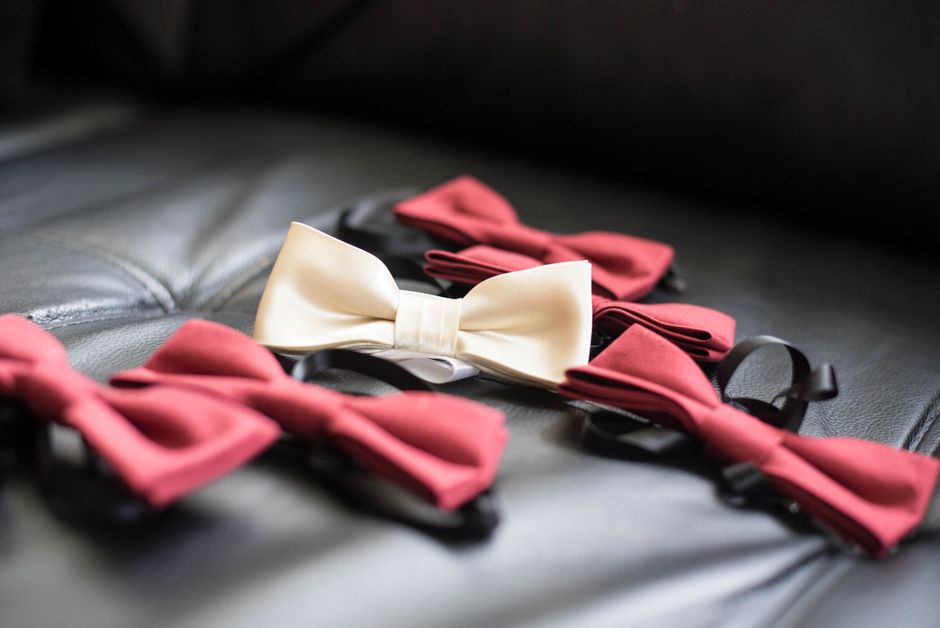
How to Make a Bow Tie: A Comprehensive Guide to DIY Neckwear
Crafting your own bow tie is a rewarding endeavor, offering a personalized touch to formal wear and a unique statement piece for everyday style. This comprehensive guide will walk you through the entire process, from selecting materials to the final knot, ensuring a professional-looking result even for beginners. We will cover essential tools, fabric choices, precise cutting techniques, accurate sewing methods, and finishing touches that elevate your handmade bow tie from amateur to artisan. Understanding the fundamental construction of a bow tie is key, and this article breaks down each step with clarity and detail, making it accessible for sewers of all skill levels. We aim to empower you with the knowledge and confidence to create a perfectly fitted and stylish bow tie that reflects your individual taste.
The first crucial step in making a bow tie is gathering the necessary materials and tools. For a standard self-tie bow tie, you will need approximately half a yard of fabric. The type of fabric you choose will significantly impact the final appearance and feel of your bow tie. Silk is a traditional and luxurious choice, offering a beautiful drape and sheen, ideal for formal occasions. Cotton is a versatile and affordable option, available in a vast array of patterns and colors, making it suitable for both casual and semi-formal wear. Linen provides a crisp, textured look, perfect for warmer weather or a more relaxed aesthetic. Wool can be used for a more substantial, winter-appropriate bow tie. For your first project, consider a medium-weight cotton as it is easy to handle and forgiving of minor sewing imperfections. Beyond fabric, you will require matching thread, a sewing machine (though hand-sewing is possible, it will be significantly more time-consuming), a sharp pair of fabric scissors, a ruler or measuring tape, pins, a tailor’s chalk or fabric marker, and an iron and ironing board. For the neckband, a fusible interfacing is highly recommended to provide structure and ensure the bow tie maintains its shape. Opt for a lightweight to medium-weight fusible interfacing that complements your fabric choice. Lastly, a button and buttonhole are standard for adjustable neckbands, so you’ll need a small button and potentially a buttonhole foot for your sewing machine.
The pattern for a standard self-tie bow tie typically involves two main pieces: the bow portion and the neckband. For a classic, medium-sized bow tie, common dimensions are as follows: the bow portion is usually around 21-23 inches in length and 2.5-3 inches in width. The neckband is designed to wrap around the wearer’s neck, so its length will vary depending on neck size. A standard neckband piece is often cut to 20 inches in length and 1.5 inches in width. However, to create an adjustable neckband, it’s advisable to cut two pieces of the neckband, each measuring approximately 12 inches in length and 1.5 inches in width. This allows for overlap and the addition of a button and buttonhole for adjustment. For the bow portion, you will need to cut two identical pieces from your fabric. These pieces will be mirrored when sewn together. When cutting, remember to add a seam allowance of approximately 1/4 inch to all edges. This allowance is crucial for stitching and allows for a neat finish. For the neckband, cut two fabric pieces for each 12-inch segment. This means a total of four fabric pieces for the neckband if you are making an adjustable band. Additionally, you will need to cut interfacing pieces that are slightly smaller than your fabric pieces, typically by the seam allowance on the sides and bottom. For the bow portion, cut one piece of interfacing to match its dimensions minus the seam allowance. For the neckband, cut two pieces of interfacing, each matching the dimensions of one neckband fabric piece minus seam allowance. Precise cutting is paramount. Use your ruler and tailor’s chalk to mark clear, straight lines. Lay your fabric flat and smooth, ensuring there are no wrinkles that could lead to inaccurate measurements. Double-check all measurements before making any cuts to avoid wasting precious fabric.
Once your fabric pieces are accurately cut, the next step is to prepare them for sewing, which involves applying fusible interfacing. Lay one of the bow portion fabric pieces right side down on your ironing board. Place the corresponding interfacing piece on top of the fabric, aligning the edges as closely as possible. Ensure the adhesive side of the interfacing is against the fabric. Following the manufacturer’s instructions for your specific fusible interfacing, use your iron on the recommended heat setting to press the interfacing firmly onto the fabric. Hold the iron in place for the recommended duration without sliding it, which can cause the interfacing to shift. Repeat this process for the second bow portion fabric piece. This will create two interfaced bow pieces. Now, for the neckband, take one of the 12-inch fabric pieces for the neckband and lay it right side down. Place one of the neckband interfacing pieces on top. Press the interfacing onto the fabric as described above. Repeat for the second neckband fabric piece. You will now have two interfaced neckband fabric pieces. This interfacing provides crucial structure, preventing the bow tie from becoming limp and ensuring it holds its shape elegantly when tied. It also makes the fabric easier to handle during the sewing process.
The sewing stage is where your bow tie begins to take shape. Start with the bow portion. Take your two interfaced bow pieces and place them right sides together. Align all edges carefully, ensuring the pointed ends and straight edges are perfectly matched. Pin the layers together securely along all edges, about 1/4 inch from the raw edge. Begin sewing along one of the long edges, using a 1/4 inch seam allowance. Continue sewing along the pointed end, pivoting your sewing machine at the tip. Sew along the opposite long edge, leaving a gap of about 2-3 inches in the middle of one of the long edges. This gap is essential for turning the bow tie right side out. Backstitch at the beginning and end of your stitching to secure the seams. Repeat this process for the second bow portion.
Next, focus on the neckband. Take your two interfaced neckband fabric pieces and place them right sides together. Align all edges and pin securely. Sew along all four edges using a 1/4 inch seam allowance. Unlike the bow portion, you will sew all the way around the neckband, creating a complete tube. Backstitch at the beginning and end.
After sewing, it’s time to prepare the pieces for turning and pressing. For the bow portion, trim the seam allowance at the pointed ends to about 1/8 inch. This reduces bulk and allows for sharper points when turned. Be careful not to cut through your stitching. Clip the corners of the straight edges diagonally to further reduce bulk. For the neckband, clip the corners diagonally to remove excess fabric and allow for a crisp finish.
Now, carefully turn both the bow portion and the neckband right side out through the unsewn gap in the bow portion. Use a point-turner, the blunt end of a chopstick, or a similar tool to gently push out the corners and points. Take your time to ensure the points are as sharp as possible. Once turned, press both pieces thoroughly with your iron. For the bow portion, carefully press the seam allowances at the gap inwards so they are flush with the sewn seam. This will create a clean edge for hand-stitching the opening closed. Press the entire bow portion flat, ensuring all seams are crisp and well-defined. For the neckband, press it flat, ensuring the seams are neat.
With the bow portion turned and pressed, it’s time to close the opening. Using a needle and thread that matches your fabric, hand-stitch the opening closed using an invisible stitch, also known as a ladder stitch or blind hem stitch. This will create a seamless finish. Once the opening is closed, give the entire bow portion a final press.
Now, assemble the bow tie. Take the neckband and center the bow portion onto the neckband. The bow portion will be significantly wider than the neckband. You want to position the bow portion so that its center aligns with the center of the neckband. Pin the bow portion in place. Then, carefully stitch the bow portion to the neckband. You can do this by machine, sewing along the edges of the neckband where it meets the bow portion, ensuring you catch both layers of the bow portion. Alternatively, you can hand-stitch for a more delicate finish. The goal here is to secure the bow to the neckband without distorting the shape of the bow.
For the adjustable neckband, you will now create the closure. Take one of the completed neckband tubes. Fold over approximately 1/2 inch of one of the raw edges and press it firmly. Then, fold over another 1/2 inch to create a hem, and press again. Stitch this hem down close to the folded edge, creating a finished end. On the other neckband tube, you will create the buttonhole. Decide where you want your button to be placed – typically about 1 inch from one of the raw ends. Mark the position and size of your buttonhole. If your sewing machine has a buttonhole foot, attach it and sew the buttonhole according to your machine’s instructions. If not, you can hand-sew a buttonhole. Once the buttonhole is sewn, carefully cut it open with a seam ripper or small sharp scissors.
Finally, assemble the adjustable neckband. Overlap the hemmed end of one neckband tube over the end of the other neckband tube, aligning them so that the raw edges of the overlapped section are hidden within the overlap. The buttonhole should be on the top layer. Pin this overlap securely. Now, stitch across the overlapped section, about 1/4 inch from the raw edge, to secure the two neckband pieces together. This creates your adjustable neckband. Finally, attach your chosen button to the neckband, positioning it through the buttonhole.
To make your bow tie wearable, you will need to attach the neckband to the bow portion. Take the assembled bow portion. Locate the center of the bow. Place the center of your adjustable neckband against the center of the bow portion. Pin them together. Then, stitch them securely. You can do this by hand or by machine. Aim to stitch through all layers to ensure a strong attachment. This step can be a bit fiddly, so take your time to ensure the bow remains centered and the neckband is attached without bunching.
The final step in creating your bow tie is a thorough pressing. Use your iron to press all the seams and ensure the bow tie is smooth and crisp. Pay particular attention to the knot of the bow. A well-pressed bow tie will look significantly more professional. You can also use a pressing cloth to protect delicate fabrics like silk.
Once your bow tie is complete, you’ll want to learn how to tie it. While this guide focuses on construction, the art of tying is essential. The standard method involves creating a loop with one side, wrapping the other side around it, and then threading it through the created loop. Practice is key to mastering the perfect knot. Many online tutorials and videos demonstrate the proper technique for tying a self-tie bow tie.
The beauty of making your own bow tie lies in its customization. Experiment with different fabrics, colors, and patterns. Consider adding decorative stitches or embellishments. For a more casual look, try a pre-tied bow tie pattern, which simplifies the construction process by creating a fixed knot. For a more advanced project, explore double-layered bow ties or those with contrasting linings. The possibilities are endless, allowing you to create a truly unique accessory that reflects your personal style. By following these detailed instructions, you can confidently embark on the journey of crafting your own bow ties, adding a touch of handmade elegance to any wardrobe.

