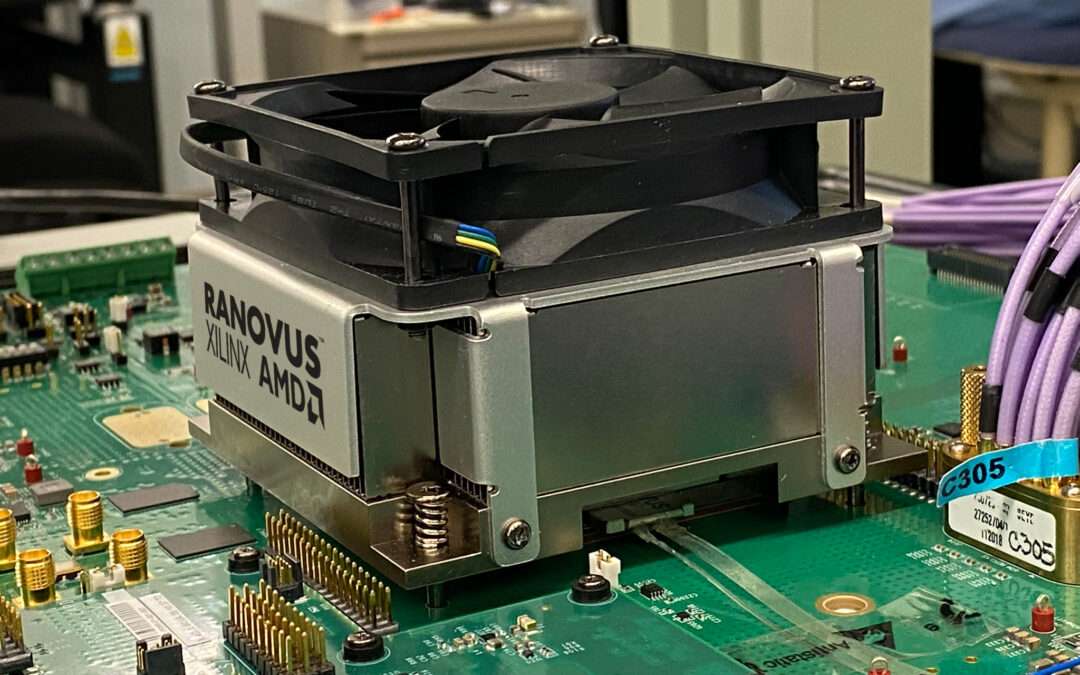

Ranovous Showcases Co-Packaged Optics: The Future of High-Performance Computing Interconnects
Ranovous’s recent demonstrations of co-packaged optics (CPO) represent a pivotal advancement in the evolution of high-performance computing (HPC) and data center interconnects. This cutting-edge technology integrates optical transceivers directly onto the same silicon substrate as the host ASIC (Application-Specific Integrated Circuit), such as a network switch or a processor. This integration fundamentally alters the architecture of data communication, moving optical signal transmission from discrete pluggable modules at the edge of the system to within the heart of the ASIC package. The implications for power efficiency, density, latency, and overall system performance are profound and are poised to address the escalating demands of modern AI workloads, large-scale cloud computing, and demanding scientific simulations.
The core principle behind co-packaged optics lies in drastically reducing the electrical trace lengths required to drive optical signals. In traditional architectures, electrical signals travel considerable distances from the ASIC to the cage holding a pluggable optical module, and then back to the ASIC for signal conditioning and conversion. These electrical traces are a significant source of power consumption and signal degradation, particularly at the high speeds required for modern data rates (e.g., 400GbE, 800GbE, 1.6TbE and beyond). By placing the optical engines directly adjacent to or on the same die as the ASIC, Ranovous’s CPO solutions minimize these resistive losses and capacitive loading, leading to a substantial reduction in power per bit transmitted. This is a critical factor as data centers grapple with ever-increasing energy footprints and operational costs.
Ranovous’s approach to CPO is multifaceted, focusing on delivering a scalable and robust solution that can be adapted to various ASIC types and system designs. Their demonstrations have highlighted key technological enablers, including advanced optical engine technology, sophisticated thermal management strategies, and innovative interconnect solutions. The company’s optical engines leverage highly integrated photonic integrated circuits (PICs) that combine laser sources, modulators, detectors, and multiplexers/demultiplexers onto a single chip. This miniaturization is essential for achieving the high port densities required in CPO. Furthermore, Ranovous employs advanced assembly techniques, such as flip-chip bonding and advanced packaging, to ensure reliable electrical and optical interconnections between the ASIC and the optical engines with minimal loss.
A significant challenge in CPO is managing the heat generated by both the high-performance ASIC and the densely packed optical components. While optics are generally more power-efficient than their electrical counterparts at high speeds, the sheer density of CPO means that thermal dissipation becomes a critical design consideration. Ranovous has invested heavily in developing advanced thermal management solutions that prevent performance degradation and ensure the longevity of the components. This includes careful material selection for heat spreading, optimized airflow within the system, and potentially innovative cooling techniques that can directly interface with the CPO modules. Their demonstrations have showcased thermal simulations and prototypes that address these concerns, indicating a mature understanding of the thermal challenges associated with integrating these high-power components.
The electrical interface between the ASIC and the optical engines is another area where Ranovous has made significant strides. At the extreme speeds of modern interconnects, maintaining signal integrity across short, dense electrical traces within the package is paramount. This requires advanced techniques such as high-frequency PCB materials, optimized trace routing, and sophisticated equalization algorithms. Ranovous’s CPO solutions are designed to meet these stringent electrical requirements, ensuring that data can be transmitted reliably between the host ASIC and the optical engines with minimal bit error rates. The company’s emphasis on a standardized or highly interoperable electrical interface is also crucial for broad industry adoption, allowing CPO to be integrated with a wide range of ASIC vendors.
The economic implications of co-packaged optics are also a driving force behind its development. While initial development costs may be higher, the long-term benefits in terms of reduced power consumption, increased port density, and potentially lower overall system cost (due to fewer discrete components and simplified cabling) are substantial. As CPO matures and manufacturing volumes increase, the cost per port is expected to become increasingly competitive with traditional pluggable optics, especially when considering the total cost of ownership for large-scale deployments. Ranovous’s focus on manufacturability and scalability in their CPO designs suggests a clear path towards cost-effective mass production.
Ranovous’s demonstrations are not merely conceptual; they represent tangible progress towards commercialization. By showcasing functional prototypes and detailed performance metrics, the company is signaling its readiness to collaborate with ASIC vendors, system integrators, and end-users to accelerate the adoption of CPO. This collaborative approach is essential in an industry that often relies on complex ecosystem dependencies. The availability of reference designs and comprehensive technical support will be key to enabling a smooth transition to CPO architectures.
The benefits of CPO extend beyond power and density. Latency reduction is another significant advantage. By eliminating the need for electrical signals to travel to external pluggable modules, CPO can reduce the end-to-end latency of data transmission. This is particularly important for applications that are highly sensitive to delay, such as high-frequency trading, real-time analytics, and certain aspects of distributed AI training where synchronized operations are critical. The reduced latency offered by CPO can lead to improved application performance and responsiveness.
Ranovous’s CPO solutions are designed to be backward compatible or offer clear upgrade paths from existing SerDes (Serializer/Deserializer) technologies used in pluggable optics. This ensures that investments in existing infrastructure are not immediately rendered obsolete and that the transition to CPO can be managed incrementally. The company’s architectural choices likely consider the evolution of electrical interfaces and their ability to support future, even higher data rates, ensuring that CPO remains a relevant technology for years to come.
The environmental impact of data centers is a growing concern, and CPO offers a compelling solution for reducing their carbon footprint. By significantly lowering power consumption, CPO contributes to a more sustainable data center infrastructure. This aligns with the increasing corporate and regulatory pressure on the technology industry to adopt more environmentally friendly practices. Ranovous’s commitment to developing power-efficient optical interconnects positions them as a key player in the quest for greener computing.
The market adoption of co-packaged optics is expected to accelerate as the demands of AI and hyperscale computing continue to push the boundaries of current interconnect technologies. Ranovous’s demonstrations serve as a strong indicator that CPO is moving from a niche research area to a mainstream solution. The company’s comprehensive approach, addressing the technical, thermal, electrical, and economic challenges, positions them favorably to capture a significant share of this emerging market. The ability to integrate advanced optical engines with leading-edge ASICs offers a potent combination for future data center designs.
Looking ahead, the evolution of CPO will likely involve further integration, with optical components becoming even more tightly coupled with the ASIC. This could lead to even greater power savings and performance gains. Ranovous’s ongoing research and development efforts are undoubtedly focused on these future advancements, ensuring that they remain at the forefront of optical interconnect innovation. The company’s proactive engagement with the industry and its commitment to demonstrating practical, high-performance CPO solutions are critical to driving this transformation. The ability to deliver high-bandwidth, low-power interconnects within the confines of a single package is no longer a distant dream but a rapidly materializing reality, thanks to the pioneering work of companies like Ranovous.

