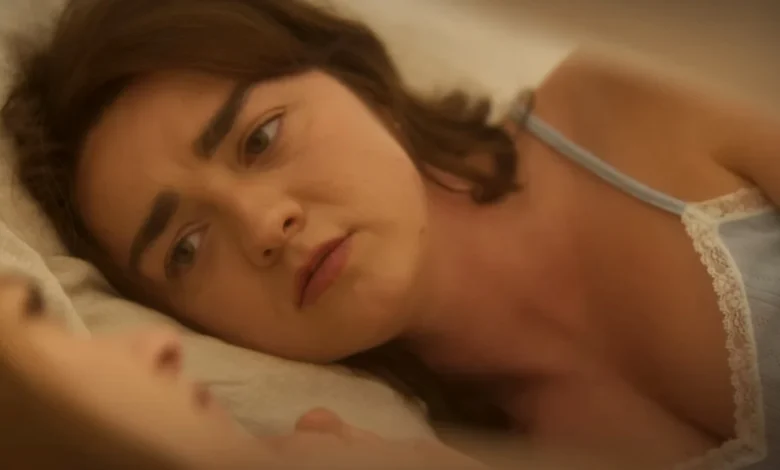
The release of Practical Magic 2 has reignited interest in the storied Owens family legacy, bringing Sandra Bullock and Nicole Kidman back to the screen as Sally and Gillian Owens. While the film focuses heavily on the high-stakes mission to save Kylie Owens’ comatose boyfriend, Gideon, from an ancient family curse, a significant narrative element from Alice Hoffman’s source material—The Book of Magic—has been sidelined in the cinematic adaptation. Maisie Williams, who portrays Antonia Owens in the Susanne Bier-helmed sequel, has revealed that she intentionally played her character through a sapphic lens, despite the script’s failure to explicitly codify this aspect of Antonia’s identity.
The Source Material: Hoffman’s The Book of Magic
In the 2021 novel The Book of Magic, which serves as the primary inspiration for the sequel’s narrative framework, Antonia Owens is a fully realized character whose arc is deeply intertwined with her own romantic journey. Hoffman depicts Antonia as an openly lesbian woman, providing her with a dedicated love interest named Ariel, a lawyer who becomes instrumental in the family’s efforts to dismantle the multi-generational curse.
Beyond her romantic life, the novel provides a more comprehensive look at the internal lives of the younger generation of Owens women. Antonia’s journey in the book includes a complex subplot involving her pregnancy with her best friend’s child—a detail that emphasizes the non-traditional family structures that are a hallmark of Hoffman’s writing. The omission of these specific character beats in the film version has drawn attention to the editorial choices made by screenwriters Akiva Goldsman, Georgia Pritchett, and Kelly Marcel, who opted to prioritize the central supernatural mystery and the dynamic between the sisters and their children over the nuances of Antonia’s personal life.
The Performance Choice: Maisie Williams on the "Sapphic Icon"
In a recent interview with Gay Times, Maisie Williams addressed the discrepancy between the book and the film regarding her character’s sexuality. Despite the narrative shifts necessitated by the film’s pacing and focus, Williams remained steadfast in her internal character work.
"There’s been a lot of different edits to the movie, and there was a lot of different versions of the script, but I always played Antonia as a sapphic icon," Williams stated. She explained that this characterization significantly informed her performance, particularly during scenes involving the character of Gideon. "I think it brought a real joy to the scenes when we would be talking about Gideon, because Antonia just has a completely different perspective on men altogether."
By positioning Antonia as a character who exists outside of the heteronormative framework, Williams sought to honor the spirit of the character as written by Hoffman, even if the final cut of the film did not explicitly label her. This approach highlights a common tension in modern adaptation: the struggle to balance a sprawling, character-rich literary source with the streamlined requirements of a feature-length film.
Chronology of the Practical Magic Franchise
The cultural footprint of Practical Magic spans nearly three decades, beginning with the 1998 Griffin Dunne film, which became a cult classic despite a mixed critical reception upon its initial release.
- 1995: Alice Hoffman publishes Practical Magic, introducing the world to the Owens sisters and the ancestral curse that haunts them.
- 1998: The feature film adaptation starring Sandra Bullock and Nicole Kidman premieres. While it underperformed at the box office, it eventually gained a massive following through home media and cable syndication.
- 2017: Hoffman releases The Rules of Magic, a prequel novel that expanded the franchise’s lore.
- 2021: The Book of Magic is published, bringing the Owens family story to a contemporary conclusion and introducing Antonia’s nuanced arc.
- 2024-2025: Development and production of Practical Magic 2 take place, with Susanne Bier attached to direct.
- 2026: Practical Magic 2 debuts in theaters, drawing both long-time fans of the original and a new generation of viewers.
Production Constraints and Editorial Decisions
The production of Practical Magic 2 faced the daunting task of reconciling the 1998 film’s aesthetic with the evolved storytelling of the 2021 novel. Screenwriters Akiva Goldsman, Georgia Pritchett, and Kelly Marcel were tasked with creating a narrative that could function both as a sequel to the film and a faithful adaptation of the book.
In the process, the film’s structure shifted toward a "chase" narrative—Sally and Gillian pursuing Kylie to England to intervene in the curse. This structural choice left little room for the expansive character development found in the novel. The decision to excise Ariel, Antonia’s partner, and the pregnancy subplot suggests a production priority centered on the central curse mechanism. From an industry perspective, this is a standard, albeit controversial, maneuver in book-to-screen adaptations, where secondary character subplots are often sacrificed to maintain a consistent runtime and narrative focus.
The Impact of "Queerbaiting" vs. Subtextual Performance
The discourse surrounding Antonia’s sexuality in the film highlights the industry’s evolving relationship with LGBTQ+ representation. While Williams’ performance was informed by her own interpretation, the failure of the script to make this explicit leads to questions regarding the visibility of such identities in mainstream cinema.
Critics and audiences alike have debated the value of "subtextual" representation versus explicit, on-screen inclusion. For many, Williams’ public confirmation that she played the character as a lesbian provides a sense of validation. However, it also serves as a reminder that without explicit text, such representation remains invisible to the casual viewer. The "sapphic icon" status Williams attributes to the character is essentially an "Easter egg" for those aware of the book or the actor’s intent, rather than a narrative reality within the film itself.
The Future of the Owens Family: Potential for a Trilogy
Despite the omissions in the second installment, there is hope for deeper exploration should the franchise continue. Sandra Bullock, who has been a driving force behind the revival of the property, has publicly expressed interest in expanding the series further. In an interview with Vanity Fair, Bullock discussed the potential for a third film, emphasizing the importance of transitioning the focus to the next generation of the Owens line.
"We’ll do a number three if this takes off. And we’ll pass the torch to the girls," Bullock noted. This "passing of the torch" could provide the necessary narrative space to delve into the lives of characters like Antonia with the complexity they deserve. If the franchise is permitted to grow into a trilogy, the screenwriters may be able to move beyond the constraints of the curse-centric plot and focus on the internal lives, relationships, and identities of the younger Owens women.
Broader Implications for Adaptations
The case of Practical Magic 2 serves as a case study for the complexities of modern adaptation. When a franchise relies on a beloved source text, the expectations for fidelity are high. Yet, the constraints of the medium—time, tone, and pacing—often force creators to make difficult choices.
The inclusion of LGBTQ+ characters and storylines is increasingly viewed as a standard expectation rather than an optional creative flourish. When these elements are present in the source material but absent or relegated to subtext in the adaptation, it raises valid questions about institutional commitment to representation. Maisie Williams’ candidness regarding her performance highlights a proactive approach by actors to infuse their roles with depth, even when the script falls short. As the industry looks toward the possibility of a third installment, the reception of Practical Magic 2 will likely serve as a barometer for how audiences prioritize character-driven narratives versus plot-driven spectacle, and how they expect those characters to be represented in the final cut.