
Microsoft Cognitive Services Project Oxford: Unlocking Intelligent Applications
Microsoft Cognitive Services, formerly known as Project Oxford, represents a suite of advanced AI capabilities that developers can seamlessly integrate into their applications. These services, built on sophisticated machine learning models, empower software to understand, interpret, and generate information akin to human cognition. The core promise of Cognitive Services lies in democratizing AI, making complex intelligent functionalities accessible without requiring deep expertise in machine learning algorithms or extensive data science backgrounds. This article explores the various facets of Microsoft Cognitive Services, delving into its key components, use cases, and the underlying technology that drives its impressive capabilities.
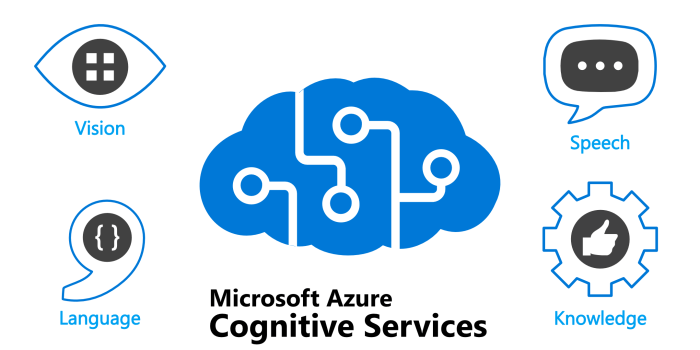
The foundational elements of Microsoft Cognitive Services are categorized into several distinct areas, each addressing a specific aspect of artificial intelligence. These include Vision, Speech, Language, and Decision. The Vision category encompasses services like Computer Vision, Face API, and Emotion API, enabling applications to "see" and interpret visual information. Computer Vision can detect and identify objects, analyze images for content, and extract text from pictures. Face API, as the name suggests, focuses on facial recognition, allowing for the detection, verification, and identification of individuals within images or video streams. Emotion API, a sub-component often associated with Face API, analyzes facial expressions to infer emotional states, offering insights into user sentiment. These services are instrumental in applications ranging from automated content moderation and image search to security systems and personalized user experiences.
The Speech category provides powerful tools for natural language interaction through voice. Key services include Speech to Text, Text to Speech, and Speaker Recognition. Speech to Text transcribes spoken language into written text, forming the backbone of voice assistants, dictation software, and real-time captioning. Text to Speech converts written text into natural-sounding human speech, enabling voice-overs, accessibility features, and more engaging user interfaces. Speaker Recognition, also known as speaker identification or verification, can distinguish between different individuals based on their unique voice characteristics, crucial for authentication and personalized services. The integration of these speech services facilitates the creation of more intuitive and accessible applications, bridging the gap between human communication and digital interaction.
The Language category focuses on understanding and processing human language in its textual form. This includes services like Text Analytics, Language Understanding (LUIS), and Translator Text. Text Analytics provides sentiment analysis, key phrase extraction, language detection, and entity recognition. Sentiment analysis helps gauge the emotional tone of text, vital for market research, customer feedback analysis, and social media monitoring. Key phrase extraction identifies the most important topics within a document, aiding in content summarization and information retrieval. Language detection automatically identifies the language of a given text, essential for globalized applications. Entity recognition pinpoints and categorizes key entities such as people, organizations, and locations within text, supporting data analysis and knowledge extraction. LUIS is a powerful tool for building custom natural language understanding models, allowing applications to interpret user intents and extract relevant information from conversational input. Translator Text provides high-quality machine translation between numerous languages, enabling seamless cross-lingual communication and content localization.
The Decision category offers services that assist in making intelligent recommendations and predictions. This includes services like Content Moderator, Anomaly Detector, and Personalizer. Content Moderator uses AI to detect potentially offensive, unwanted, or otherwise inappropriate content in text and images, aiding in content filtering and safety. Anomaly Detector identifies unusual patterns and outliers in time-series data, valuable for fraud detection, system health monitoring, and predictive maintenance. Personalizer is a reinforcement learning service that helps tailor experiences to individual users by learning their preferences and recommending the most relevant content or actions. These decision-making services empower applications to proactively assist users, enhance security, and optimize operational efficiency.
The underlying technology powering Microsoft Cognitive Services is a combination of cutting-edge machine learning techniques. Many of these services leverage deep learning architectures, particularly convolutional neural networks (CNNs) for image and video analysis, and recurrent neural networks (RNNs) and transformer models for natural language processing. Microsoft invests heavily in research and development, continuously training and refining these models on vast datasets to achieve state-of-the-art performance. The availability of pre-trained models significantly reduces the barrier to entry for developers, allowing them to integrate sophisticated AI capabilities without the need to collect massive datasets or train complex models from scratch. Furthermore, Microsoft offers tools and platforms that enable developers to customize and fine-tune these models for their specific use cases, achieving even greater accuracy and relevance.
The accessibility of Microsoft Cognitive Services is a key differentiator. They are offered through RESTful APIs, making them compatible with virtually any programming language and platform. This broad compatibility ensures that developers can integrate these intelligent features into existing applications or build new ones from the ground up, regardless of their preferred technology stack. The services are designed to be scalable, capable of handling varying loads and processing large volumes of data efficiently. This scalability is crucial for businesses of all sizes, from startups to large enterprises, to leverage AI without worrying about infrastructure limitations. Pricing models are typically consumption-based, offering flexibility and cost-effectiveness.
Numerous real-world applications demonstrate the transformative power of Microsoft Cognitive Services. In customer service, sentiment analysis from Text Analytics can help identify unhappy customers for prompt intervention, while Speech to Text can transcribe support calls for analysis and training. E-commerce platforms utilize recommendations from Personalizer to boost sales and improve customer engagement. Social media platforms employ Computer Vision and Content Moderator to filter out harmful content. Healthcare providers can use Face API for patient identification and Emotion API to gauge patient well-being. The possibilities are virtually endless, limited only by the developer’s imagination and the specific problem they aim to solve.
The integration of Microsoft Cognitive Services into an organization’s workflow can lead to significant improvements in efficiency, productivity, and innovation. Automating tasks that previously required human intervention, such as image tagging or language translation, frees up human resources for more strategic activities. Gaining deeper insights from data through advanced analytics and natural language understanding enables better decision-making and a more nuanced understanding of customers and markets. Creating more personalized and engaging user experiences fosters customer loyalty and satisfaction.
For developers, the learning curve for Microsoft Cognitive Services is relatively low, especially when leveraging the pre-trained models. Microsoft provides comprehensive documentation, SDKs for popular programming languages, and extensive tutorials to guide developers through the integration process. The Azure portal offers a user-friendly interface for managing Cognitive Services subscriptions, monitoring usage, and configuring individual services. The continuous updates and enhancements to the services by Microsoft ensure that developers always have access to the latest advancements in AI.
The ethical considerations surrounding AI are paramount, and Microsoft is committed to responsible AI development and deployment. This includes addressing issues of bias in AI models, ensuring data privacy and security, and promoting transparency in how AI systems make decisions. Developers using Microsoft Cognitive Services are encouraged to adhere to responsible AI principles, ensuring that their applications are fair, reliable, safe, inclusive, and transparent. This proactive approach to ethics builds trust and fosters the widespread adoption of AI technologies.
In conclusion, Microsoft Cognitive Services, evolving from its Project Oxford roots, stands as a pivotal platform for building intelligent applications. Its comprehensive suite of Vision, Speech, Language, and Decision services, powered by advanced machine learning and accessible via user-friendly APIs, empowers developers to infuse AI capabilities into their software. The platform’s scalability, flexibility, and commitment to responsible AI make it an indispensable tool for organizations seeking to innovate, optimize operations, and create compelling user experiences in the rapidly evolving digital landscape. The continuous advancements in this domain promise even more sophisticated and impactful applications in the future.

