President Donald Trump has signed two sweeping executive orders that effectively dismantle the current boundaries of the Bears Ears and Grand Staircase-Escalante national monuments in southern Utah, reducing their total protected acreage by approximately 90 percent. The move, which mirrors similar actions taken during his previous administration, has reignited a fierce national debate over the use of public lands, the authority of the Antiquities Act, and the degree to which elected officials represent the will of their constituents. While Utah’s top Republican leaders have hailed the decision as a victory for local sovereignty and economic development, a growing body of empirical data suggests that a significant majority of Utah residents—and voters across the Mountain West—oppose the shrinkage of these protected landscapes.
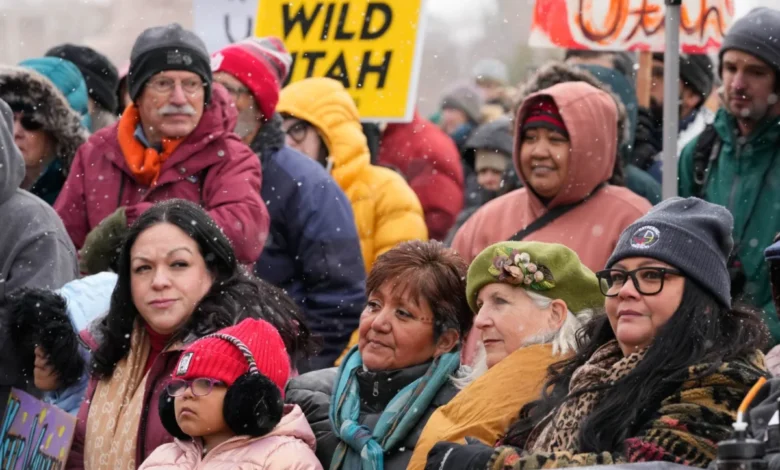
The executive orders, signed in a ceremony attended by Governor Spencer Cox and members of Utah’s congressional delegation, reduce Bears Ears from roughly 1.35 million acres to approximately 121,000 acres. Grand Staircase-Escalante, which previously spanned nearly 1.9 million acres, has been reduced to just over 181,500 acres. In his proclamation, the President asserted that the reductions would "better align the use of these public lands with the public interest," specifically citing the need to access deposits of critical minerals such as copper, nickel, and uranium. However, the move has sparked immediate backlash, including large-scale protests outside the Governor’s Mansion in Salt Lake City, where hundreds gathered to voice their dissent.
The Disconnect Between Political Rhetoric and Public Sentiment
The central tension of the current monument debate lies in the stark contrast between the statements of Utah’s political elite and the results of multiple non-partisan polls. During the signing ceremony, Representative Celeste Maloy (R-UT) argued that the administration was "listening to the people of Utah," particularly local residents who fear that monument designations restrict "multiple uses" of federal lands. Governor Spencer Cox echoed these sentiments, suggesting that the massive size of the original monuments—larger than the state of Delaware—violated the spirit of the law.
Data from Utah State University (USU) and other research institutions tell a different story. In surveys conducted throughout 2024 and 2025, researchers at USU found that 61 percent of Utahns supported or strongly supported the preservation of Bears Ears as a national monument. Conversely, only 19 percent of respondents expressed opposition. When asked specifically about reducing the size of the monument, 53 percent of Utahns were opposed, while only 26 percent supported the idea.
"It is very contradictive of our findings," said Michaelann Nelson, a professor of environmental rhetoric at Utah State University. Nelson, the lead author of the study, noted that politicians appear to be "picking and choosing" which voices they acknowledge, often prioritizing industry interests over the broader public consensus. Jessica Schad, a professor of sociology at USU, added that the issue has become highly politicized, leading to a situation where "politicians aren’t taking into account what residents are preferring."
A Regional Trend: The Mountain West Values Protection
The sentiment in Utah is not an isolated phenomenon but part of a broader trend across the American West. The annual "Conservation in the West" poll, conducted by Colorado College, has tracked public opinion on public lands for over a decade. The 2026 results, which included interviews with voters in Arizona, Colorado, Idaho, Montana, Nevada, New Mexico, Utah, and Wyoming, showed that 91 percent of voters favor keeping existing national monuments in place. This represents a steady increase from 80 percent in 2017.
The support for conservation transcends traditional party lines. According to the Colorado College data, 87 percent of Republicans, 92 percent of independents, and 96 percent of Democrats in the Mountain West support the maintenance of national monuments. Perhaps most notably, support among those identifying with the MAGA movement grew from 81 percent in 2025 to 87 percent in 2026. Lori Weigel, a principal with the Republican public opinion research group New Bridge Strategies, noted that the data consistently shows a public desire for "additional protections for these public lands," rather than a roll-back of environmental safeguards.
Historical Context and the Antiquities Act
The legal battle over these lands centers on the Antiquities Act of 1906. Signed into law by President Theodore Roosevelt, the Act gives the President the authority to protect "historic landmarks, historic and prehistoric structures, and other objects of historic or scientific interest" as national monuments. The law specifies that the protected area should be "the smallest area compatible with the proper care and management of the objects to be protected."
Utah’s Republican leadership has long argued that Democratic presidents have abused this power. Grand Staircase-Escalante was established by President Bill Clinton in 1996, a move that was met with significant local hostility at the time. Bears Ears was designated by President Barack Obama in 2016 following years of advocacy by a coalition of five Native American tribes.
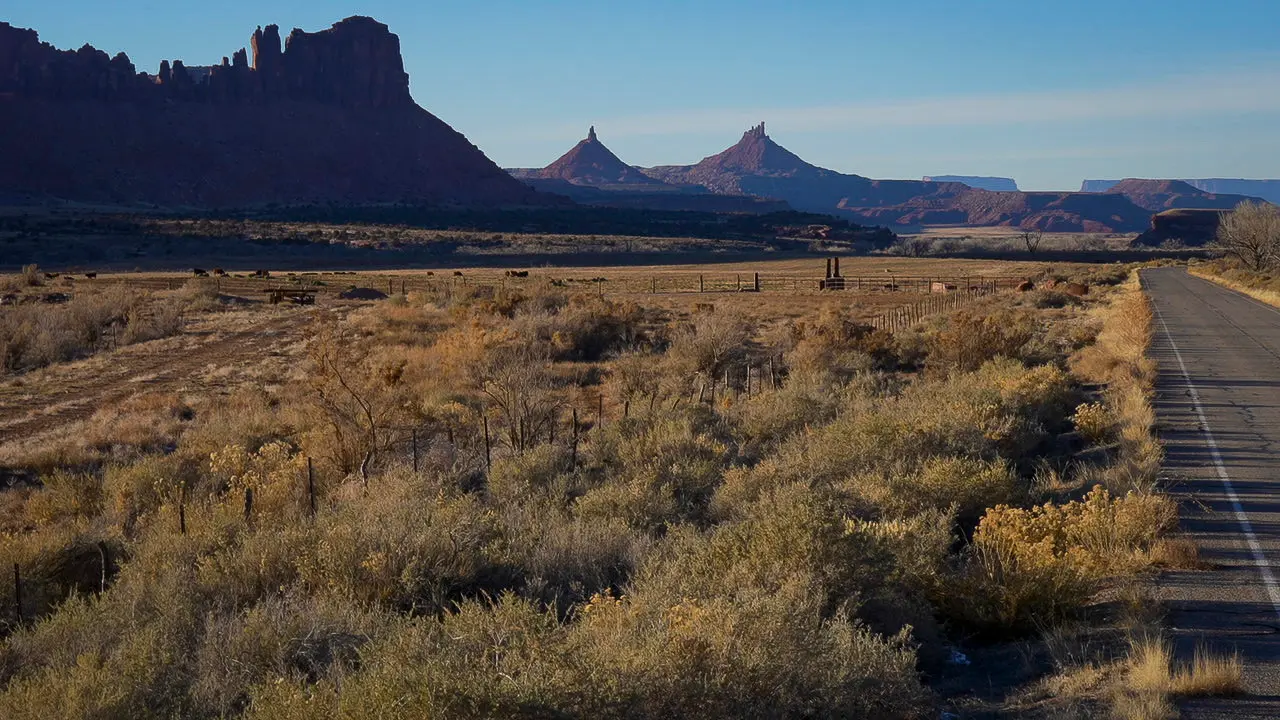
The debate over what constitutes the "smallest area compatible" is at the heart of several ongoing and pending lawsuits. While proponents of the cuts argue that million-acre designations are a form of "federal overreach," conservationists and tribal leaders argue that the cultural and ecological features of the high desert—ranging from ancient cliff dwellings to unique geological formations—are interconnected and require landscape-scale protection.
Economic Drivers: Mining and Mineral Extraction
While the administration has framed the monument reductions as a matter of "fairness" and "recreation access," internal records and the language of the executive orders themselves point toward industrial interests. The regions being excised from the monuments are rich in minerals that are increasingly viewed as vital to national security and the energy transition.
Uranium, in particular, has been a driving force behind the push to shrink Bears Ears. During the first Trump administration in 2017, records revealed that mining companies had lobbied officials to adjust boundaries to exclude areas with high mineral potential. The 2026 orders explicitly mention the region’s deposits of copper and nickel, which are essential for the production of batteries and electronics.
However, critics argue that the economic benefits of mining may be outweighed by the loss of the "amenity economy." Areas surrounding national monuments often see a surge in tourism, outdoor recreation, and a high quality of life that attracts new residents and businesses. A statement from the Utah Senate acknowledged that the designations have brought more visitors to the region but argued that this has caused "degradation" and strained local law enforcement.
Tribal Sovereignty and Cultural Preservation
One of the most significant impacts of the recent executive orders is the disbanding of the Bears Ears Inter-Tribal Commission. The commission was established to provide federal agencies with traditional indigenous knowledge and to ensure that the five tribes with ancestral ties to the land—the Navajo Nation, Hopi Tribe, Ute Indian Tribe, Ute Mountain Ute Tribe, and Pueblo of Zuni—had a seat at the management table.
The removal of tribal oversight is a move that runs contrary to public opinion in Utah. According to a December 2024 survey by New Bridge Strategies, nearly 90 percent of Utahns support Native American tribes having a strong role in managing ancestral lands. Furthermore, 81 percent of respondents believed the administration should honor existing agreements with tribes regarding the management of Bears Ears. Tribal leaders have vowed to fight the orders, citing the thousands of sacred sites, burial grounds, and archaeological treasures that are now left without federal monument protection.
Fact-Checking the Recreation Argument
In justifying the cuts, President Trump claimed that the monument designations "closed off" the land to the public. "You can’t do anything. You can’t go hunting. You can’t go fishing… You can virtually not even walk on it," the President stated during the signing ceremony.
However, land management records indicate that these claims are largely inaccurate. Unlike National Parks, which have stricter regulations, National Monuments managed by the Bureau of Land Management (BLM) and the U.S. Forest Service typically allow for a wide range of activities. Hunting and fishing are permitted and regulated by state authorities within both Bears Ears and Grand Staircase-Escalante. Additionally, many existing off-road vehicle trails remained open under the monument management plans, though new cross-country motorized travel was restricted to protect cultural sites and soil crusts.
Future Implications and Legal Challenges
The reduction of these monuments is expected to trigger a protracted legal battle that could eventually reach the Supreme Court. Environmental groups, such as the Southern Utah Wilderness Alliance (SUWA) and the Sierra Club, along with tribal coalitions, argue that while the Antiquities Act gives a President the power to create a monument, it does not explicitly grant the power to abolish or drastically reduce one. They contend that such authority rests solely with Congress.
The outcome of this legal struggle will have profound implications for the future of the American landscape. If the courts uphold the President’s authority to slash monument boundaries, it could lead to a "yo-yo" effect, where land protections are granted and rescinded with every change in the White House. This uncertainty creates challenges for land managers, local businesses, and the preservation of the nation’s cultural heritage.
As the legal and political dust settles, the data remains clear: the vast majority of those who live in and near these landscapes value their protection. Whether through the lens of spiritual significance, ecological health, or long-term economic stability, the public’s preference for conservation appears to be a rare point of consensus in an otherwise divided political climate. For now, the future of 3 million acres of Utah’s red-rock country hangs in the balance, caught between the mandates of the executive branch and the documented desires of the people.