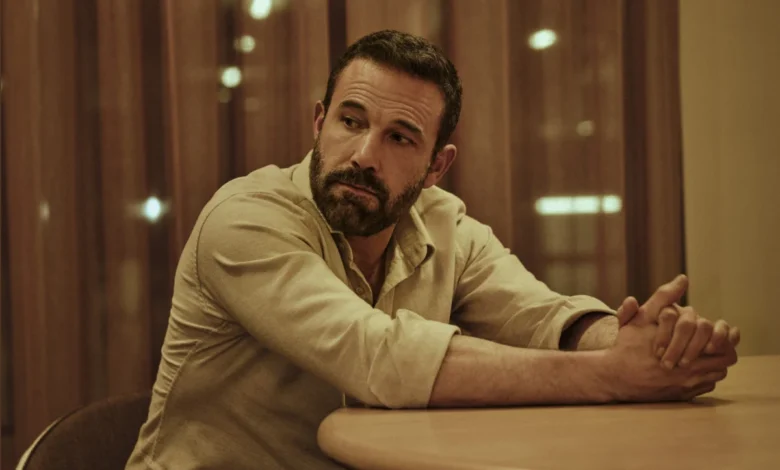
Netflix has officially confirmed its acquisition of InterPositive, the artificial intelligence firm founded by actor and director Ben Affleck, for a substantial $587 million. This figure aligns closely with earlier estimates reported in March, when the streaming giant’s ambitious move into AI technology first surfaced. The confirmation, detailed in a recent Securities and Exchange Commission (SEC) filing, provides a definitive price tag for a deal that signals Netflix’s strategic intent to leverage cutting-edge AI for content creation and operational efficiencies.
A Strategic Leap into AI-Driven Production
The acquisition of InterPositive, a company quietly established by Affleck in 2022, underscores Netflix’s commitment to integrating artificial intelligence into its vast content production pipeline. While the exact nature of InterPositive’s proprietary technology remains under wraps, its core function is understood to be focused on streamlining various aspects of film and television production, with an emphasis on cost savings and enhanced creative output.
Ben Affleck, who served as the sole founder and CEO of InterPositive, will transition into an advisory role as part of the acquisition. The company’s small, specialized staff will also be absorbed into Netflix’s expanding technological infrastructure. This move suggests a deliberate effort by Netflix to harness the expertise and intellectual property developed within InterPositive, rather than simply acquiring a shell company. The initial surprise surrounding the deal, first reported by Bloomberg as a transaction in the vicinity of $600 million, has now been clarified by Netflix’s official disclosure.
The AI Landscape in Entertainment: A Contentious Frontier
The integration of AI into the creative industries has become a focal point of discussion and, at times, significant concern. The entertainment sector, in particular, is navigating a complex landscape where the promise of technological advancement collides with the anxieties of artists, writers, actors, and other creative professionals. Issues surrounding intellectual property, job displacement, and the very definition of creativity are at the forefront of these debates.
Netflix Co-CEO Ted Sarandos addressed the implications of the InterPositive acquisition during the company’s quarterly earnings call, directly acknowledging the sensitivity surrounding AI’s role in production. Sarandos framed the acquisition and the subsequent deployment of AI tools as a means to enhance efficiency and unlock new creative possibilities, rather than a direct replacement for human artistry.
"It’s early days for InterPositive, but we’re broadly seeing that gen-AI is starting to have an impact across hundreds of our productions," Sarandos stated, highlighting areas such as visual effects and animation. He emphasized that the integration of AI is not intended to diminish the role of human talent but to augment their capabilities.
Quantifying the Impact: Data and Projections
Netflix’s financial filings and Sarandos’s commentary provide a glimpse into the tangible benefits the company expects to derive from its investment in AI. The narrative presented is one of enhanced productivity and cost-effectiveness, with the ultimate goal of reinvesting these savings into the creation of more content, thereby fueling subscriber engagement and the company’s growth.
According to Sarandos, generative AI (gen-AI) is rapidly scaling across the entire entertainment creation process, from initial concept development and pre-visualization to post-production and final delivery. He asserted that Netflix is now producing "higher-quality output more quickly and effectively than we would have using traditional methods."
The company reported that gen-AI workflows have already been implemented in approximately 300 of its titles, with a significant concentration in post-production. These tools are being utilized for particularly complex shots and sequences, such as crowd scenes or battle sequences, which might otherwise have been omitted from productions due to prohibitive costs or time constraints.
Case Study: "The American Experiment"
A compelling example cited by Sarandos was a recent documentary series, The American Experiment. This production incorporated 17 minutes of AI-enhanced footage, which was reportedly produced "twice as fast and at half the cost of previous options." Such concrete data points serve to illustrate the quantifiable advantages that Netflix is beginning to realize through its AI initiatives.
These cost savings, Sarandos explained, are not merely about reducing expenditure but are integral to a larger strategy. "All of that said, we reaffirm our belief that it takes great artists to make something great, and AI is not changing that," he emphasized. The realized savings, he continued, "will likely be reinvested into more content on the service, which fuels higher-quality engagement. That whole revenue/profit flywheel that’s going to come from that is what we’ve been talking about from Day 1."
Timeline of the Acquisition
The journey from initial speculation to official confirmation of Netflix’s acquisition of InterPositive involved several key stages:
- Early 2022: Ben Affleck quietly forms InterPositive, an AI firm focused on production efficiencies.
- March 2026 (Estimated): Reports emerge from sources like Bloomberg suggesting Netflix is in advanced talks to acquire InterPositive for an estimated $600 million. This news generates significant buzz within the entertainment and tech industries due to the substantial valuation and the involvement of a high-profile figure like Affleck.
- Thursday, [Date of Initial Filing]: Netflix releases a shorter SEC filing that alludes to the financial implications of recent acquisitions, without explicitly naming InterPositive or providing a precise figure.
- Friday, [Date of Final Filing]: Netflix submits a more comprehensive SEC filing detailing its second-quarter financial results. This filing explicitly confirms the acquisition of InterPositive and reveals the final purchase price of $587 million.
- Quarterly Earnings Call: Ted Sarandos addresses the InterPositive acquisition and the role of AI in production during the company’s earnings call, providing insights into the strategic rationale and expected benefits.
This timeline highlights the deliberate, yet initially discreet, approach Netflix took in integrating this significant AI asset into its operations.
Broader Implications and Future Outlook
The acquisition of InterPositive by Netflix is more than just a financial transaction; it represents a significant signal about the future direction of content creation and distribution. As a leading global streamer, Netflix’s strategic decisions often influence broader industry trends.
Industry-Wide Impact
- AI Integration Acceleration: This move is likely to accelerate the adoption of AI tools across the entertainment industry. Competitors may feel pressured to explore similar acquisitions or in-house AI development to remain competitive in terms of production efficiency and cost management.
- Talent and Labor Discussions: The acquisition will undoubtedly intensify ongoing discussions between studios, streamers, and creative unions regarding the role of AI in production. The potential for AI to automate certain tasks and the implications for employment will remain a critical point of negotiation.
- Technological Innovation: The investment suggests a commitment to pushing the boundaries of AI in creative applications. This could lead to new forms of storytelling, enhanced visual effects, and more personalized content experiences for viewers.
Analysis of the Strategic Rationale
Netflix’s investment in InterPositive can be viewed through several lenses:
- Cost Optimization: In an era of increasing content spending, AI offers a potential avenue for significant cost savings, particularly in labor-intensive areas like visual effects and post-production.
- Enhanced Creative Capabilities: Beyond cost savings, AI can enable the creation of ambitious visual sequences that were previously unfeasible due to budget or time constraints. This allows for greater creative freedom and the realization of more complex artistic visions.
- Competitive Advantage: By securing cutting-edge AI technology and expertise, Netflix aims to gain a competitive edge in a rapidly evolving market, differentiating itself through innovative production methods and potentially faster content delivery.
- Future-Proofing: The acquisition demonstrates a proactive approach to embracing technological advancements that are poised to reshape the entertainment landscape.
The Human Element Remains Paramount
Despite the focus on technological integration, Sarandos’s reaffirmation that "it takes great artists to make something great" is a crucial point. Netflix’s strategy appears to be one of augmentation rather than replacement. The aim is to empower artists with more sophisticated tools, allowing them to focus on the creative aspects of their work while AI handles more repetitive or computationally intensive tasks. This nuanced approach is critical for maintaining the artistic integrity of their content and navigating the sensitivities within the creative community.
The substantial investment by Netflix in InterPositive marks a pivotal moment, signaling a bold step into an AI-driven future for content creation. While the full impact of this acquisition will unfold over time, it undoubtedly positions Netflix at the forefront of technological innovation within the global entertainment industry, with both promising efficiencies and complex challenges ahead.