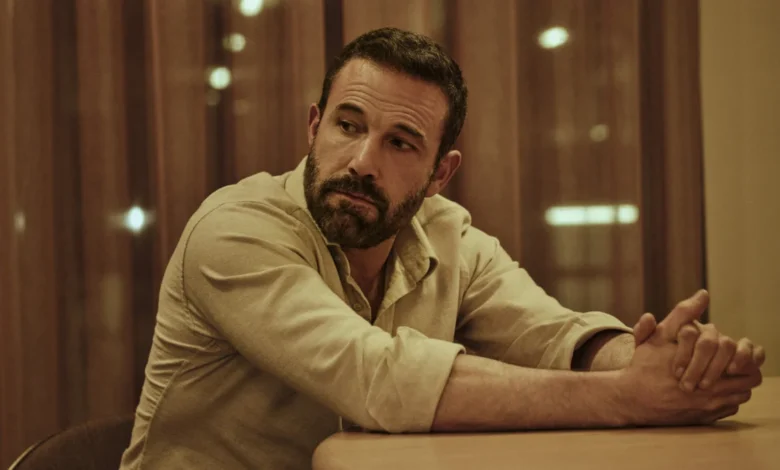
In a significant strategic move that underscores the escalating integration of artificial intelligence into the entertainment industry, Netflix has officially confirmed the acquisition of InterPositive, a pioneering AI-powered filmmaking startup co-founded by acclaimed actor and director Ben Affleck, for a staggering $587 million in cash. The details of the high-profile transaction, which had been the subject of industry speculation for months, were finally disclosed in a recent regulatory filing by the streaming giant, cementing its commitment to leveraging advanced technological solutions in content creation.
A Landmark Acquisition: Unpacking the Financial and Strategic Dimensions
The announcement of the acquisition initially surfaced in March, with Ben Affleck himself providing a statement that articulated the core ethos behind InterPositive’s development: to "protect the power of human creativity." At the time, while Netflix confirmed that the entire InterPositive team would be integrated into its operations and that Affleck would assume a senior advisory role, the precise financial terms of the deal remained undisclosed. Initial reports, particularly one from Bloomberg, had estimated the deal’s value could reach up to $600 million, a figure now largely corroborated by the official filing. The confirmed $587 million cash payment positions InterPositive as one of the most substantial AI-focused acquisitions in the entertainment sector to date, signaling both the perceived value of its technology and the strategic urgency with which Netflix is pursuing AI integration.
InterPositive’s suite of AI tools is specifically designed to address and rectify "real-world production challenges" that frequently plague post-production. Affleck highlighted their utility in scenarios such as compensating for "missing shots, background replacements or incorrect lighting." These capabilities suggest a sophisticated application of generative AI, computer vision, and machine learning algorithms that can intelligently analyze footage and synthesize new elements or correct existing ones with remarkable fidelity. This level of technological assistance promises to streamline workflows, reduce the need for costly reshoots, and empower filmmakers to achieve their creative visions more efficiently, even when faced with unforeseen on-set complications.
Chronology of a Strategic Alliance: From Concept to Confirmation
The path to this major acquisition has been marked by several key milestones, reflecting a deliberate and accelerating pivot by Netflix towards AI-driven production efficiencies and creative enhancements:
- Pre-March 2026: While the exact inception date of InterPositive remains private, its development likely spanned several years, with Ben Affleck and his co-founders quietly developing the AI technology. Affleck, known for his keen interest in technological advancements and efficiency in filmmaking, would have overseen the strategic direction and practical application of the tools.
- March 2026: Initial Acquisition Announcement: Netflix publicly announced its intent to acquire InterPositive. This initial statement emphasized the strategic alignment of the two entities, with Affleck’s vision for preserving human creativity through AI resonating with Netflix’s own stated goals of empowering storytellers. The non-disclosure of financial terms at this stage fueled considerable industry speculation regarding the valuation.
- March 2026 (Post-Announcement): Bloomberg Report: Shortly after the initial announcement, a report from Bloomberg suggested the deal could be valued at up to $600 million. This figure, based on industry insider information and market analysis, provided the first concrete indication of the magnitude of Netflix’s investment.
- Recent Regulatory Filing: The definitive confirmation of the $587 million cash payment came through Netflix’s latest regulatory filing, providing transparency and solidifying the financial details of the transaction. This filing also serves as an official record of the acquisition for investors and the public.
- Recent Earnings Report: Broader AI Integration: Coinciding with or shortly before the regulatory filing, Netflix’s most recent earnings report revealed a broader, already active integration of generative AI within its content pipeline. The company stated that "around 300 of its titles have already used generative AI" this year. This statistic provides critical context for the InterPositive acquisition, demonstrating that the startup is not an isolated experiment but rather a significant enhancement to an already established and growing AI strategy within Netflix.
Netflix’s Expanding AI Footprint: A Strategic Imperative
The revelation that Netflix has already employed generative AI in approximately 300 of its titles this year speaks volumes about the company’s long-term strategic vision. This is not merely an exploratory phase; it is a full-scale integration of AI into its core business model of content production. The acquisition of InterPositive can be viewed as a vertical integration strategy, bringing specialized, high-value AI capabilities in-house rather than relying solely on third-party vendors or developing all tools from scratch.
Netflix’s proactive stance on AI is driven by several factors:
- Cost Efficiency: AI tools can significantly reduce the time and expense associated with complex post-production tasks, visual effects, and even reshoots. By automating or assisting in these processes, Netflix can potentially produce more content, or higher-quality content, within existing or even reduced budgets.
- Creative Augmentation: Rather than replacing human creativity, tools like InterPositive are designed to augment it. They free up artists and filmmakers from tedious, repetitive tasks, allowing them to focus on higher-level creative decisions. They also enable the realization of creative ideas that might otherwise be prohibitively expensive or technically challenging.
- Production Velocity: In a highly competitive streaming landscape where subscriber retention often hinges on a consistent flow of fresh, engaging content, AI can accelerate various stages of production, from pre-visualization to final delivery, ensuring a more robust content pipeline.
- Competitive Advantage: By pioneering and internalizing advanced AI filmmaking technologies, Netflix aims to establish a significant lead over its competitors, many of whom are also exploring AI but may not have made such substantial, targeted acquisitions.
InterPositive’s Technological Edge: Beyond Simple Fixes
While the initial description of InterPositive’s capabilities focuses on "missing shots, background replacements or incorrect lighting," the implied technology is far more advanced than simple digital touch-ups. These challenges require sophisticated AI models capable of:
- Semantic Understanding: The AI must understand the context of a scene, the intent of the director, and the narrative flow to intelligently "fill in" missing information or correct discrepancies.
- Generative Inpainting/Outpainting: For missing shots or extending backgrounds, the AI likely employs generative adversarial networks (GANs) or diffusion models to create photorealistic content that seamlessly blends with existing footage.
- Lighting Reconstruction: Correcting "incorrect lighting" involves analyzing the scene’s geometry, existing light sources, and material properties to realistically re-light elements or entire environments, a complex task even for human artists.
- Object Removal/Replacement: This requires precise segmentation, tracking, and intelligent infilling to remove unwanted elements or replace them with new, AI-generated content.
The integration of such tools directly into Netflix’s production pipeline suggests a future where the line between what was physically shot and what was digitally enhanced or generated becomes increasingly blurred, opening new frontiers for visual storytelling.
Reactions and Implications: A Shifting Landscape
The acquisition, while celebrated for its technological prowess, also lands in a broader industry context fraught with discussions about AI’s role, particularly following the recent WGA and SAG-AFTRA strikes. A central concern during these labor disputes was the potential for AI to displace human jobs, dilute creative credits, or exploit actor likenesses without fair compensation.
Ben Affleck’s statement about "protecting the power of human creativity" is particularly salient in this environment. It attempts to position InterPositive’s technology as an enabler rather than a replacement. The nuance here is crucial: if AI tools can take over the more mundane, labor-intensive, or error-correcting aspects of filmmaking, human creatives can theoretically dedicate more time and energy to the truly artistic and conceptual elements.
Potential Implications for Various Stakeholders:
- Filmmakers and Directors: Increased creative freedom and problem-solving capabilities in post-production. The ability to "fix it in post" takes on an entirely new dimension.
- Actors: Continued concerns about likeness and digital doubles. Clear guidelines and compensation frameworks will be vital to maintain trust and collaboration.
- Post-Production Artists (VFX, Editors, Colorists): A shift in skill sets will be necessary. Instead of manual manipulation, artists may become "AI supervisors," guiding the AI and refining its outputs, requiring a blend of artistic vision and technical understanding of AI capabilities. Some entry-level or highly repetitive tasks might be automated.
- Studios and Production Houses: Reduced costs, faster turnaround times, and the ability to achieve higher production values within budget constraints. This could lead to an increase in the sheer volume of content produced.
- Audiences: Potentially higher quality visuals, fewer technical glitches, and more ambitious cinematic experiences. The seamlessness of AI integration will be key to audience acceptance.
The Broader Market Context: A Race for AI Dominance
Netflix’s move is not isolated. The entire entertainment industry is engaged in a rapid embrace of AI. Major studios like Disney, Warner Bros. Discovery, and Universal are all investing heavily in generative AI for scriptwriting, character animation, visual effects, and even marketing. Tech giants such as Google, Meta, and OpenAI are simultaneously developing increasingly powerful general-purpose generative AI models that have broad applications in creative fields.
The acquisition of InterPositive gives Netflix a proprietary edge, allowing it to tailor the technology specifically to its production needs and integrate it deeply into its existing infrastructure. This internal capability could prove to be a significant competitive differentiator in the long run, offering greater control over technology development and intellectual property.
Future Outlook: The AI-Powered Cinematic Landscape
The $587 million acquisition of InterPositive by Netflix is more than just a financial transaction; it is a profound statement about the future direction of filmmaking. It signals a future where artificial intelligence is not merely a supplementary tool but an intrinsic component of the creative process, from initial concept to final delivery.
The challenge for Netflix, Ben Affleck, and the broader industry will be to navigate this technological revolution responsibly. This involves developing ethical AI guidelines, fostering transparency, ensuring fair compensation for all contributors, and, crucially, upholding the very "human creativity" that Affleck emphasized. If successful, this integration could usher in a new golden age of visual storytelling, where technological limitations recede, and the only boundaries are those of imagination. However, the industry must remain vigilant to ensure that the pursuit of efficiency and innovation does not inadvertently diminish the human element that has always been at the heart of compelling cinema. The coming years will undoubtedly reveal the full scope of this transformation, with Netflix positioned at its vanguard.