The delicate geopolitical balance between Washington and Beijing is facing a new test as international trade tensions intersect with the explosive growth of artificial intelligence infrastructure. Behind the scenes of a recent high-stakes diplomatic summit between US President Donald Trump and Chinese President Xi Jinping, policy shifts are quietly taking shape. According to industry insiders, Beijing’s technological oversight authorities are actively considering a relaxation of import restrictions, which could potentially allow major domestic technology firms to acquire millions of restricted Nvidia processors over the coming year.
This prospective policy reversal highlights the mounting pressure Chinese enterprises face as they scale up advanced language and computational models faster than domestic supply chains can support. However, the potential resumption of chip shipments to China also re-ignites a fierce domestic debate within the United States regarding national security, intellectual property protection, and the outsized influence of commercial interests on federal technology policy.
Diplomatic Stalling and the Fragile Tech Truce
The backdrop to these developments is marked by a diplomatic stalemate. During their recent bilateral meeting, President Trump and President Xi made virtually no headway on the contentious landscape of AI regulation and export controls. Neither administration displayed an appetite for unilateral concessions. The pre-existing trade truce, already viewed as tenuous by international trade analysts, was extended for a brief two-month window.
Policy analysts warn that this window could easily fracture. The United States is widely expected to introduce stringent new export controls soon, a move that could provoke swift retaliation from Beijing, potentially targeting critical mineral exports such as rare earths. Yet, even as overarching trade relations remain frozen in a state of mutual suspicion, microchip manufacturing giant Nvidia appears to be carving out a unique pathway toward restoring its footprint in the lucrative Chinese market.
Shifting Regulatory Landscapes: From H200 Bans to Gaming Chips
Nvidia’s trajectory under the Trump administration has been characterized by sharp pivots. Upon taking office, President Trump initially questioned the company’s dominance, reportedly asking advisers, "What the hell is Nvidia?" Rather than dismantling the export controls instituted during the Biden administration, the Trump White House initially intensified them, outright banning the export of advanced H200 chips to China and briefly considering proposals to break up the hardware manufacturer to foster domestic competition.
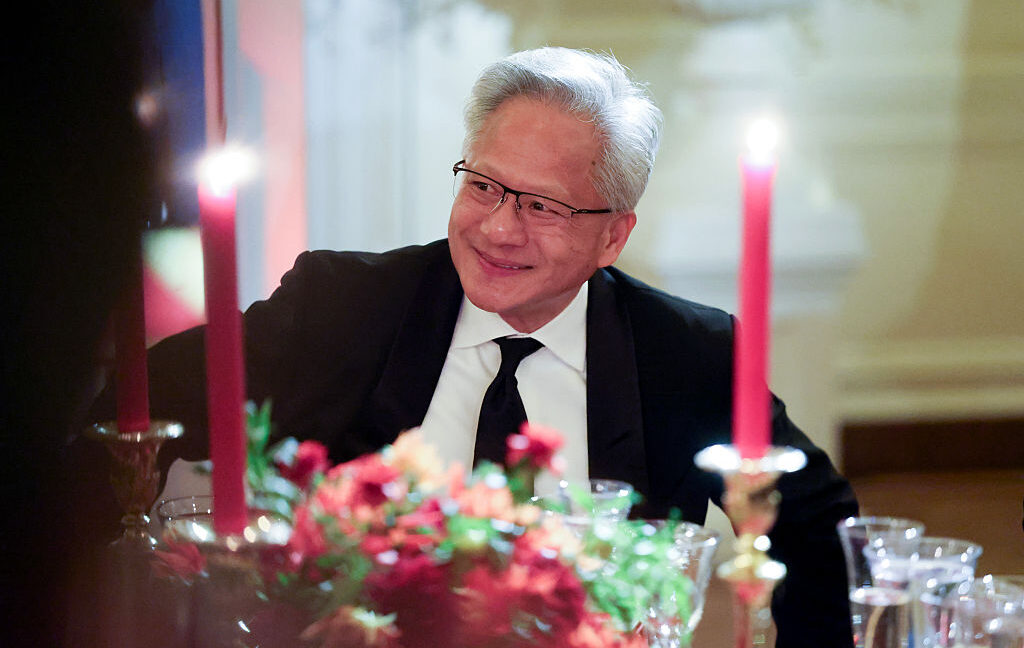
The turning point arrived during a high-profile dinner meeting at Mar-a-Lago between President Trump and Nvidia CEO Jensen Huang. Following the encounter, the administration abruptly reversed course, lifting export restrictions on H200 chips and embracing a philosophy that aligns closely with Huang’s pro-expansion outlook. Since then, Huang has emerged as one of the president’s most influential informal technology advisers, frequently communicating via phone and appearing publicly alongside the administration’s leadership.
Despite this alignment at the executive level, national security experts and federal law enforcement agencies remain deeply divided. The Federal Bureau of Investigation (FBI) has recently raised alarms over aggressive intellectual property acquisition strategies, publicly accusing multiple Chinese artificial intelligence firms of systematically copying and distilling American frontier models. While federal investigators characterize these actions as intellectual property theft, Huang has offered a more permissive view, publicly comparing model distillation to legitimate market competition and arguing that testing and analyzing competitor architecture is a standard mechanism of technological advancement.
The Proposed Alibaba and ByteDance Procurements
Despite regulatory friction, economic pressures in Beijing are driving a re-evaluation of hardware bans. Sources familiar with ongoing discussions report that China’s Ministry of Industry and Information Technology has instructed major domestic technology conglomerates, including Alibaba and ByteDance, to draft formal acquisition plans targeting specific Nvidia hardware—notably the RTX Pro 5500 processors.
Although these units are technically classified as gaming components rather than enterprise-grade data center accelerators, Chinese technical teams have devised operational configurations to integrate them into server clusters. Industry sources indicate that standard deployment models involve mounting multiple units—such as eight RTX Pro 5500s per server—to collectively power resource-intensive AI models. ByteDance alone has reportedly contemplated orders scaling up to one million units if official approval is granted, a volume that would instantly secure multiple quarters of projected sales for Nvidia.
This potential influx of hardware comes at a critical juncture for Nvidia’s financial diversification. Due to delayed approvals and prior regulatory restrictions, Nvidia’s data center revenue derived directly from the Chinese market plummeted to less than one percent during the most recent fiscal quarter. Securing approval for these alternative chip classes would offer the corporation a vital bridge to recapture lost market share.
Divergent Perspectives on AI Risk and Economic Growth
The growing influence of hardware manufacturers over federal policy has exposed a deep ideological rift within the technology sector. On one side stand semiconductor designers, infrastructure providers, and corporate executives who advocate for rapid, unobstructed deployment. Proponents of this view, championed by Huang, contend that maintaining global market leadership requires continuous sales volume and broad technological diffusion, arguing that overly restrictive policies will merely cede ground to international competitors without enhancing national security.

Conversely, prominent AI safety researchers, software developers from frontier labs like OpenAI and Anthropic, and congressional watchdogs urge extreme caution. Critics argue that unchecked hardware proliferation risks accelerating capabilities beyond humanity’s ability to maintain safety alignments. Furthermore, economic analysts express concern that prioritizing short-term corporate revenues could eventually strain domestic supply chains, leaving American data centers with depleted hardware reserves at a time when computational power dictates geopolitical advantage.
Legislative figures have also voiced frustration over the administration’s diplomatic priorities. Lawmakers on congressional oversight committees have pointed out that international summits offer a prime platform to establish formal technical working groups dedicated to monitoring and mitigating cross-border AI threats. Instead, observers note that bilateral discussions have largely bypassed risk mitigation in favor of maintaining high-velocity technological development.
Broader Economic and Geopolitical Implications
As the global technology race accelerates, the question of whether hardware manufacturers should dictate geopolitical strategy remains one of the defining policy questions of the decade. While administration officials maintain that national prosperity and industry leadership are inextricably linked, safety advocates warn against ignoring structural vulnerabilities for the sake of immediate commercial gains.
Whether Beijing ultimately authorizes the large-scale import of alternative Nvidia processors will serve as an immediate bellwether for the resilience of international tech supply chains. For Nvidia, successfully navigating these regulatory channels means securing its financial dominance across both hemispheres. For policymakers in Washington and Beijing, the ongoing struggle to reconcile rapid innovation with systemic risk management will continue to shape the trajectory of global technological development for years to come.