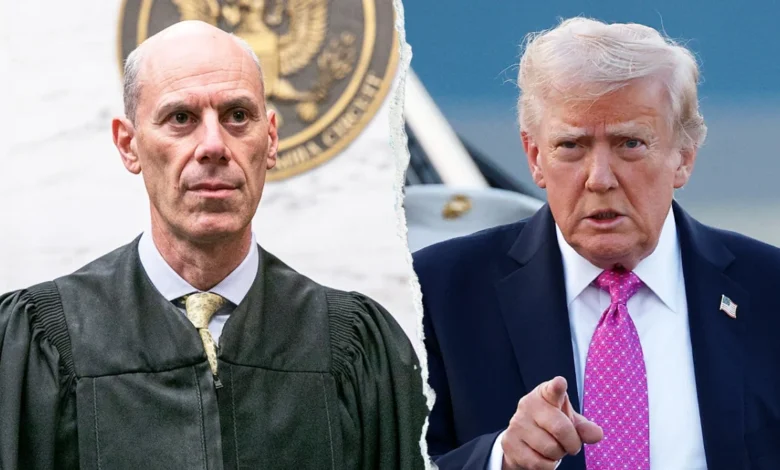
The Trump administration has initiated a significant and unprecedented legal maneuver, moving to deport an unnamed undocumented immigrant suspected of terrorism through the Alien Terrorist Removal Court (ATRC), a specialized judicial body that has remained dormant and unused since its creation nearly three decades ago. This marks the first-ever attempt to invoke the ATRC’s unique authority, which permits the government to remove non-citizens suspected of terrorist activities using sealed classified evidence, a process that has long been a subject of intense legal and ethical debate.
The Department of Justice officially filed its inaugural application for a removal order with the ATRC on July 15. This filing represents a pivotal moment, potentially reviving a legal mechanism that legal scholars have often dubbed a "zombie" court due to its existence without ever having heard a single case. Its activation could reshape the landscape of national security and immigration enforcement, offering the executive branch a powerful, albeit controversial, new tool for addressing perceived threats.
The ATRC: A Tool Forged in the Shadow of Terrorism
The Alien Terrorist Removal Court was established by Congress as part of the Antiterrorism and Effective Death Penalty Act (AEDPA) of 1996, a landmark piece of legislation signed into law by President Bill Clinton. The Act was a direct response to a series of high-profile terrorist attacks, including the 1993 World Trade Center bombing and the 1995 Oklahoma City bombing, which underscored the urgent need for enhanced counterterrorism measures. During the bill’s signing, President Clinton articulated its intent clearly, stating, "From now on we can quickly expel foreigners who dare to come to America and support terrorist activities."
The court’s structure is distinct, composed of five federal district judges who serve staggered five-year terms, designated by the Chief Justice of the United States. Its core mandate is to handle deportation cases where the government asserts that its evidence against a non-citizen suspected of terrorism cannot be publicly disclosed without jeopardizing national security. In such instances, the respondent is provided with an unclassified summary of the charges rather than direct access to the classified evidence itself. This provision, while designed to protect sensitive intelligence, has been a consistent flashpoint for civil liberties advocates and legal experts who raise profound concerns about due process and the right to confront one’s accusers.
Despite its creation with such a potent purpose, the ATRC remained an untouched instrument. According to a staff report from the 9/11 Commission, Department of Justice attorneys considered approximately 50 cases for potential ATRC referral by 1998, and another 50 over the subsequent two years. However, every single one of these cases was ultimately rejected for various reasons, with terrorism-related deportations instead proceeding through the regular immigration court system, albeit often with the challenges inherent in handling sensitive information in open court. The lack of use led to its "zombie" moniker, a court technically alive but practically inert.
The Current Case: A Test of the ATRC’s Efficacy
The Justice Department’s initial application to the ATRC for the unnamed individual was notably sparse, providing minimal details about the person’s identity, the specific alleged conduct, or the precise section of anti-terrorism law being invoked. Following arguments from Justice Department officials, ATRC Chief Judge Joan N. Erickson, an appointee of President George W. Bush, requested additional information.
In her directive, Judge Erickson noted, "The Court had questions about the nexus that the government alleges between the actions of the respondent and the specific sections and subsections it invokes with respect to those actions." She further elaborated that "The answers persuaded the Court that the Government could benefit from the opportunity for more thoughtful consideration," granting the Justice Department a deadline to provide the necessary documentation. This initial judicial scrutiny underscores the rigorous standards the court intends to apply, even in its inaugural proceedings, and highlights the complexities inherent in cases reliant on classified intelligence.
Broader Context: Executive-Judicial Tensions in Immigration
This unprecedented move comes amid ongoing tensions between the Trump administration and the federal judiciary over immigration enforcement policies. The administration has repeatedly faced judicial resistance, with federal judges frequently blocking, delaying, or narrowing key parts of its immigration enforcement agenda, from border wall funding to asylum policies.

Notably, the decision to activate the ATRC follows months after Chief U.S. District Judge James Boasberg in Washington, D.C., explicitly pointed to the long-dormant court as a potential alternative for handling terrorism-related deportation cases. Judge Boasberg’s comments arose during his questioning of the Trump administration’s use of the Alien Enemies Act, a wartime statute, to deport alleged members of the Venezuelan gang Tren de Aragua.
During a March hearing, Judge Boasberg queried, "In fact, Congress has an answer for us, doesn’t it? Because they created the Alien Terrorist Removal Court. So if there’s a national security concern with having these hearings, whether via habeas or otherwise, you can always go to the ATRC, which would be a first, but that’s what it’s there for, right?" His remarks came as he temporarily blocked the administration from employing the Alien Enemies Act for these removals, pending a determination of the statute’s lawful application. He even ordered deportation flights already en route to return, initiating a high-profile legal confrontation between the executive and judicial branches. The Justice Department’s subsequent turn to the ATRC can be seen, in part, as a direct response to this judicial guidance and a strategic effort to find a more judicially resilient pathway for certain deportations.
Legal and Political Reactions
The activation of the ATRC has elicited strong reactions from various legal and political corners. Hans von Spakovsky, a senior legal fellow at Advancing American Freedom, expressed strong support for the administration’s decision, telling Fox News Digital, "I think it is a sign of negligence, frankly, of prior presidents that they did not use this special court, this special procedure that was specifically set up by Congress, so that they could quickly get aliens — aliens who were either terrorists or supported terrorist activities — out of the U.S." He views the ATRC as a "much stronger tool" that could streamline terrorism-related deportations and potentially reduce interference from what he described as "rogue" liberal judges.
However, the use of secret evidence, a cornerstone of the ATRC’s procedure, has historically drawn sharp criticism from civil liberties advocates and some political figures. Then-Senator Joe Biden, for instance, vociferously opposed this provision during the 1996 debate over AEDPA. He famously lambasted the concept, stating, "You and me, Judge—me, the prosecutor; you, the judge—let’s deport him in a secret hearing, using secret evidence. We know you did it, and we can’t tell you how we know. Now I think that is about as un-American as it gets." This sentiment reflects long-standing concerns about the erosion of fundamental due process rights when an individual cannot fully examine the evidence against them. Legal scholars like David Cole, a professor at Georgetown Law, have consistently argued that reliance on secret evidence undermines the adversarial system of justice, creating an inherent imbalance where the government possesses an unchallengeable advantage.
Implications for National Security and Due Process

The successful activation and utilization of the ATRC could have profound implications. From a national security perspective, it offers the government a specialized avenue to remove individuals deemed high-risk threats without compromising sensitive intelligence sources and methods. In an era of evolving global terrorism and increasingly complex national security challenges, proponents argue this efficiency is paramount. The ability to act swiftly and decisively against suspected alien terrorists, particularly those whose activities are intertwined with clandestine networks, could be seen as a critical enhancement to the nation’s protective apparatus.
Conversely, the use of secret evidence raises significant due process concerns. Critics argue that even with an unclassified summary, the inability of a respondent or their legal counsel to directly challenge the underlying classified evidence fundamentally compromises the fairness of the proceedings. This tension between national security imperatives and individual rights is a perennial challenge in democratic societies, and the ATRC’s activation brings it sharply back into focus. The precedent set by this first case could determine whether the ATRC becomes a frequently used instrument or remains a rarely invoked last resort, with its impact on the balance of powers between the executive, legislative, and judicial branches yet to be fully understood.
Furthermore, the ATRC’s use could influence the broader immigration enforcement landscape. Should it prove effective and withstand legal challenges, it might encourage future administrations to explore other specialized judicial pathways for complex immigration cases, potentially leading to a more segmented and nuanced approach to deportation proceedings. It also signals a continued effort by the executive branch to assert its authority in immigration matters, particularly in areas intersecting with national security, even when faced with judicial skepticism in conventional courts. The unfolding case will be closely watched by legal scholars, civil liberties organizations, and national security experts alike, as it promises to illuminate the boundaries of executive power and judicial oversight in the critical domain of counterterrorism and immigration.