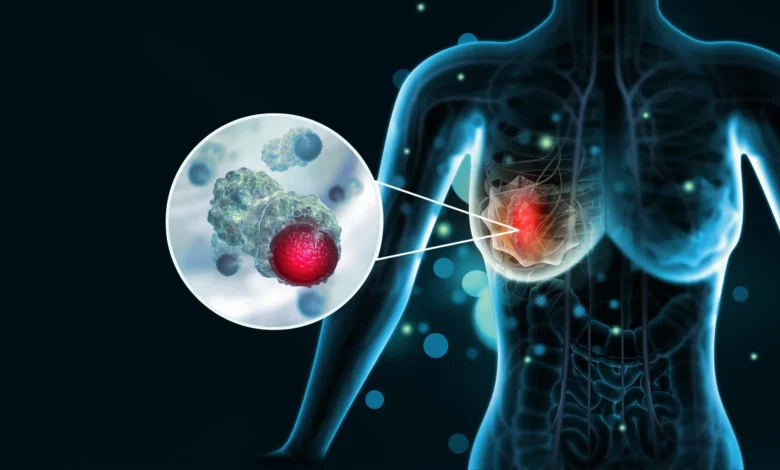
A sweeping new epidemiological study published in the Journal of Clinical Oncology has established a concerning statistical association between elevated blood concentrations of legacy per- and polyfluoroalkyl substances (PFAS)—commonly referred to as "forever chemicals"—and an increased incidence of estrogen receptor-negative (ER-negative) breast cancer. Conducted by researchers at the National Institutes of Health (NIH), a division of the U.S. Department of Health and Human Services (HHS), the investigation suggests that women harboring higher systemic levels of two prevalent compounds, perfluorooctanoic acid (PFOA) and perfluorooctanesulfonic acid (PFOS), face a markedly heightened risk of developing this aggressive and historically difficult-to-treat malignancy.
While previous scientific literature has widely explored the bioaccumulation of synthetic chemicals in human tissue and their broad environmental footprints, this
specific inquiry zeroes in on a particularly dangerous phenotype of breast cancer. ER-negative tumors lack the cellular receptors that typically respond to the hormone estrogen, rendering standard hormone-blocking therapies ineffective. Consequently, these cancers generally present clinical management challenges, exhibit faster growth rates, and correlate with poorer long-term prognoses. The findings illuminate a potential environmental contributor to a disease subtype whose etiology has remained largely enigmatic to the medical community.
Chronology and Methodology of the Sister Study
The foundational data for this investigation were drawn from the Sister Study, a large-scale, prospective cohort project spearheaded by the National Institute of Environmental Health Sciences (NIEHS), part of the NIH. Designed to uncover the environmental and genetic determinants of breast cancer, the Sister Study recruited heavily across the United States and Puerto Rico between 2003 and 2009. The recruitment framework focused uniquely on enrolling women who had no personal history of breast cancer at baseline, but who had a full or half-sister who had been diagnosed with the disease, thereby enriching the cohort for genetic susceptibility while allowing scientists to track environmental exposures prospectively.
In total, the Sister Study enrolled 50,884 women between the ages of 35 and 74. For the specific PFAS investigation, researchers utilized a nested case-control design. They analyzed archived blood samples that had been collected from participants years prior to any cancer diagnosis. The final analytical sample comprised 1,609 women who subsequently developed breast cancer and a matched control group of 2,269 women who remained cancer-free.
By measuring the baseline serum concentrations of 17 distinct PFAS compounds, the research team was able to temporally link past exposure levels with subsequent disease outcomes. The laboratory analysis revealed no generalized, statistically significant association between overall breast cancer risk and the presence of these chemicals. However, when parsing the data by tumor subtype, a striking divergence emerged regarding ER-negative diagnoses.
Quantifying the Risk: Statistical Findings
The quantitative results of the NIH investigation underscore a dose-dependent vulnerability regarding specific legacy PFAS compounds. When researchers stratified participants into exposure quartiles based on their blood concentrations, the comparative risk differentials proved substantial.
Women falling into the highest exposure category for PFOA demonstrated a 67% higher rate of developing ER-negative breast cancer relative to those in the lowest exposure tier. The correlation was even more pronounced for PFOS. Participants exhibiting the highest serum concentrations of PFOS experienced a 93% elevation in the rate of ER-negative breast cancer—nearly doubling the incidence rate observed in the lowest exposure quartile.
To validate these observational results, the research team conducted a rigorous meta-analysis incorporating prior independent scientific literature. This supplementary evaluation corroborated the primary findings, strengthening the scientific consensus that legacy PFAS exposure contributes disproportionately to the genesis of hormone receptor-negative malignancies.
Epidemiologists and study authors emphasize that these figures denote relative risk differences across population subgroups rather than an absolute diagnostic certainty for any single individual. Furthermore, the observational nature of the cohort study establishes a strong statistical association rather than definitive, direct causation, underscoring the necessity for continued mechanistic research.
Official Responses and Regulatory Implications
The publication of the study has drawn immediate attention from federal health leadership and regulatory watchdogs, amplifying ongoing policy debates concerning chemical safety and environmental justice.
"Women deserve clear answers about how chemicals in their environment may affect their health," stated HHS Secretary Robert F. Kennedy, Jr. "This NIH study links two forever chemicals to a higher risk of ER-negative breast cancer and demands further investigation. Under President Trump’s leadership, we will pursue the evidence, confront environmental health risks, and give women the information they need to protect their health."
The institutional response reflects a growing bipartisan and administrative urgency surrounding the pervasive nature of PFAS compounds. Although PFOA and PFOS have been largely phased out of active manufacturing in the United States under historical voluntary agreements and subsequent regulatory pressure, their moniker as "forever chemicals" is well-earned. Characterized by robust carbon-fluorine bonds, these synthetic agents resist thermal, chemical, and biological degradation. Consequently, they persist indefinitely in aquatic ecosystems, soil, and wildlife, while bioaccumulating in human blood serum, where they can remain detectable for years after exposure has ceased.
Dr. Alexandra White, an NIH Stadtman Investigator who led the research effort, noted the clinical significance of uncovering a modifiable risk factor for such an aggressive disease. "Our findings, which we confirmed using a meta-analysis of prior research, indicate that certain legacy PFAS, including PFOA and PFOS, are associated with a higher risk of ER-negative breast cancer, a more aggressive tumor type with few known risk factors," she remarked.
Biological Mechanisms and Unanswered Scientific Questions
The revelation that PFOA and PFOS preferentially associate with ER-negative tumors rather than hormone-responsive breast cancers offers vital clues regarding the underlying pathophysiology. Because these aggressive tumors lack estrogen receptors, the epidemiological pattern implies that PFAS compounds may exert their tumorigenic effects through pathways entirely independent of hormonal signaling.
Toxicologists and molecular biologists point to several plausible mechanisms, including the disruption of normal gene expression, epigenetic modifications, and alterations in immune system surveillance. Certain PFAS chemicals are known endocrine disruptors and immunotoxicants, capable of modulating inflammatory responses and cellular signaling cascades. However, because the Sister Study analysis was epidemiological rather than toxicological, the study did not directly test these intracellular mechanisms, leaving the exact biological pathways open to future laboratory investigation.
Dr. Che-Jung Chang, the study’s first author and a researcher at scientific research organization DLH, emphasized the practical horizon of these molecular inquiries. "These findings matter for women’s health broadly," Dr. Chang explained. "Although PFAS are persistent in the environment and in our bodies, exposure to them is still potentially modifiable, meaning people can take steps to reduce their exposure, and these findings could open new avenues for prevention."
The Challenge of Replacement Chemicals and Future Horizons
As public health agencies grapple with the legacy burden of PFOA and PFOS, a parallel scientific anxiety centers on the chemical industry’s transition to newer generation PFAS compounds. To replace phased-out substances, manufacturers introduced alternative short-chain and polyether-based perfluoroalkyl substances, often marketed as safer or more environmentally labile alternatives.
However, independent toxicological assessments of these newer replacement compounds remain scarce, and many share similar chemical persistence profiles. The NIH research team has underscored that determining whether these newer variants carry analogous breast cancer risks represents an urgent priority for environmental health research.
"More research is needed, particularly evaluating the risk of breast cancer associated with newer replacement PFAS chemicals," Dr. White asserted.
Moving forward, investigators plan to expand their epidemiological focus to examine populations subjected to disproportionately high environmental exposures—such as communities near industrial manufacturing sites, military installations utilizing aqueous film-forming foams, and municipalities with contaminated drinking water supplies. Additionally, researchers aim to study demographic groups burdened by higher baseline rates of ER-negative breast cancer to evaluate whether disparate environmental exposures exacerbate existing health disparities.
Ultimately, the NIH study bridges a critical gap in environmental oncology, transforming diffuse concerns about synthetic chemical persistence into targeted epidemiological evidence. By illuminating the nexus between legacy industrial pollutants and one of the most treatment-resistant forms of breast cancer, the findings provide both a scientific roadmap for future regulatory scrutiny and actionable insights for clinical prevention strategies.