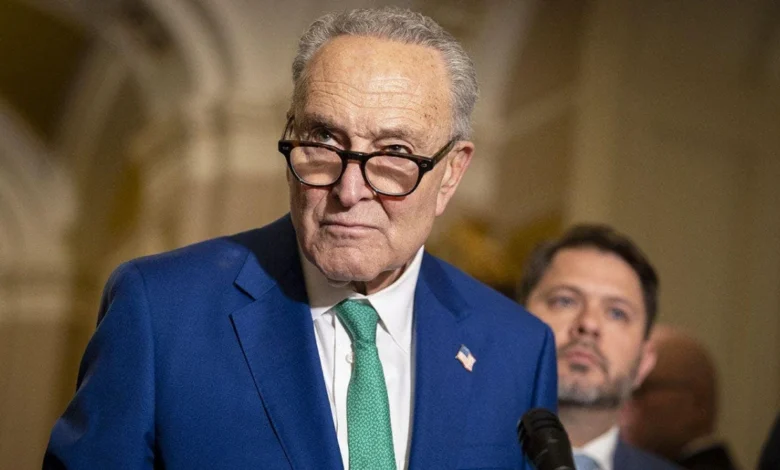
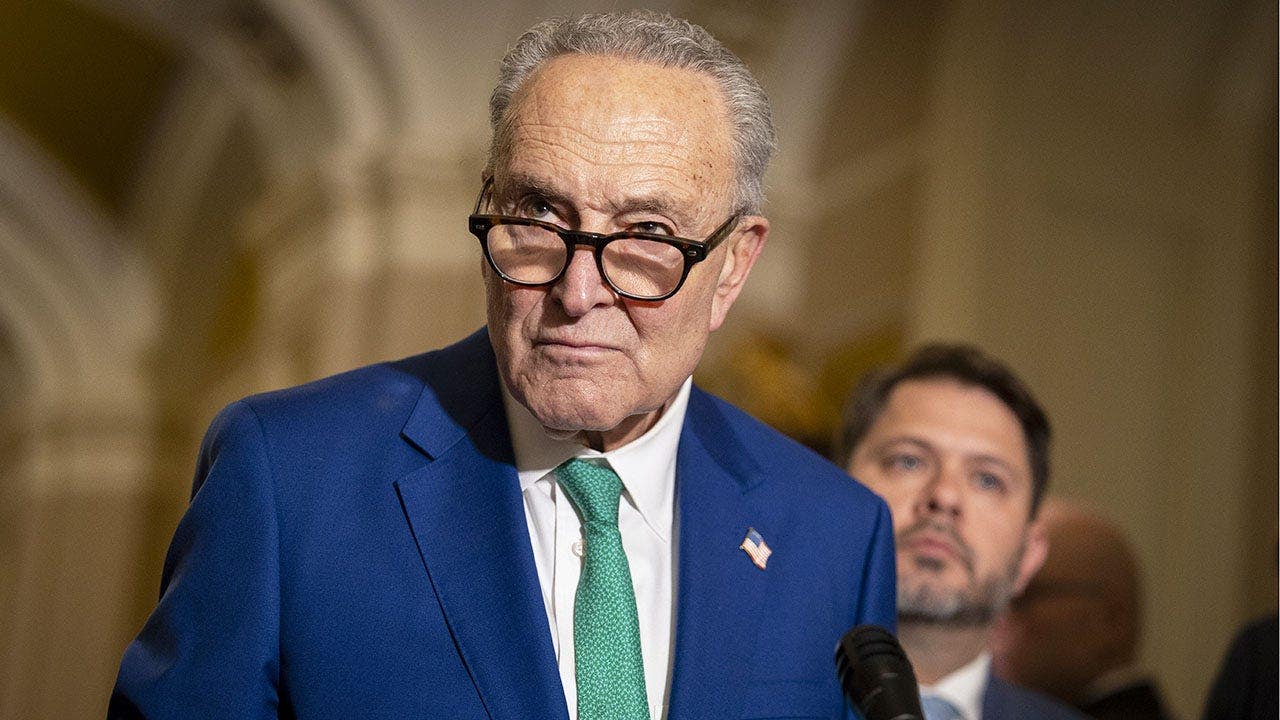
The internal cohesion of the Democratic Senate caucus, which celebrated a historic electoral performance this cycle, is currently facing a significant test of its foundations. Despite the party’s sweeping victories on Election Night that secured a new Senate majority, the leadership of longtime Senate Minority Leader Chuck Schumer, D-N.Y., is under fire. A growing faction of progressive members and newly elected senators has formally declared their opposition to his continued tenure as leader, setting the stage for a rare and high-stakes intra-party leadership battle.
The discord, which has simmered behind closed doors for months, burst into the open this week as several prominent senators, including longtime allies and incoming freshman lawmakers, announced they would not support Schumer’s bid for another term. The dissent appears rooted in a desire for a generational shift and dissatisfaction with the party’s reliance on establishment-aligned funding mechanisms and institutional alliances.
The Roots of the Rebellion
The movement to replace Schumer stems from a perceived disconnect between the party’s veteran leadership and its energized progressive base. Critics within the caucus argue that the Democratic Senatorial Campaign Committee (DSCC) and the broader leadership apparatus have prioritized institutional stability and moderate-leaning donors—such as those linked to the crypto industry and the American Israel Public Affairs Committee (AIPAC)—over the grassroots movements that fueled the party’s recent successes.
Senator Bernie Sanders, I-Vt., a longtime ally who has previously worked in tandem with Schumer on economic legislation, has become a vocal critic of the current leadership structure. His opposition signals a potential realignment of the Senate’s progressive wing. Joining him are newly elected senators such as Elissa Slotkin, D-Mich., who represent the shifting demographics and political priorities of a party that has successfully expanded its footprint into traditionally conservative-leaning territories.
The challenge is not merely symbolic. Dissidents are actively vetting potential alternatives, with Senator Chris Van Hollen, D-Md., emerging as a focal point for those seeking a change. Van Hollen has been "kicking the tires" on a potential leadership bid, positioning himself as a candidate who better reflects the "popular mandate" that voters delivered on Election Day.
A Timeline of Growing Discontent
The friction within the caucus can be traced back to the primary season, where the DSCC’s involvement in key races drew sharp criticism from progressives.
- Early 2026: As the primary cycle began, early reports indicated that the DSCC was heavily vetting candidates, leading to allegations of interference in states where progressive favorites were seeking nominations.
- Late Summer 2026: Progressive advocacy groups, including Indivisible, began formal campaigns to pressure incoming senators to oppose a "coronation" of the existing leadership, citing the need for transparency and ideological diversity in top Senate roles.
- Election Night, November 2026: Democrats outperformed expectations, flipping nine seats and solidifying control of the Senate. Paradoxically, this surge of new members—many of whom were not the preferred candidates of the establishment—provided the numbers necessary for a potential revolt against the status quo.
- Post-Election Week: The formal announcements of opposition from senators-elect like Adam Hamilton, Peggy Flanagan, Scott Colom, and Abdul El-Sayed crystallized the movement, forcing the party into a defensive posture regarding its leadership succession.
The Case for Change: The "Popular Mandate" Conference
At the recent Popular Mandate conference, Senator Van Hollen articulated the frustration felt by many in the new guard. "We just saw democracy in America in action. We should bring a little more democracy to the United States Senate," Van Hollen stated. He explicitly called out the leadership’s reliance on corporate-aligned PACs and their opposition to certain progressive candidates during the primary phase.
The argument presented by his supporters is that the Senate should reflect the diversity of the voters who returned the party to power. By prioritizing institutional allies, they argue, the current leadership has hindered the party’s ability to fully embrace the populist energy that defined the 2026 midterms.
Schumer’s Counter-Defense and Institutional Support
Despite the mounting pressure, Schumer retains a core group of defenders who emphasize his effectiveness as a tactician. When questioned about the potential challenge from Van Hollen, Schumer maintained a diplomatic tone, emphasizing unity. "Chris Van Hollen and I are friends," Schumer stated at a press conference. "We talk frequently, and we’re united—united in lowering costs and united in ending this damn war," he added, alluding to the ongoing conflict in Iran.
Senator John Fetterman, D-Pa., has emerged as one of Schumer’s most vocal supporters. Fetterman dismissed the rebellion as a distraction, questioning the motivations and the records of those leading the charge against the incumbent leader. "Well, what’s his record, other than yelling about anti-Israel stuff, or last year when he visited that wife-beating guy in prison," Fetterman remarked, referring to a past controversy involving Van Hollen’s advocacy for a constituent.
Kirstin Gillibrand, D-N.Y., the current Chair of the Democratic Senatorial Campaign Committee, has also thrown her weight behind Schumer. She credited his strategic vision for the party’s nine-seat pickup, describing it as an unprecedented feat in modern political history. "You will see, despite all the grumblings, enormous gratitude for the hard work he has done to get us to this position," Gillibrand said, framing the opposition as a localized grievance rather than a systemic rejection of his leadership.

Supporting Data and Political Implications
The scale of the 2026 victory provides a complex backdrop for this internal struggle. Data from the election cycle shows that Democrats managed to flip seats in regions previously considered "Trump country," indicating a broader appeal than many analysts predicted.
However, the internal data also reveals a widening ideological chasm. While Schumer’s leadership resulted in a majority, it also alienated a segment of the party’s base that feels excluded from the decision-making process. The "Tell Democrats: NO Schumer Coronation" campaign launched by Indivisible has reportedly gained traction, with thousands of supporters reaching out to their respective senators to demand a competitive leadership vote.
The implications for the next two years are significant. A fractured leadership would struggle to maintain the discipline required to pass major legislation, especially with a slim majority. Furthermore, the public nature of this dispute undermines the party’s message of unity, potentially providing an opening for the Republican minority to capitalize on the chaos.
The Path Forward
As the caucus moves toward formal leadership elections, the situation remains fluid. The newly elected senators, such as Abdul El-Sayed, have adopted a "wait and see" approach, indicating that while the desire for change is real, the political math of the caucus remains in flux. El-Sayed noted, "This is a unique moment, and it’s our job to make sure we honor our mandate."
The challenge for Schumer is to prove that he can pivot to address the concerns of the progressive wing without alienating the moderate members who were equally crucial to the party’s victory. For the challengers, the challenge is to prove that they can govern effectively and hold a majority together—a task that requires more than just ideological purity.
With the Senate set to convene shortly, all eyes are on the closed-door meetings that will determine the future of the chamber’s leadership. The outcome will not only define the direction of the Democratic caucus for the remainder of the session but will also serve as a barometer for the broader ideological direction of the party heading into the next presidential cycle. The "blue wave" has arrived, but the internal debate over who will hold the oars is only just beginning.