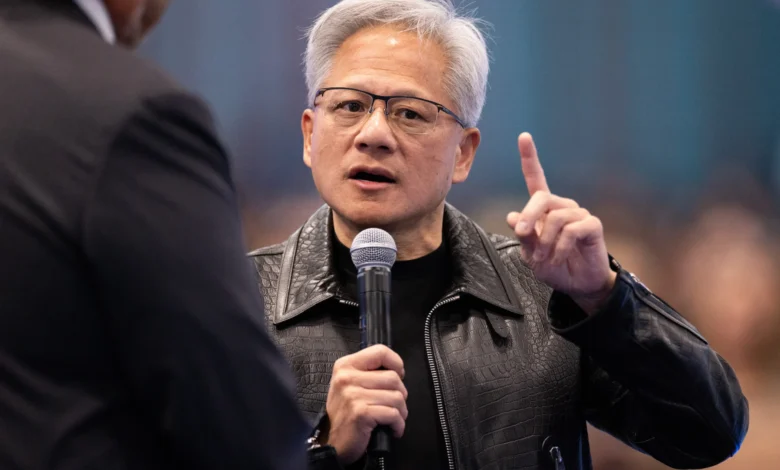
The corporate stability of Nvidia, the world’s most valuable semiconductor manufacturer, has been thrown into unprecedented turmoil following a series of explosive allegations leveled against its long-standing CEO, Jensen Huang. As of November 11, 2026, the company finds itself at the center of a dual-front crisis: a federal inquiry into potential national security breaches linked to an alleged Chinese intelligence operative, and a widening internal investigation into claims of a workplace affair with a direct subordinate. These developments have prompted the Nvidia board of directors to prepare for a leadership transition, marking a historic turning point for the Silicon Valley titan.
The Chronology of an Escalating Crisis
The current instability began when information surfaced regarding a personal relationship between Jensen Huang and an individual suspected by federal authorities of acting as a Chinese spy. The revelation sent shockwaves through the technology sector, as Nvidia’s dominance in artificial intelligence hardware makes it a critical component of both global commerce and national security infrastructure.
The timeline of these events is critical to understanding the severity of the situation. Following the initial disclosure of the alleged espionage connection, the Nvidia board of directors promptly initiated an independent investigation. This probe was intended to assess whether any proprietary technology, trade secrets, or sensitive strategic roadmaps were compromised during the period of the alleged affair.
However, the situation reached a breaking point on Wednesday, November 11, when reports surfaced of a second, entirely separate investigation. According to documentation verified by the New York Times, five current employees at Nvidia have provided testimony regarding an alleged extramarital relationship between Huang and Kimberly Powell, the company’s vice president of health care. The allegations are supported by reports of video evidence capturing the pair in an affectionate setting at a San Jose hotel earlier this year. This second allegation complicates the company’s internal review, as it potentially violates core corporate governance standards regarding executive conduct and relationships between superiors and subordinates.
Corporate Governance and the Code of Conduct
Nvidia, like many of its peers in the S&P 500, maintains a rigorous code of business conduct and ethics. These policies are designed to mitigate conflicts of interest and prevent the abuse of power within the corporate hierarchy. Specifically, Nvidia’s internal governance mandates strict transparency regarding interpersonal relationships that could influence business decisions, resource allocation, or the fair treatment of personnel.
The revelation of an affair with a direct report, if substantiated, places Huang in direct violation of these policies. For a company of Nvidia’s stature, the breach of such a fundamental governance pillar is rarely a matter of individual conduct alone; it is a matter of fiduciary duty. The board of directors is now tasked with determining whether this conduct compromised the objectivity of the vice president of health care or affected the promotion and management of other staff within that division.
Political Pressure and Federal Oversight
Beyond the boardroom, the scandal has attracted the attention of the United States Congress. The intersection of a CEO potentially compromised by foreign intelligence and the critical nature of the AI hardware industry has triggered a bipartisan response.

Two prominent House Republicans have signaled that they are preparing to issue a subpoena for Huang’s testimony. The lawmakers are demanding a closed-door briefing to ascertain the extent of the alleged connection to a Chinese intelligence asset. The threat of a subpoena underscores the broader geopolitical stakes. Nvidia’s chips are the primary engine for advanced AI development, including large language models and defense-related applications. Any suggestion that the company’s top leadership could be leveraged by a foreign power represents a catastrophic risk to U.S. technological supremacy.
If Huang fails to appear voluntarily, the move to compel his testimony would signal a shift from a private corporate crisis to a public investigation of national interest. This would place Nvidia under a level of legislative scrutiny not seen in the technology sector since the antitrust hearings of the late 2010s.
The Economic and Strategic Implications
The potential ouster of Jensen Huang carries significant weight for the financial markets. Under Huang’s leadership, which began in 1993, Nvidia evolved from a niche graphics card manufacturer into the backbone of the global artificial intelligence revolution. His departure, particularly under these circumstances, would create a power vacuum at the most critical juncture in the company’s history.
Investors are currently navigating a high-volatility environment. Nvidia’s market valuation is deeply intertwined with the market’s confidence in the company’s execution of its ambitious AI roadmap. A leadership change during an active federal inquiry and a internal conduct scandal could lead to:
- Strategic Uncertainty: A change in leadership often leads to a shift in corporate priorities. Analysts are concerned that the departure of the founder could stall momentum on next-generation architecture projects.
- Institutional Governance Re-evaluation: The board’s decision to move toward ousting the CEO suggests a commitment to protecting the company’s reputation, yet it risks alienating the engineering culture that has thrived under Huang’s long-term vision.
- Operational Risks: If the espionage allegations hold merit, the company may face not only reputational damage but also potential export control violations, which could restrict its ability to sell advanced chips to key international markets.
The Path Forward for the Nvidia Board
The board of directors is now in the unenviable position of balancing the need for stability with the mandate for accountability. According to reports from the Wall Street Journal, the board is actively preparing for a post-Huang era. This preparation includes identifying interim leadership and assessing the potential impact of a transition on Nvidia’s upcoming product launches and supply chain contracts.
For the company, the next few weeks will be defined by its ability to manage the narrative while complying with federal authorities. The legal implications of an affair with an alleged foreign intelligence asset are far-reaching. Even if the affair itself was not a vehicle for espionage, the association itself provides foreign intelligence services with a potential leverage point—a "human intelligence" vulnerability that the U.S. government views as a major security threat.
Conclusion
The situation involving Jensen Huang is a reminder of the fragility of corporate empires built upon the vision of a single individual. While the allegations of an affair with a direct report represent a serious failure of internal policy, the primary threat to the firm remains the geopolitical fallout associated with the espionage investigation.
As Nvidia prepares to navigate these challenges, the company must confront the reality that its leadership is no longer merely a corporate concern. It is a matter of national security and public trust. Whether the board manages to navigate this transition effectively will determine if Nvidia can maintain its leadership in the semiconductor industry or if it will be forced to restructure its entire strategic and cultural framework in the wake of its founder’s potential departure. The coming days are expected to bring further clarity as the board formalizes its next steps and as Congressional committees decide whether to formalize their pursuit of testimony. For now, the tech world remains on watch, waiting to see how the architect of the AI age handles his most difficult challenge to date.