The leadership era of DC Studios under co-chairmen and CEOs James Gunn and Peter Safran has officially come to an end, sending shockwaves through Hollywood and prompting a major reassessment of the comic book film industry’s strategic direction. Following a bombshell corporate decision reportedly spearheaded by studio leadership under David Ellison, the dynamic duo behind the much-hyped DC Universe (DCU) reset have stepped down from their executive posts. The move marks a sudden and dramatic halt to an ambitious multi-year rollout that aimed to completely overhaul Warner Bros.’ cinematic comic book properties, raising fresh questions about the viability of filmmaker-led studio management, quality control standards, and audience fatigue in an increasingly crowded superhero marketplace.
The origin of the Gunn and Safran regime dates back to January 31, 2023, when the newly minted executives laid out their expansive, interconnected blueprint for the DCU. During the presentation, the pair detailed a massive slate of films, television shows, and animated projects designed to establish a cohesive storytelling ecosystem. While the roadmap introduced several intriguing concepts, it immediately triggered strategic concerns among industry analysts. Most notably, the announcement revealed plans to develop an all-new theatrical Batman series that would run concurrently with Matt Reeves’ separate, highly successful "The Batman" universe starring Robert Pattinson.
This decision threatened to fragment the studio’s brand identity and confuse mainstream audiences. For decades, the cinematic history of Gotham City’s protector had experienced a revolving door of interpretations, from the stylistic shifts of the 1990s through Michael Keaton, Val Kilmer, and George Clooney, followed by Ben Affleck’s tenure in the DC Extended Universe. It was not until Christopher Nolan’s "The Dark Knight" trilogy—and later Reeves’ critically acclaimed 2022 noir thriller—that the character achieved distinct, definitive cinematic identities. Introducing a competing studio-driven iteration under the new DCU banner risked amplifying the very sense of clutter and franchise fatigue that the studio was ostensibly trying to escape.
The Ambition and Overkill of the Gunn Era
Throughout their tenure, Gunn and Safran sought to navigate the delicate line between revitalizing exhausted intellectual properties and delivering the high-octane spectacle expected of modern blockbusters. However, the execution often leaned toward a scattershot approach. While Sony found considerable success by running its animated "Spider-Verse" films parallel to its live-action Spider-Man franchise—largely due to the clear medium-based separation—DC’s live-action multiplicity strategy lacked that immediate distinction.
The release of "Superman," directed by Gunn himself and released in the summer of 2025, served as an early litmus test for the new studio framework. The picture generated polarized responses from critics, yet it managed to connect commercially, pulling in respectable global box office figures and offering a glimmer of hope that the studio could break free from the dark, brooding tone that had characterized much of the previous Snyderverse era.
Beneath the commercial success, however, structural concerns persisted. Gunn’s directorial style on "Superman" was notably kinetic, jam-packed with self-conscious Easter eggs, rapid-fire humor, and stylistic flourishes. While characteristic of his previous work on properties like "Guardians of the Galaxy," the heavy authorial stamp invited a distinct critique: rather than simply serving the character, the project frequently felt like a showcase for the filmmaker’s personal brand.
This dual role—functioning simultaneously as the corporate executive responsible for macro-level quality control and the hands-on director of flagship multi-million-dollar features—became a persistent friction point within the industry. By the time Gunn wrapped production on the upcoming sequel "Man of Tomorrow," slated for a July 9, 2027 release, questions surrounding potential conflicts of interest and executive bandwidth had grown increasingly difficult to ignore.
The Breakdown of Quality Control
A cornerstone of the original Gunn and Safran pitch to investors, media, and fans was a stringent commitment to script development. In direct contrast to industry rivals—most notably Marvel Studios, which had faced mounting criticism for pushing CGI-heavy productions into active development without finalized screenplays—DC Studios vowed that no project would enter production until its narrative foundation was ironclad.
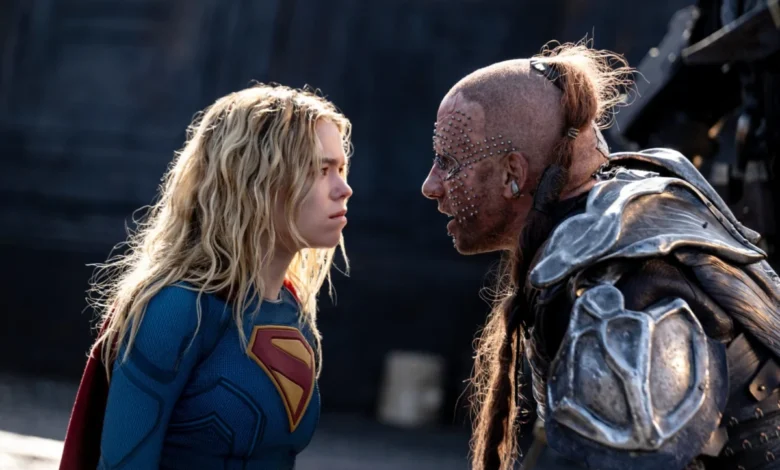
That promise faced its sternest test with the release of "Supergirl," which debuted in theaters roughly four months prior to the leadership shakeup. The film’s dystopian narrative, uneven tone, and lackadaisical scripting failed to resonate with either critics or general audiences, resulting in a stark critical and commercial misfire. For an enterprise built on the premise of rigorous oversight, the underperformance of "Supergirl" highlighted a troubling gap between executive rhetoric and box office reality.
Compounding these challenges was the strategic deployment of secondary characters, exemplified by the release of "Clayface." While the offbeat horror-leaning superhero film functioned adequately within its modest $44 million production budget, its limited domestic box office trajectory—peaking around $65 million domestically—meant the film struggled to capture broader cultural mindshare. Positioning a niche property as a foundational pillar of the studio’s early theatrical slate raised further questions regarding long-term commercial planning and brand positioning.
Chronology of Key Events
- January 31, 2023: James Gunn and Peter Safran formally unveil the Chapter 1: Gods and Monsters slate for DC Studios, introducing a sprawling multi-platform roadmap including competing Batman properties.
- Summer 2025: Gunn’s "Superman" debuts in theaters worldwide, dividing critical consensus while achieving solid commercial returns.
- Late 2025/Early 2026: "Supergirl" is released to widespread negative reviews, bringing underlying script and quality-control concerns into sharp focus.
- Mid-2026: "Clayface" enters theatrical distribution with a constrained budget, yielding modest box office returns but failing to drive significant cultural engagement.
- Current: Following leadership evaluations under David Ellison, Gunn and Safran officially step down from their executive roles at DC Studios, paving the way for a structural reorganization.
Behind the Leadership Shakeup and Strategic Re-evaluation
The decision by David Ellison to relieve Gunn and Safran of their executive duties stems from a convergence of internal friction points and performance metrics. Reports within Hollywood indicate that studio executives expressed growing apprehension regarding the creative direction of "Man of Tomorrow," particularly concerns over excessive self-referential Easter eggs and narrative clutter inherited from Gunn’s directorial style. Consequently, leadership reportedly initiated steps to trim and refocus the project in post-production.
The choice of replacement underscores a dramatic pivot in corporate philosophy. Jeremy Latcham, a seasoned veteran of Marvel Studios known for steering high-profile blockbuster productions, has been tapped to guide the next phase of the DC cinematic landscape. Latcham’s publicly stated creative leanings toward a more wholesome, universally heroic, and accessible narrative framework signal an unmistakable departure from the irreverent, ironic "edge" that defined James Gunn’s creative output.
Broader Industry Implications
The departure of Gunn and Safran from DC Studios serves as a watershed moment for the contemporary superhero genre. As studios across Hollywood grapple with pervasive audience fatigue, diminishing returns on interconnected cinematic universes, and escalating production budgets, the experiment in handing studio reins directly to auteur filmmakers has faced a harsh reality check.
While James Gunn remains an undeniably gifted creative force with a proven track record of box-office successes, his tenure as a corporate architect demonstrated the systemic difficulties of balancing micro-level artistic expression with macro-level studio strategy. As DC Studios prepares to transition under new leadership, the mandate moving forward is clear: a return to disciplined storytelling, streamlined brand identities, and a renewed focus on audience connection over stylistic indulgence. Whether the incoming administration can successfully steady the ship and rescue the iconic comic book brand from ongoing fragmentation remains one of the most closely watched narratives in the global entertainment landscape.