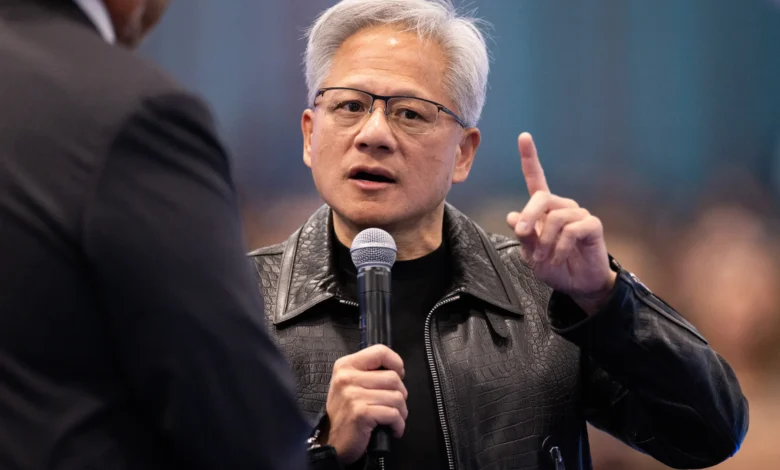
A high-stakes geopolitical drama has ensnared the semiconductor industry’s most prominent figure, as intelligence reports reveal that Nvidia CEO Jensen Huang was the target of a sophisticated espionage operation orchestrated by China’s Ministry of State Security. According to a classified memo circulated earlier this year and corroborated by multiple international news outlets, the operation allegedly leveraged the professional and personal proximity of a technology executive named Alice Huang to gain sensitive insights into the operations of the world’s most valuable chipmaker.
The revelation has sent shockwaves through the technology sector, highlighting the extreme vulnerabilities facing companies at the epicenter of the ongoing U.S.-China technological cold war. As the primary architect of the artificial intelligence boom, Nvidia holds a position of strategic importance that makes it a primary target for foreign intelligence agencies seeking to bypass U.S. export controls and accelerate China’s own domestic AI capabilities.
The Allegations and the Intelligence Memo
The core of the controversy stems from a government memo, reportedly based on U.S. intelligence assessments, which suggests that Alice Huang, an executive associated with the Singapore-based firm Megaspeed, was recruited by Chinese state actors. The memo alleges that the ultimate objective of this recruitment was to infiltrate the inner circle of Jensen Huang.
Subsequent reporting by The Financial Times has added a layer of personal complexity to the situation, claiming that the memo detailed a purported romantic relationship between Jensen Huang and Alice Huang. This detail, if accurate, would represent a classic "honey trap" or social engineering strategy designed to lower a high-value target’s defenses. By establishing a personal connection, foreign intelligence services aim to gain access to proprietary information, strategic roadmaps, or non-public insights regarding government-imposed export restrictions that have crippled China’s ability to procure top-tier hardware.
Nvidia has been swift to address the claims. In a statement provided to The New York Times, an Nvidia spokesperson characterized the interactions between the CEO and the executive in question as "not unusual," emphasizing that such meetings are standard in the course of global business operations. Crucially, the company categorically denied the mishandling of any sensitive data, maintaining that it adheres to strict compliance protocols and does not disclose classified or restricted information to its customers, regardless of their regional affiliations.
The Broader Context of Semiconductor Espionage
To understand the severity of these allegations, one must consider the historical context of the semiconductor industry’s role in modern statecraft. For the past several years, the United States has engaged in a systematic campaign to restrict China’s access to advanced computing power, specifically the H100 and Blackwell series of GPUs that power the vast majority of the world’s generative AI models.
The U.S. Commerce Department has imposed increasingly stringent export controls, intended to prevent the People’s Liberation Army and various state-affiliated research institutes from utilizing American silicon to advance their military-industrial complex. Consequently, intelligence agencies in Beijing have been forced to pursue increasingly creative—and often illicit—avenues to secure the hardware required to remain competitive in the global AI arms race.
The alleged targeting of Jensen Huang serves as a stark reminder that the battle for technological supremacy is no longer confined to trade negotiations and legislative halls. It has moved into the realm of human intelligence, where the goal is to exploit individual vulnerabilities to undermine the corporate security perimeters of Western firms.

The New Matrix Controversy and Supply Chain Integrity
The investigation into the intelligence memo has inadvertently cast light on another significant issue: the difficulty of verifying the end-users of high-end technology. A separate report from The New York Times examined a Chinese entity known as "New Matrix," a firm that had been authorized by the U.S. Commerce Department to receive shipments of advanced Nvidia chips.
When journalists attempted to verify the legitimacy of New Matrix by visiting its registered office address in China, they discovered a "hollow gray shell." The physical location did not appear to be an active corporate headquarters, but rather a facade. This discovery has raised urgent concerns among lawmakers and national security experts that legitimate-looking shell companies are being used as fronts for blacklisted private equity firms or state-backed entities to circumvent U.S. export bans.
Nvidia’s response to these supply chain integrity concerns has been to reiterate its commitment to U.S. law. The company has emphasized that it prioritizes domestic demand, stating that it sells the "first, best and most of our technology in America." However, the "New Matrix" case highlights the systemic challenges inherent in tracking the final destination of hardware once it leaves the manufacturer’s control.
Timeline of Recent Developments
- Early 2026: An intelligence memo is circulated within U.S. government channels, warning of Chinese efforts to target Jensen Huang via Alice Huang.
- September 2026: Tensions regarding chip exports to China reach a peak as the U.S. Commerce Department announces tighter oversight on third-party distributors.
- November 6, 2026: The New York Times publishes the initial report regarding Chinese intelligence targeting the Nvidia CEO, triggering a global investigation into the veracity of the memo.
- November 7, 2026: Subsequent reporting by The Financial Times elaborates on the nature of the relationship between the two figures, fueling public debate over the intersection of corporate and state espionage.
Implications for the Tech Industry
The fallout from these reports is expected to be significant. For one, Silicon Valley executives are likely to see an increase in security protocols. Corporate travel to regions with high intelligence risks will likely be subjected to stricter vetting, and the reliance on third-party intermediaries—once a standard practice for international business—will now be viewed through a lens of extreme skepticism.
Furthermore, this incident is expected to embolden regulators in Washington to push for even stricter export controls. If a company as sophisticated as Nvidia can be targeted in such a direct manner, the argument that "business as usual" is no longer viable in the context of U.S.-China relations becomes much harder to refute.
From an investor’s perspective, the news introduces a new "geopolitical risk premium." Nvidia has performed exceptionally well in the markets due to its dominance in AI, but the potential for its leadership to be compromised by state actors creates a level of uncertainty that analysts will be forced to account for in future valuations.
Final Analysis
The accusations surrounding Jensen Huang and the Ministry of State Security are a microcosm of a much larger struggle. As the world moves toward an AI-integrated future, the hardware that facilitates this transition—the semiconductor—has become the most valuable commodity on the planet.
While Nvidia has maintained its stance that it is in full compliance with all laws and that its CEO remains focused on the company’s technological mission, the broader environment remains fraught with risk. The investigation into whether Alice Huang was indeed a conduit for state espionage, and whether the "New Matrix" entity represents a wider trend of shell-company infiltration, remains ongoing.
As of this writing, no formal charges have been brought against any party, and the details of the intelligence memo remain under heavy scrutiny. However, the incident has permanently altered the discourse surrounding corporate security. In an era where silicon is the new oil, the protection of the architects behind that silicon is not just a corporate responsibility—it has become a matter of national security. The tech industry, and the global markets that rely on it, will be watching closely as federal authorities continue to sift through the implications of this unprecedented intelligence breach.