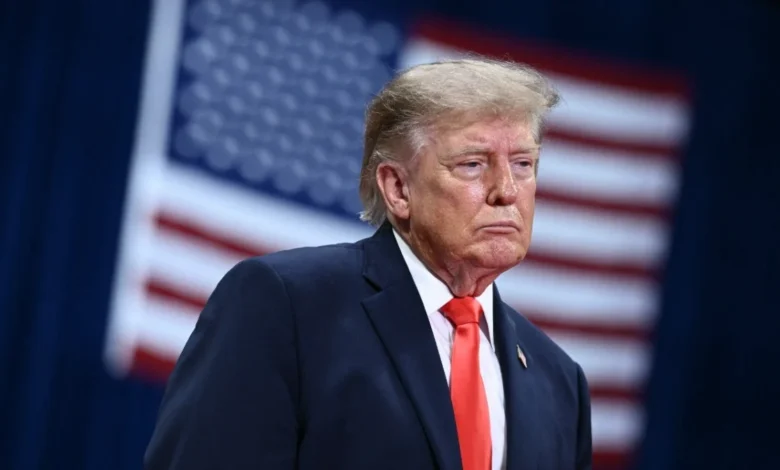
In an escalation of post-midterm political tensions, President Donald Trump announced on Saturday that he has formally directed the Department of Justice to launch a comprehensive investigation into what he characterizes as a campaign of intimidation by Democratic lawmakers. The President’s directive, issued via the Truth Social platform, follows a major shift in the balance of power on Capitol Hill, where Democratic candidates secured majorities in both the House and Senate. According to the President, the investigation is intended to address alleged threats of impeachment and other punitive measures leveled against executive branch officials, specifically citing Attorney General Todd Blanche.
The backdrop for this directive is a highly charged political atmosphere in Washington. Following the midterm elections, several high-profile Democratic members of Congress have publicly called for the removal of key figures within the Trump administration. The rhetoric has centered on legislative oversight and potential impeachment inquiries, a move the President has labeled as meritless and politically motivated.
Chronology of Escalating Rhetoric
The current friction reached a flashpoint in the days following the midterms. On Thursday, Rep. Hank Johnson (D-Ga.) publicly advocated for the impeachment of Attorney General Todd Blanche during an appearance on SiriusXM’s "The Dan Abrams Show." Johnson stated, "I personally believe that the offenses of Todd Blanche demand that he be impeached and convicted and removed from office."
Shortly thereafter, Rep. Deborah Ross (D-N.C.) joined the discussion on the same program, confirming her support for an impeachment effort against the Attorney General. However, Ross broadened the scope of the potential actions, suggesting that any such legislative push might be better served by prioritizing the removal of Secretary of War Pete Hegseth. This public signaling from senior House Democrats has served as the catalyst for the President’s call for federal intervention.
The timeline of these threats appears to track closely with broader discussions among Democratic leadership regarding oversight strategies for the next legislative session. Reports from Reuters and other outlets have indicated that incoming Democratic majorities in Congress are preparing to utilize subpoena powers to investigate various facets of the current administration, including the financial contributions of major Republican donors and the professional conduct of political appointees.
Examining the Scope of the DOJ Directive
President Trump’s directive to the Department of Justice focuses on what he describes as "extortionist" behavior by members of the legislative branch. In his statement, he specifically highlighted concerns regarding the chilling effect these threats may have on the recruitment and retention of young professionals interested in serving in the executive branch.
The President pointed to remarks made by Sen. Elissa Slotkin (D-Mich.) on October 13 at the University of Chicago as a primary example of this behavior. During that appearance, Slotkin discussed the intent to create a deterrent against working for the current administration, stating, "I want young people coming out of school to say, ‘Should I go work for the Trump administration? Like, that sounds fun, I might get an opportunity.’ I want them to be like, ‘Lord, that might be buying myself a ton of problems that I don’t want, and so let me avoid participating in that.’ I want that deterrence message sent."
The President’s legal team and supporters argue that such comments, when paired with formal calls for impeachment, cross the line from standard legislative oversight into the realm of obstruction and intimidation of federal officers. The requested DOJ investigation is expected to determine whether these actions meet the legal threshold for criminal conduct or if they remain within the bounds of protected political speech and legislative activity.
The Financial and Regulatory Implications
Beyond the potential impeachment of cabinet officials, the broader political landscape is being shaped by anticipated investigations into private-sector support for the current administration. Reports suggest that Democratic lawmakers are setting their sights on major Republican donors, with potential probes aimed at individuals and corporations associated with the White House and its associated fundraising apparatus.

This potential scrutiny of donors adds a new dimension to the partisan divide. While the Republican Party maintains that these investigations are a weaponization of federal power, Democratic proponents argue that they are a necessary exercise of congressional oversight to ensure transparency in government interactions with private entities. The President’s assertion that donors are being threatened with "imprisonment" suggests that the administration intends to frame these upcoming congressional inquiries as a systematic campaign of harassment rather than legitimate governance.
Fact-Based Context: The Separation of Powers
The conflict underscores the traditional, yet increasingly volatile, friction between the executive and legislative branches. Under the Constitution, the House of Representatives holds the sole power to initiate articles of impeachment, while the Senate possesses the sole power to try those articles. Historically, these powers are treated as the ultimate check on the executive branch.
Legal scholars note that for the Department of Justice to investigate members of Congress, it would have to navigate the Speech or Debate Clause of the Constitution, which protects members of Congress from being questioned in any other place for any speech or debate in either House. Consequently, a criminal investigation into the public statements of lawmakers would face significant constitutional hurdles and likely trigger a prolonged legal battle over the limits of congressional immunity.
Strategic Implications for the 119th Congress
As the new Congress prepares to take office, the implications of this standoff are profound. The legislative agenda is now overshadowed by the prospect of a cycle of retribution. If the DOJ proceeds with an investigation, it could lead to an unprecedented constitutional crisis where the executive branch is actively investigating the very body tasked with overseeing it.
Furthermore, the focus on Attorney General Blanche and Secretary of War Hegseth suggests that the administration will adopt a defensive posture, prioritizing the protection of its cabinet members against legislative maneuvers. This focus may complicate the passage of routine legislation, such as budget appropriations and defense authorizations, which are essential for the functioning of the federal government.

The political fallout is also expected to influence public perception of the midterm results. While Democrats view their victory as a mandate for oversight, the President’s supporters view it as a precursor to a "war" on the administration. This perception is already manifesting in the discourse among House Republicans, who have expressed internal frustrations regarding the administration’s handling of these challenges and the broader political trajectory.
Conclusion and Outlook
The call for a DOJ investigation into Democratic lawmakers is more than a mere reaction to political rhetoric; it is a signal of the hardening battle lines in Washington. With the shift in congressional control, the standard mechanisms of government—oversight, confirmation, and legislative drafting—are increasingly being utilized as tools of political warfare.
As the Department of Justice evaluates the President’s request, the nation awaits a determination on whether these actions warrant a formal criminal inquiry or if they will be categorized as part of the normal, albeit heated, democratic process. Regardless of the outcome, the current trajectory suggests a period of intense institutional strain, with the separation of powers being tested in ways that have not been seen in recent decades. The coming months will likely see a series of subpoenas, legal challenges, and further public disputes, defining the character of the legislative and executive relationship for the foreseeable future.