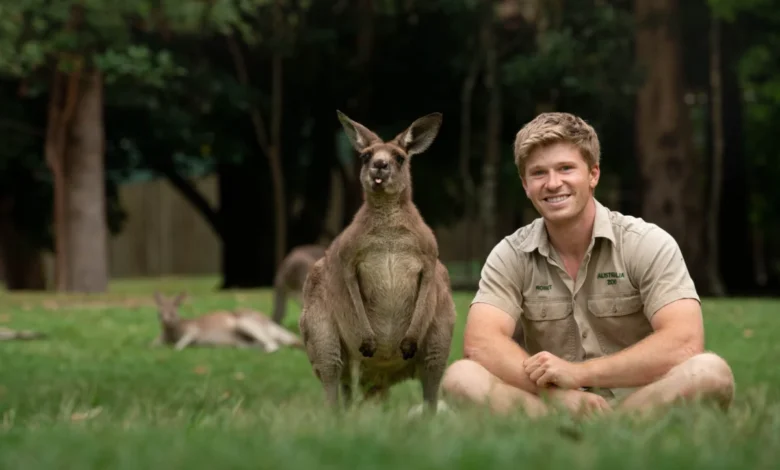
Robert Irwin, the 20-year-old naturalist, photographer, and television personality, has emerged as the preeminent face of the Sunshine Coast, a region in Queensland, Australia, that has become synonymous with his family’s multi-generational commitment to wildlife conservation. As the son of the late Steve Irwin, Robert’s upbringing was defined by an unconventional immersion in the natural world, spent largely within the 700-acre expanse of Australia Zoo. In a series of recent reflections on his role as a global ambassador for the region, Irwin articulated a vision that bridges the gap between high-profile entertainment and grassroots environmentalism, emphasizing the Sunshine Coast not merely as a tourist destination, but as a critical site for ecological reconnection.
The Evolution of a Conservation Legacy
The Irwin family’s connection to the Sunshine Coast began long before Robert’s birth in 2003. The story of Australia Zoo traces back to 1970, when Bob and Lyn Irwin opened the Beerwah Reptile and Fauna Park. By the 1990s, under the leadership of Steve and Terri Irwin, the park evolved into Australia Zoo, gaining international fame through the "Crocodile Hunter" documentary series. Following Steve Irwin’s death in 2006, the mantle of leadership passed to Terri, Bindi, and Robert, who have overseen a massive expansion of both the physical facility and the "Wildlife Warriors" conservation programs.

Robert Irwin’s current role as the host of the Disney+ series Dancing with the Stars: The Next Pro represents the latest chapter in this evolution. While his career has expanded into mainstream media, his primary focus remains the operation of Australia Zoo and the promotion of the Sunshine Coast’s natural heritage. Irwin describes himself as a "free-range kid," having spent 99 percent of his childhood outdoors, engaged in activities ranging from catching venomous snakes to rehabilitating koalas. This upbringing has informed his professional philosophy: that conservation is most effective when the public is given a direct, emotional connection to wildlife.
Geographic and Ecological Context of the Sunshine Coast
The Sunshine Coast is a peri-urban region located approximately 100 kilometers north of Brisbane. It is characterized by a diverse topography that includes the volcanic peaks of the Glass House Mountains, lush subtropical rainforests, and world-renowned coastal strips. For Irwin, the region’s appeal lies in its geographical accessibility; visitors can transition from rugged hinterlands to white-sand beaches within a twenty-minute drive.
According to data from Tourism and Events Queensland, the Sunshine Coast welcomed approximately 4.2 million domestic visitors and hundreds of thousands of international tourists in the year ending December 2023. The regional tourism economy is valued at over $5 billion AUD annually. Australia Zoo serves as a primary anchor for this industry, employing hundreds of staff and attracting visitors from across the globe. However, the Irwin family’s impact extends beyond traditional tourism. The Australia Zoo Wildlife Hospital, located adjacent to the zoo, is one of the busiest facilities of its kind in the world, having treated over 130,000 animals since its inception.

Strategic Recommendations for Regional Tourism
In his capacity as a local expert, Irwin highlights several key locations that define the Sunshine Coast experience. These recommendations reflect a balance between popular landmarks and "hidden gems" that preserve the region’s original character.
The Glass House Mountains: A cluster of eleven volcanic peaks, these mountains hold significant cultural importance for the Gubbi Gubbi people. Irwin identifies the Glass House Mountains as a premier spot for sunrise hiking, offering panoramic views that stretch to the Pacific Ocean. The geological history of the peaks, which formed approximately 26 to 27 million years ago, adds a layer of scientific interest to the aesthetic appeal.
Noosa and Mooloolaba: While Noosa is famous for its "National Park" surf break and upscale dining, Irwin points toward "Hell’s Gates" as a site for quiet contemplation. In contrast, Mooloolaba serves as a hub for marine life. The migratory route for humpback whales passes directly off the coast between June and November, a phenomenon that has spurred a significant eco-tourism sector focused on whale watching and swimming with whales.
%2520(1).jpg)
Mary Cairncross Scenic Reserve: Located in the Blackall Range, this 55-hectare reserve is a remnant of the ancient rainforests that once covered the region. Irwin notes the presence of pademelons—small macropods—and a variety of avian species, framing the park as a vital sanctuary for biodiversity that offers a cooler, alpine-like atmosphere distinct from the coastal heat.
The Crocodile Hunter Lodge and Sustainable Hospitality
A significant recent development in the Irwin family’s portfolio is the opening of the Crocodile Hunter Lodge. This luxury eco-retreat represents a shift toward sustainable, conservation-centric hospitality. The lodge is designed to integrate with the surrounding environment, featuring botanical gardens that attract wild kangaroos, koalas, and cockatoos.
The lodge’s "Warrior Restaurant and Bar" emphasizes locally sourced produce, reflecting a broader trend in the Australian culinary scene toward regionalism and sustainability. Irwin’s endorsement of this facility underscores a strategic move to keep tourism revenue within the conservation ecosystem, as profits from the lodge support the zoo’s various wildlife projects. This model of "circular conservation" is increasingly seen as a blueprint for private-sector environmentalism.

Analysis of the "Irwin Effect" on Conservation and Media
The "Irwin Effect" refers to the family’s ability to use celebrity status to mobilize public support for environmental causes. Robert Irwin’s approach differs slightly from his father’s high-octane style, leaning more into professional photography and digital storytelling. His photography has been featured in international exhibitions and publications, often focusing on the plight of endangered species.
Industry analysts suggest that Robert’s transition into hosting major television franchises like Dancing with the Stars is a calculated move to maintain relevance among younger demographics who may not have grown up watching his father. By maintaining a presence in the "mainstream" spotlight, Irwin ensures a platform for his conservation messages. This dual-identity—part celebrity, part scientist—is a powerful tool in an era where environmental news is often overshadowed by entertainment.
Broader Implications for Queensland’s Future
The future of the Sunshine Coast is inextricably linked to the balance between development and preservation. As the region prepares for the 2032 Brisbane Olympics, which will see several events hosted on the Sunshine Coast, there is increased pressure on local infrastructure. Environmental advocates, including the Irwins, are vocal about ensuring that this growth does not come at the expense of the region’s unique biodiversity.

Local government officials and tourism boards have often praised the Irwin family for their role in defining the "brand" of Queensland. A spokesperson for Visit Sunshine Coast recently noted that the Irwins provide an "authentic voice" that resonates with travelers seeking meaningful experiences. Their advocacy for "slow travel"—spending time in one region to truly connect with its flora and fauna—aligns with global shifts toward more responsible tourism.
Conclusion: A Purpose-Driven Return
For Robert Irwin, the Sunshine Coast remains a "jewel in the crown" of Australia. His frequent international travels for film and television work serve to reinforce his appreciation for his home. He describes returning to the zoo as a "life-changing reconnection" with nature, a feeling he hopes to facilitate for every visitor to the region.
The legacy of Steve Irwin continues to loom large, but Robert is successfully carving out a distinct path. By combining traditional zoo management with modern media strategies and luxury eco-tourism, the Irwin family has ensured that the Sunshine Coast remains a global epicenter for wildlife education. As Robert continues to share the "beauty of where he lives" with the world, his work stands as a testament to the idea that conservation is not a static goal, but a dynamic, lifelong commitment to the planet.

Through the Glass House Mountains, the surf of Noosa, and the sprawling savannas of Australia Zoo, the Sunshine Coast offers a microcosm of the Australian wilderness. Under the stewardship of the Irwin family, this region is positioned to remain a vital sanctuary for wildlife and a primary destination for those seeking to understand the natural world. Robert Irwin’s mission is clear: to ensure that the "magical childhood" he experienced among rhinos, giraffes, and snakes remains a possibility for future generations through the rigorous protection of the environment he calls home.