Across the globe, water scarcity has transitioned from an isolated regional crisis into a systemic threat affecting billions of lives. According to recent data compiled by United Nations water agencies, approximately 2.2 billion people currently live without safely managed drinking water. This profound deficit is exacerbated by shifting climate patterns, prolonged droughts, and rapidly depleting aquifers. From the agricultural heartlands of California to the hyper-arid expanses of the Middle East, municipalities and nations have increasingly turned to industrial desalination plants to bridge the gap, converting vast expanses of saline ocean water into potable supplies.
Yet, conventional desalination infrastructure comes with formidable trade-offs. The two prevailing industrial methods—reverse osmosis, which forces pressurized water through fine polymeric membranes, and thermal distillation, which boils water to separate it from dissolved salts—are exceptionally energy-intensive. Furthermore, these facilities demand extensive pre-treatment chemicals to prevent biological fouling and post-treatment stabilization to make the water potable. Most critically, they produce a high-volume, highly concentrated liquid byproduct known as brine. When returned to marine environments, this toxic discharge elevates local salinity, depletes dissolved oxygen, and devastates fragile coastal ecosystems.
To counter these systemic environmental and economic hurdles, a multidisciplinary team of researchers at the University of Rochester has engineered an innovative, solar-powered desalination paradigm. Published recently in the academic journal Light: Science & Applications, their breakthrough promises to deliver efficient fresh-water generation while entirely eliminating liquid brine discharge and bypassing the need for chemical water pre-treatment.
Chronology and Development of the Technology
The roots of this breakthrough extend back years of foundational optics and materials science research directed by Chunlei Guo, a professor of optics and physics at the University of Rochester and a senior scientist at the university’s Laboratory for Laser Energetics. Guo and his research group have long specialized in utilizing ultrafast lasers to fundamentally alter the surface topology and chemical characteristics of common metals.
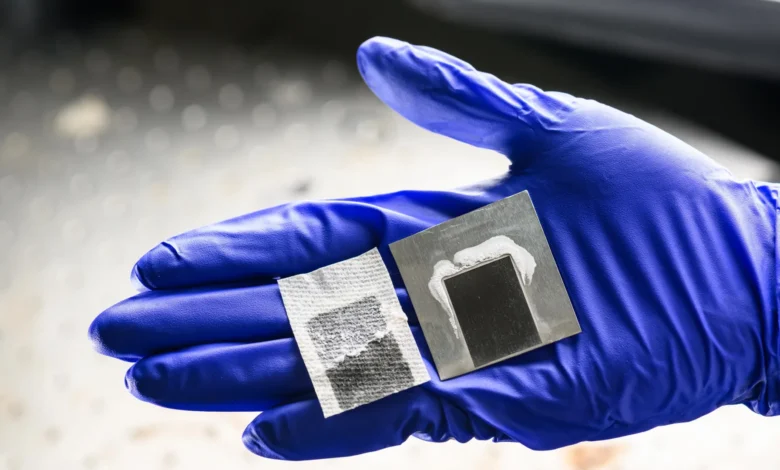
The core of the technology relies on the manipulation of metals using femtosecond laser pulses. A femtosecond represents an unimaginably brief increment of time—one quadrillionth of a second. By bombarding metal surfaces with ultra-short, highly intense laser bursts, the researchers can sculpt microscopic, nanoscale structures across the material. These engineered textures drastically alter how the metal interacts with light and fluids, transforming ordinary black metal into a hyper-efficient solar absorber endowed with superwicking capabilities.
While initial iterations of the technology focused on manipulating fluid flow and light absorption for various engineering applications, the team recognized its profound potential for water purification. Traditional solar thermal desalination systems have historically excelled in controlled laboratory environments when evaluated using simplified, artificial seawater composed strictly of pure water and sodium chloride. However, these systems invariably failed or choked when exposed to authentic, complex natural seawater.
The Engineering Challenge of Natural Seawater
The fundamental impediment to scaling solar desalination has always been salt accumulation. When artificial saline solutions evaporate, sodium chloride crystallizes into a relatively loose, grainy, and porous structure. Water molecules can continuously navigate through these porous crystals, dissolving trapped salts and facilitating a self-cleaning mechanism.
Natural seawater, by contrast, presents a far more complex chemical matrix. In addition to sodium chloride, raw ocean water contains a rich cocktail of dissolved minerals, including magnesium, calcium sulfates, and carbonates. As evaporation proceeds, these compounds precipitate out of the solution to form dense, hard, non-porous crusts. This phenomenon mirrors the stubborn mineral scale that slowly accumulates inside domestic water heaters, tea kettles, or showerheads.
In a large-scale industrial or solar desalination apparatus, however, the stakes are exponentially higher. Because raw seawater contains hundreds of times more dissolved minerals than standard tap water, these hard crusts quickly seal off the evaporating surface. They choke off the capillary movement of water, smother thermal absorption, and permanently halt the desalination process within hours of operation.
Harnessing the Coffee Ring Effect and the Coffee Ring Solution
To circumvent this seemingly intractable limitation, Guo and his team looked to a familiar, everyday physical phenomenon: the coffee ring effect. Whenever a droplet of coffee spills and dries on a kitchen counter, the liquid evaporates outward, dragging suspended particles to the perimeter and leaving behind a distinct, dark outer ring.
The University of Rochester researchers deliberately engineered microscopic grooves into their laser-treated black metal panels to exploit this exact hydrodynamic principle. Instead of allowing minerals to precipitate directly over the active solar-heating zone, the micro-engineered surface topology harnesses capillary action and the coffee ring effect to actively propel salts away from the center.
As the active central region absorbs nearly 100 percent of incoming solar radiation to rapidly boil off thin layers of incoming seawater, the dissolved minerals are systematically steered toward untreated, passive outer regions along the panel’s perimeter. Rigorous testing using actual seawater samples harvested directly from the Pacific, Atlantic, and Indian Oceans confirmed the resilience of the design. The panels successfully sustained continuous evaporation, self-cleansed their active surfaces without human intervention, and channeled all remaining mineral content outward without suffering any degradation in fresh-water output efficiency.
Transforming Waste into High-Value Resources: The Lithium Breakthrough
Beyond solving the operational bottleneck of salt accumulation, the University of Rochester system alters the economic equation of desalination by rethinking the final phase of the process. Conventional plants discharge millions of gallons of liquid brine back into the sea. The URochester system, conversely, extracts nearly 100 percent of the dissolved salts in a dry, solid state.
This paradigm shift converts what was once an ecological liability into a potentially lucrative resource stream. The harvested solids contain not only standard sodium chloride suitable for commercial processing, but also a spectrum of trace minerals. Among the most economically and strategically vital of these elements is lithium—the indispensable foundational metal powering the global transition toward electric vehicles, grid-scale energy storage, and portable consumer electronics.
In a companion study published in the Journal of Materials Chemistry A, Guo’s research team detailed an extension of their core technology. By embedding microscopic nanoparticles of hydrogen titanate directly into the laser-etched grooves of the black metal panels, the researchers successfully engineered the surface to selectively isolate lithium ions from the broader mixture of harvested salts.
Using brine samples procured from the Great Salt Lake, the modified solar panels successfully extracted approximately 50 percent of the lithium contained within the mineral residue. Because traditional terrestrial lithium mining—typically reliant on hard-rock excavation or massive evaporation ponds—carries a notoriously heavy carbon footprint and requires vast tracts of land, direct extraction from saline water sources represents a paradigm shift for the critical minerals supply chain.
Broader Implications and Future Trajectory
While the technology has thus far been validated primarily through proof-of-concept experiments using compact device configurations, the underlying engineering architecture is inherently modular and scalable. Experts watching the field note that if these solar-powered, self-cleaning panels can be successfully transitioned from laboratory benches to commercial-scale pilot plants, they could simultaneously alleviate two of the modern era’s most stubborn challenges: accelerating water insecurity among vulnerable populations and securing the mineral supply chains required for global decarbonization.
Financial and institutional backing for the research has been provided by prominent scientific and philanthropic organizations, including the National Science Foundation, the Bill & Melinda Gates Foundation, and the Worldwide Universities Network. Alongside Professor Guo, the core research team at the University of Rochester Institute of Optics included Senior Scientist Subash Singh, recent PhD alumnus Ran Wei, doctoral researchers Luheng Tang and Tainshu Xu, and investigator Mingjiang Ma.
As global populations expand and climate-induced water stress intensifies, innovations that bridge the gap between ecological preservation and resource recovery will inevitably dictate the viability of future infrastructure. By turning the ocean’s harshest byproduct into a source of pure water and critical energy transition metals, the University of Rochester breakthrough offers a compelling blueprint for the next generation of sustainable engineering.