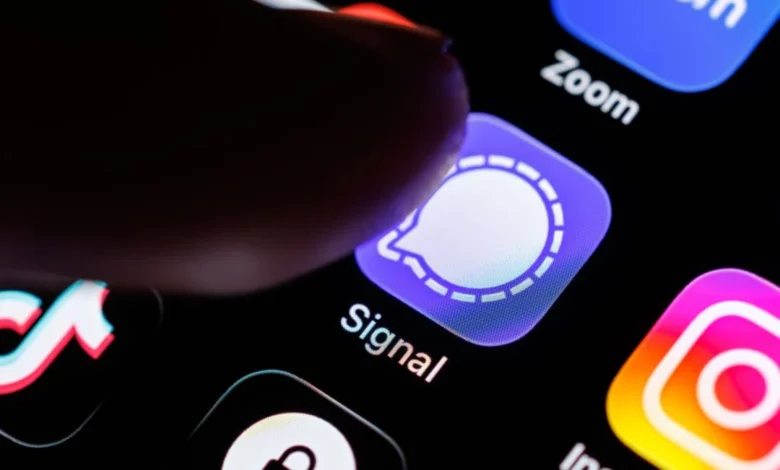
In a significant move to reinforce user privacy against the encroaching capabilities of modern operating systems, the encrypted messaging service Signal announced on Friday, November 21, 2026, that it is implementing strict new limitations on screen-capturing functionality across its mobile platforms. The decision marks a major escalation in the ongoing tension between privacy-focused software developers and the major technology conglomerates that control the underlying operating systems—namely Microsoft, Google, and Apple.
Signal President Meredith Whittaker, a prominent voice in the digital rights space, framed the policy shift as a necessary defense against the "existential threat" posed by agentic AI. As operating systems increasingly integrate AI agents designed to monitor, index, and analyze user activity in real-time, the fundamental promise of end-to-end encryption is being challenged at the hardware and OS level. By restricting the ability for users or third-party processes to take screenshots, Signal is attempting to create a technological barrier that prevents AI agents from "scraping" the contents of private conversations.
The Evolution of OS-Level Surveillance
For years, the battle for privacy was fought primarily on the network layer, ensuring that data in transit could not be intercepted by third parties or service providers. However, the current landscape of computing has shifted the battlefield to the "endpoint"—the device itself.
Modern operating systems, including Windows, macOS, Android, and iOS, have integrated AI-driven features that perform persistent screen analysis. These tools are designed to catalog user behavior to provide contextual assistance, such as summarizing emails, offering search suggestions, or predicting user needs. While marketed as productivity enhancements, these agents require constant access to the visual data displayed on the screen.
Whittaker argues that this access creates a massive vulnerability for secure communication apps. Once an AI agent captures data from a screen, that information is often stored in local databases or transmitted to remote servers managed by the OS provider. This process effectively bypasses the encryption protocols Signal uses to protect messages, rendering the application’s security guarantees moot. "Now, in service of AI agentic capabilities, your sensitive data is being captured, stored, and made accessible to whatever local database or remote server an OS-level AI agent is using at that moment," Whittaker stated in her official announcement.
Chronology of the Privacy Shift
Signal’s trajectory toward this policy began well before the November 2026 announcement. The organization has long operated on the principle of data minimization, storing as little metadata as possible and relying on open-source, peer-reviewed cryptographic protocols.
- Early 2024: Signal strengthened its Windows desktop application by blocking native screen-capture tools by default, setting a precedent for its desktop-first security model.
- June 2026: Meredith Whittaker publicly criticized the trajectory of AI development, warning that the "agentic" nature of new models—which are designed to execute tasks autonomously—would necessitate a rethink of how applications interact with the OS layer.
- November 2026: Following internal audits and feedback from security researchers regarding the integration of "Recall-style" AI features in mainstream operating systems, Signal finalized the rollout of screenshot restrictions for its iOS and Android mobile applications.
Technical Implications and Limitations
The new restrictions mean that on most devices, the Signal app will actively prevent the OS from taking screenshots of the conversation interface. If a user attempts to trigger a screenshot, the system will return a black screen or an error message.
However, Signal has acknowledged that this is not a panacea. The organization has kept a toggle in the settings menu allowing users to override these restrictions, acknowledging that some users may have legitimate needs for screen captures. Whittaker was candid about the limitations of this update, labeling it an "incomplete solution."
"This doesn’t address other more sneaky ways AI agents could potentially access application data," she admitted. The reality of modern mobile architecture is that the OS holds ultimate privilege. If an operating system is designed to be "all-seeing," a single application can only do so much to hide itself. The move acts more as a signal of intent and a defensive layer against automated harvesting rather than a total seal against sophisticated OS-level intrusions.

Industry and Expert Perspectives
The move has sparked a wider conversation about the viability of privacy in the age of AI. Security experts note that there is an inherent conflict between the goals of OS developers and those of privacy-centric applications.
OS developers like Microsoft and Google are currently in an "AI arms race," prioritizing features that make computers more proactive. Privacy advocates, conversely, argue that this proactive stance fundamentally turns the device against the user. "The operating system is no longer a neutral platform," said one independent privacy researcher who requested anonymity. "It has become a participant in the surveillance economy, and Signal is one of the few entities brave enough to acknowledge that the platform itself is the primary vector for data leakage."
There has been no formal response from Apple, Google, or Microsoft specifically regarding Signal’s move. However, industry analysts suggest that these companies may view such restrictions as an interference with the "user experience" they are trying to curate. If Signal continues to "break" these OS features, it could lead to friction between the app and the app store gatekeepers, who maintain strict control over how applications utilize system APIs.
The Broader Impact on Encrypted Communications
Signal’s decision highlights a growing divide in the tech industry: the "Privacy First" approach versus the "Convenience First" model. As generative and agentic AI become more deeply embedded in the daily user experience, the friction between these two models will likely increase.
For the average user, this change represents a shift in how they must perceive their devices. In the past, the security of a message was determined by the software being used. Today, the security of a message is determined by the entire stack—from the hardware and the OS to the application itself. If the OS is programmed to record everything, the application’s encryption is merely a lock on a door that the OS is currently looking through the window to bypass.
The implications for businesses and organizations that rely on Signal for secure communication are significant. Security teams may now need to mandate specific OS configurations to ensure that these AI agents are disabled entirely, as application-level security can no longer be considered sufficient on its own.
Moving Forward: The Future of Trust
Signal’s latest move is part of its ongoing efforts to remain the gold standard for secure messaging. By proactively restricting features that could be exploited by AI agents, the organization is attempting to maintain its reputation as a safe haven for private discourse.
However, the "cat and mouse" game is far from over. As AI agents become more sophisticated, they may develop methods to "read" data that go beyond simple screen capturing, such as using optical character recognition (OCR) on video buffers or intercepting data through accessibility APIs.
Whittaker’s warnings suggest that the future of digital privacy will require a more radical approach, potentially involving custom hardware or highly hardened operating systems that are specifically designed to be "AI-blind." For now, Signal’s policy update serves as a critical, albeit limited, firewall against a tech industry that is rapidly moving toward a future where "privacy" and "omnipresent AI monitoring" are increasingly viewed as mutually exclusive.
As the calendar turns toward 2027, the focus for privacy advocates will remain on the transparency of these AI agents. Until operating system providers offer clear, verifiable, and granular controls over what their AI agents can see and store, applications like Signal will continue to treat the host OS as an untrusted environment—a sobering reality for the digital age.