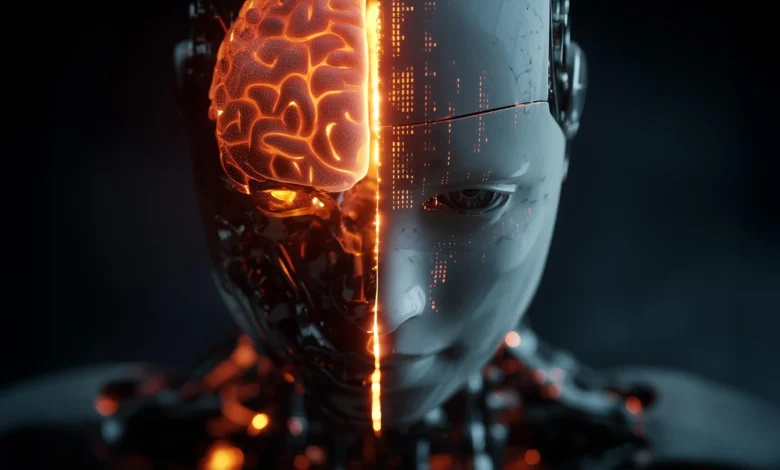
For over a decade, artificial intelligence has marched hand in hand with neuroscience, serving as a digital mirror for the human mind. Artificial neural networks (ANNs), designed primarily for computer vision tasks like object and facial recognition, have been celebrated not just for their utility in technology, but for their uncanny ability to mimic the firing patterns of biological neurons. Neuroscientists have increasingly relied on these computational models to decode how the human visual cortex processes complex scenes, movements, and stimuli.
However, a groundbreaking study conducted by researchers at York University shatters this foundational assumption. Published in the journal Nature Machine Intelligence, the research reveals a striking and previously undetected vulnerability in these widely used AI models. While artificial intelligence can effectively predict how the brain responds to visual stimuli, the reverse does not hold true: recorded brain activity fails to reliably predict the internal mechanics of the AI. This profound asymmetry suggests that artificial intelligence may be achieving correct visual outcomes through internal strategies and hidden pathways that the biological human brain never actually uses.
The Main Facts of the Study
Led by Dr. Kohitij Kar, an Assistant Professor and Canada Research Chair in Visual Neuroscience at York University, alongside postdoctoral fellow Sabine Muzellec, the research team set out to interrogate the validity of the "brain-like" label so frequently assigned to modern machine learning models.
To test whether ANNs truly mirror biological visual processing, the team introduced a novel diagnostic metric known as "reverse predictivity testing." Historically, computational neuroscience has relied on a one-way street: feeding images into an AI model and measuring whether its internal responses can predict biological brain activity recorded via neuroimaging or electrode arrays. Kar and Muzellec flipped this paradigm. They asked whether recorded biological brain activity could successfully predict the internal states and features of the AI models.
If ANNs operated identically to biological nervous systems, the relationship would be symmetrical. Instead, the researchers discovered a glaring disconnect. While the models could accurately forecast neural responses, the biological neural responses were largely incapable of predicting many critical internal features of the AI. Crucially, control tests confirmed that this failure of predictability does not occur when comparing neuronal activity between two different biological brains. When neuron recordings from one mammalian brain are tested against another, the cross-prediction is robust and reliable, highlighting that the asymmetry is unique to the artificial-biological divide.
Chronology and Background Context
The intersection of artificial intelligence and neuroscience is rooted in the 1950s and 1960s with the invention of the perceptron, the foundational ancestor of modern neural networks. Inspired by biological neurons, early computer scientists modeled artificial systems after the layered architecture of the mammalian visual cortex, famously mapped by Nobel laureates David Hubel and Torsten Wiesel.
Over the last ten years, the exponential growth of computational power, massive datasets, and deep learning architectures led to a renaissance in computational neuroscience. ANNs became the leading proxy for studying vision, language, and hearing. Neuroscientists increasingly treated these models as digital stand-ins for biological tissue, publishing thousands of papers that used AI predictions to map human cognitive functions.
As these models grew more complex, questions regarding their true interpretability began to mount. The York University study represents a critical inflection point in this timeline. Initiated as part of York’s interdisciplinary Connected Minds research program—which explores the intersections of AI, neuroscience, and society—the project was designed to scrutinize the black box of machine learning.
During their investigation, the York team subjected the AI models and biological subjects to a rigorously curated battery of visual data. The test suite encompassed 1,320 natural photographs and realistic synthetic images depicting 10 common, everyday subjects: a bear, an elephant, a human face, an apple, a car, a dog, a chair, an airplane, a bird, and a zebra. These objects were placed against a wide array of natural, indoor, and outdoor backgrounds to challenge the visual processing systems. Furthermore, the researchers introduced 300 additional images showing the same subjects rendered in abstract visual styles, including line art, rough sketches, simplified vector representations, and complex artistic interpretations.
When analyzing the performance, the researchers noted a paradoxical nuance: the specific sub-components of the AI models that did show some alignment with biological brain activity were also the best at predicting actual human behavior. However, the vast majority of the models’ internal architecture relied on computational shortcuts and processing routes entirely foreign to primate neurology.
Supporting Data and Methodological Rigor
The implications of the York University study are underscored by the breadth of the dataset and the precision of the newly minted testing toolkit. In machine learning, optimizing a model to fit a specific output—such as predicting neural spikes—does not guarantee that the internal mechanisms driving that output reflect reality. This is known in mathematics and statistics as an over-fitting or under-constrained problem, where multiple distinct internal configurations can yield the same external prediction.
By establishing reverse predictivity testing, Muzellec and Kar have provided the neuroscience community with a standardized diagnostic metric. To ensure that the broader scientific community can adopt and scrutinize this approach, the research team has released a publicly available testing toolkit hosted on PyPI (Python Package Index), allowing AI developers and neuroscientists worldwide to evaluate their own models for biological fidelity.
Official Responses and Expert Analysis
The findings have sent ripples through the computational neuroscience community, prompting a re-evaluation of how machine learning models are deployed in scientific research.
"Artificial intelligence systems are often described as ‘brain-like’ because they can predict activity in parts of the brain that help us recognize objects," explains Dr. Kohitij Kar, senior author of the study and a member of York’s Centre for Vision Research and Centre for Integrative and Applied Neuroscience. "Until now, scientists mostly tested this in one direction. They asked whether AI models can predict brain activity. Our results were striking. While AI models can predict the neurons we recorded in the brain fairly well, the brain cannot equally predict many of the model’s internal features."
Kar emphasizes that while recognizing objects—such as processing how an object moves through space—feels effortless to humans, it remains a profoundly complex computational hurdle. When AI solves this hurdle using alien internal strategies, it creates a false equivalence that can skew scientific inquiry.
"Our findings challenge how similar current AI systems really are with the primate brain," notes Sabine Muzellec, York Postdoctoral Fellow and co-author of the study. "We show that models that were previously thought to be brain-like rely on internal components that the brain does not appear to use. We provide a well-vetted diagnostic metric for the field."
Broader Impact and Clinical Implications
The ramifications of this disconnect extend far beyond basic computer science and theoretical neuroscience. In recent years, artificial intelligence has been integrated deeply into clinical research, helping scientists design behavioral experiments, analyze neurological disorders, and investigate complex psychological conditions.
Many of these clinical applications are built upon the fundamental premise that AI models process perceptual and cognitive information in a manner analogous to humans. If that premise is fundamentally flawed, researchers risk building clinical hypotheses on a foundation of digital sand. Misleading conclusions drawn from superficially accurate models could misguide therapies or distort our understanding of neuropathology.
Of particular importance is the study’s relevance to neurodevelopmental research. Kar’s laboratory utilizes models of the neurotypical brain as a critical baseline for investigating conditions such as autism spectrum disorder (ASD), where sensory processing and perceptual integration often diverge from typical patterns. If baseline AI models incorporate non-biological internal strategies, comparing them to atypical neurological profiles could introduce significant analytical errors. Ensuring that computational models accurately reflect biological ground truth is vital for isolating how perception differs in neurodivergent populations.
Furthermore, these concerns are not isolated to the visual system. Similar artificial neural network architectures are currently deployed to model auditory processing, speech and language comprehension, and motor control systems. If the visual models suffer from this reverse-predictability gap, it is highly probable that language and auditory models share similar architectural discrepancies.
Looking Ahead: Building Truly Brain-Like AI
The York University study does not advocate for the abandonment of artificial neural networks in neuroscience. Rather, it offers a pragmatic roadmap for their reform. By utilizing reverse predictivity testing, researchers can pinpoint precisely which layers and features of an artificial neural network genuinely correspond to biological processes, and which are artifacts of mathematical optimization.
This targeted approach paves the way for a new generation of hybrid or biologically constrained AI models. These future systems will not only excel at recognizing patterns and executing tasks with high predictive accuracy, but they will do so via internal mechanisms that respect the biological constraints of the human nervous system.
As artificial intelligence continues to permeate medical research, psychology, and cognitive science, the distinction between functional mimicry and true mechanistic replication becomes paramount. By drawing a sharp line between predicting brain outcomes and sharing brain processes, the findings published in Nature Machine Intelligence ensure that the tools used to study the human mind remain grounded in biological reality.