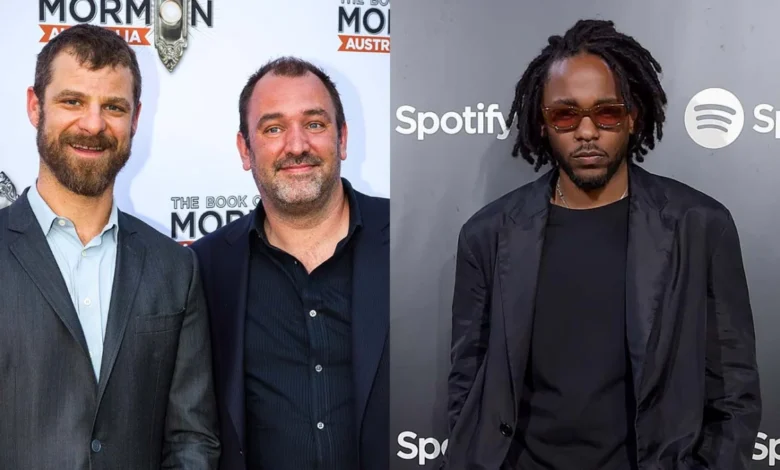
The long-gestating musical comedy film project spearheaded by South Park creators Trey Parker and Matt Stone, in collaboration with Grammy-winning rapper Kendrick Lamar, remains in a state of limbo, with the filmmakers recently issuing a formal apology regarding the production’s repeated scheduling shifts. The film, which has operated under the working title Whitney Springs, has been officially removed from the Paramount Pictures release calendar, leaving its future trajectory uncertain despite significant institutional enthusiasm for the script.
The Current Status of the Project
The production, a collaborative effort between Parker and Stone’s Park County banner and the creative agency pgLang, founded by Kendrick Lamar and his longtime business partner Dave Free, has faced multiple delays that have pushed it far beyond its initial targets. While the project was once heralded as a cornerstone of Paramount’s upcoming film slate, the studio has been forced to vacate its release slots repeatedly.
In a statement provided to The Ankler, Parker and Stone took full accountability for the project’s stagnation. “We take full responsibility for the schedule delay of this movie,” the duo stated. “We apologize to our partners at pgLang and Paramount, and we appreciate their patience. South Park and life’s circumstances have gotten in the way, but we still believe in the project.”
The film, scripted by longtime South Park producer and writer Vernon Chatman, is reportedly a provocative musical satire. According to industry reports, the narrative follows a Black reenactor at a historical slave plantation museum who finds himself in an escalating conflict with the town’s racist mayor, a role intended to be played by Trey Parker. The project is notable for the inclusion of original, previously unreleased musical contributions from Kendrick Lamar, whose involvement has been a significant draw for the studio.
A Chronology of Delays
The history of Whitney Springs is marked by a series of shifting deadlines that reflect the logistical complexities of balancing a major feature film with the rigorous production demands of the long-running animated series South Park.
- April 2024: During the annual CinemaCon event, then-Paramount film chief Brian Robbins publicly championed the project, describing it as "one of the funniest and most original scripts we’ve ever read." At the time, expectations for a near-term production timeline were high.
- July 2025 (Original Date): The film was initially slated for a July 4, 2025, release. This window was eventually abandoned due to a combination of Kendrick Lamar’s extensive touring schedule and the cyclical, time-intensive requirements of maintaining the South Park franchise.
- March 2026 (Second Date): Following the initial shift, the film was rescheduled for March 20, 2026. However, by November 2024, industry reports confirmed that Paramount had removed the title from its theatrical calendar entirely.
- Present Day: The film currently lacks an official release date, with the creative team focusing on managing the complex interplay between the film’s post-production requirements and the ongoing commitments of the creators involved.
Creative Context and Provenance
The collaboration brings together three of the most influential figures in modern American satire and music. Trey Parker and Matt Stone have established a career defined by their willingness to tackle social, racial, and political taboos through the lens of irreverent comedy. Their portfolio includes the 2004 satirical puppet action film Team America: World Police and the 1997 Broadway phenomenon The Book of Mormon, which earned nine Tony Awards and a Grammy.
Kendrick Lamar, through his pgLang creative agency, has sought to expand his footprint into film and multi-disciplinary art. The partnership with Parker and Stone suggests a project that aligns with the rapper’s history of complex, socially conscious storytelling. By centering the plot on a historical reenactor and a clash with a racist mayor, the film appears to be positioning itself as a satirical examination of American history and racial dynamics, a common theme in both the creators’ and the musician’s previous works.
The involvement of Vernon Chatman, a veteran writer for South Park and the creator of cult shows like Wonder Showzen, adds a layer of continuity to the project’s creative DNA. Chatman’s history with the creators ensures that the film’s humor will likely share the DNA of the South Park universe, even as it moves into the realm of a live-action musical comedy.
Institutional Challenges at Paramount
The delay of Whitney Springs occurs against the backdrop of significant structural changes within Paramount Pictures. The departure of Brian Robbins, who was a vocal supporter of the project, coincides with the studio’s massive merger with Skydance Media, led by David Ellison.
In the wake of such corporate realignments, projects that are not part of established blockbuster franchises often face increased scrutiny regarding their budgets and timelines. While Whitney Springs has been described as a high-priority, high-concept project, the studio’s transition to new leadership has likely necessitated a re-evaluation of its entire slate, potentially contributing to the current "undated" status of the film.
The Burden of Success: South Park’s Endurance
A primary factor cited by the filmmakers for the delay is the relentless production cycle of South Park. The show, which recently won its sixth Emmy Award for best animated series, has been on the air for over 27 years. The show’s unique production model—often creating entire episodes in just six days to ensure topical relevance—demands the constant, undivided attention of Parker and Stone.
With the show’s 29th season scheduled to premiere on September 16, the duo’s bandwidth for outside projects remains constrained. As Parker and Stone noted in their recent statement, the realities of maintaining a cultural institution like South Park often take precedence, creating a bottleneck for new creative endeavors.
Industry Implications and Future Outlook
The "reparations musical," as it has been colloquially described in industry circles, carries significant financial and reputational weight. With a reported $100 million price tag associated with the broader deal involving the creators, the studio is understandably cautious about rushing the final product.
From an analytical standpoint, the delay of such a high-profile, edgy project highlights a growing trend in Hollywood: the friction between the long-term creative vision of high-tier talent and the rigid, short-term demands of corporate theatrical release windows.
If the film successfully reaches completion, it will likely serve as a test case for how far an R-rated, satirical musical can perform in the modern box office landscape. Should it maintain the biting, provocative tone that characterizes the work of Parker, Stone, and Lamar, it could generate significant cultural conversation. However, the longer the film remains in development, the greater the pressure becomes to deliver a project that justifies the long wait and the high expectations set by its creators.
For fans, the confirmation that the project is still alive is a positive sign, though the lack of a release window suggests that the audience may have to wait until at least late 2026 or 2027 to see the results of this unconventional collaboration. Until then, the film remains a "mythical" entity—a highly anticipated, expensive, and deeply mysterious project that continues to occupy a unique space in the current Hollywood development landscape.