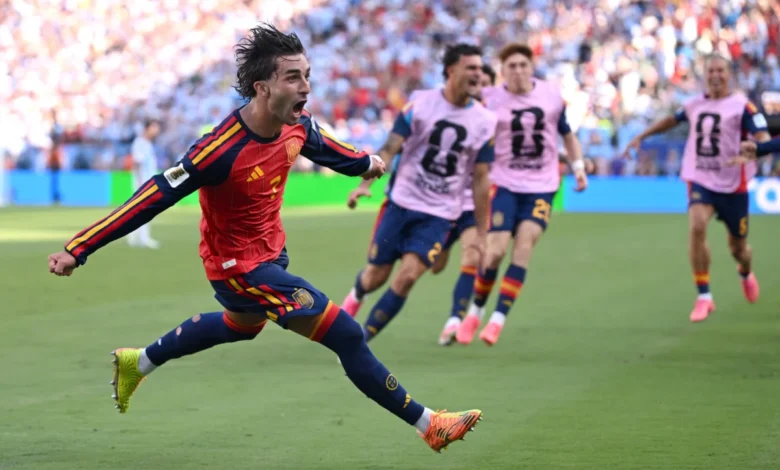
The air in the stadium crackled with anticipation, a palpable energy that promised a World Cup Final for the ages. While the 2026 showdown between Spain and defending champions Argentina may not have reached the mythical heights of the 1986 Argentina-England clash, it delivered a spectacle of resilience, tactical brilliance, and individual heroism that will be etched in football history. In a match characterized by Spanish dominance in possession and a Herculean effort from Argentina’s goalkeeper Emiliano "Dibu" Martínez, Spain ultimately triumphed, securing their first World Cup title since 2010 with a hard-fought 1-0 victory in extra time.
The narrative of the final was, in many ways, defined by a single figure: Emiliano Martínez. The Argentine custodian, playing with what was later revealed to be a broken finger on his right hand, delivered a performance that bordered on the supernatural. Throughout the grueling 120 minutes, Martínez was Argentina’s defiant last line of defense, amassing an astonishing 10 saves in the initial 98 minutes alone. This remarkable tally set a new all-time record for saves in a World Cup Final, eclipsing his own previous tournament performances where he had made a total of nine saves across seven matches prior to the final. His heroics repeatedly thwarted a relentless Spanish attack, keeping his team in contention against overwhelming pressure.
Spain, true to their renowned tactical identity, controlled the tempo of the game from the outset. Their signature possession-based style, often referred to as "tiki-taka," suffocated Argentina, limiting their opportunities and dictating the flow of play. In the first half, Spain boasted an imposing 62% of ball possession, a statistic that underscored their territorial advantage. The Argentine talisman, Lionel Messi, a figure synonymous with individual brilliance, found himself with precious little to do, touching the ball only once in the opening period. This stark contrast in ball control highlighted Spain’s strategic dominance and Argentina’s struggle to establish any attacking rhythm.
However, Argentina, a nation whose footballing identity is intrinsically linked to passion and fighting spirit, began to assert themselves as the second half unfolded. A noticeable increase in aggression and intensity characterized their approach, a shift that, while necessary, proved to be a double-edged sword. Midfielder Enzo Fernández, a vital cog in Argentina’s midfield engine, received his second yellow card in the 92nd minute for a rash challenge. This dismissal meant Argentina would have to navigate the remainder of the match, including the entirety of extra time, a man down. The strategic disadvantage placed an immense burden on the remaining ten players and amplified the challenge of containing Spain’s potent offense.
The tension escalated as the match approached its conclusion. In the 98th minute, Spain was presented with a golden opportunity to seal the victory from a free kick positioned just outside the penalty area. The stage was set for a decisive moment, but once again, Martínez was there, soaring to his left to make a crucial save and deny Spain their breakthrough. As the final whistle blew on regular time, the scoreboard read a stark 0-0, a testament to Spain’s offensive onslaught and Argentina’s heroic defense. Spain had registered 16 shots on goal by this point, while Argentina, remarkably, had failed to record a single shot on target.
The drama continued into extra time. Just before the 100th minute, Nico Williams Jr. appeared to have broken the deadlock, finding the back of the net with a well-placed shot. However, the jubilation was short-lived as the goal was disallowed following a review. The referee spotted a foul in the box, with Spain’s Mikel Merino deemed to have stepped on the foot of Argentine defender Otamendi during the build-up. This marginal call served as another twist of the knife, prolonging the agonizing wait for a decisive goal.
The breakthrough finally arrived in the 105th minute. Spain’s persistent pressure finally paid dividends when midfielder Ferran Torres, a player who had been instrumental in their attacking efforts, unleashed a powerful shot that deflected into the net. Fittingly, for a team that champions collective effort, this was Torres’s first goal of the tournament, a moment of individual brilliance born from sustained team play. Spain’s relentless attacking pressure was reflected in their statistics, as they finished the match with 20 shots on goal across regular and extra time. In stark contrast, Argentina’s first shot on target did not materialize until the 116th minute, a testament to their defensive resilience and the attacking void created by Fernández’s dismissal.
Spain’s victory marked a significant milestone for the nation, their first World Cup triumph in over a decade, signaling a new era of dominance for Spanish football. For Argentina, the loss carried an additional layer of poignancy. The final was widely anticipated to be the last World Cup appearance for their legendary captain, the 39-year-old Lionel Messi. The outcome, therefore, represented a bittersweet conclusion to what has been an unparalleled career at the pinnacle of the sport, leaving many to ponder the future of the Argentine national team without their iconic leader on the grandest stage.
Historical Context and Tournament Progression
The 2026 FIFA World Cup, hosted across the United States, Canada, and Mexico, was the first to feature an expanded 48-team format, promising a global spectacle with unprecedented inclusivity. The tournament had been marked by a series of upsets and compelling narratives, setting the stage for a final that was expected to deliver fireworks. Spain’s journey to the final was characterized by their methodical approach, navigating through a competitive group stage and demonstrating their tactical acumen in the knockout rounds. They showcased a blend of experienced veterans and emerging talent, a testament to the depth of their footballing infrastructure.
Argentina, the reigning champions, entered the tournament with the weight of expectation and the formidable presence of Lionel Messi, who had previously expressed his desire to lift the World Cup trophy for his nation. Their path to the final was a testament to their resilience, often relying on individual brilliance and the unwavering determination of their squad. Manager Lionel Scaloni had successfully cultivated a cohesive unit, blending youthful exuberance with the experience of their captain.
Key Moments and Turning Points
The final can be dissected into several critical junctures:
- Emiliano Martínez’s Early Heroics: From the outset, Martínez’s exceptional goalkeeping prevented Spain from capitalizing on their early dominance. His record-breaking saves were crucial in keeping Argentina in the game.
- Enzo Fernández’s Red Card: The midfielder’s dismissal in the 92nd minute significantly altered the dynamic of the match, forcing Argentina to defend for extended periods with a numerical disadvantage.
- Disallowed Nico Williams Jr. Goal: This controversial decision in extra time added to the escalating tension and denied Spain a potential lead at a critical juncture.
- Ferran Torres’s Decisive Goal: The breakthrough in the 105th minute, a product of sustained Spanish pressure and a fortunate deflection, ultimately proved to be the match-winner.
Statistical Deep Dive
The statistics from the final paint a vivid picture of the game’s narrative:
- Shots on Goal: Spain outshot Argentina significantly, with 20 shots on target compared to Argentina’s single shot on target in the 116th minute.
- Possession: Spain’s dominance in possession was evident throughout, particularly in the first half where they controlled 62% of the ball.
- Saves: Emiliano Martínez’s 10 saves in the first 98 minutes alone underscored his pivotal role in keeping Argentina competitive.
- Fouls and Cards: The increase in Argentina’s aggression led to more fouls and ultimately Fernández’s red card, a key factor in the game’s outcome.
Reactions and Implications
While official statements from the Spanish Football Federation and the Argentine Football Association are expected to follow, the immediate aftermath of the final is likely to be filled with a mixture of elation and reflection. Spanish coach Luis de la Fuente will undoubtedly be lauded for his tactical acumen and his ability to instill a winning mentality in his squad. The victory solidifies Spain’s position as a global footballing powerhouse and offers a promising outlook for the future of the national team.
For Argentina, the defeat, while painful, will be viewed in the broader context of their historic World Cup triumph in 2022. The performance of Emiliano Martínez has cemented his status as one of the greatest goalkeepers of his generation, and the team’s fighting spirit, even with a man down, will be remembered. The potential end of Lionel Messi’s World Cup journey without another title will undoubtedly spark widespread debate and retrospection on his illustrious career.
The 2026 World Cup Final, therefore, was not just a match; it was a narrative of contrasting styles, individual brilliance against collective strength, and the unyielding spirit of competition. Spain’s triumph, achieved through a combination of tactical discipline and a late surge of offensive prowess, marks a new chapter in their footballing history. Argentina’s valiant effort, spearheaded by an extraordinary goalkeeping display, showcased their enduring passion and resilience on the world stage. The echoes of this dramatic encounter will undoubtedly resonate within the footballing world for years to come.