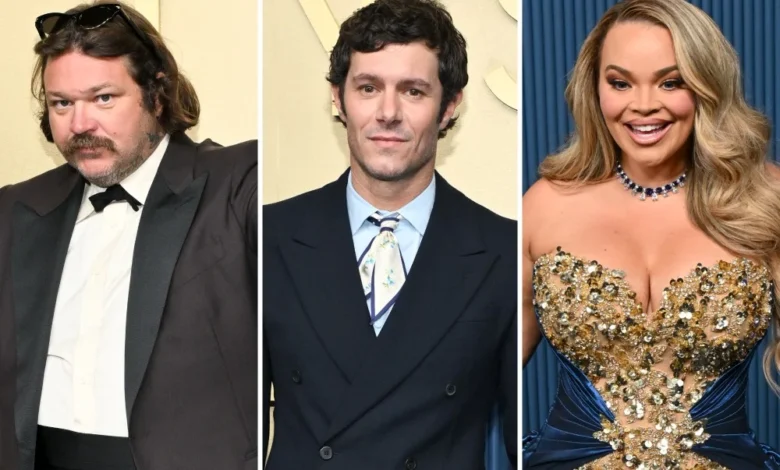
The glittering lights of downtown Los Angeles illuminated television’s biggest and most anticipated night of the year as the 78th Primetime Emmy Awards officially got underway. Hollywood’s finest converged on the red carpet in their sartorial best, setting the stage for an evening dedicated to celebrating the pinnacle of television excellence, groundbreaking storytelling, and exceptional performances across traditional networks and streaming giants alike.

As the industry gathers to honor the finest achievements in television from the past year, this year’s ceremony arrives with a fascinating backdrop of shifting industry paradigms, intensifying streaming wars, and a remarkable concentration of critical acclaim directed at a handful of standout series. Leading the charge into the evening is HBO Max’s gripping medical drama The Pitt, which towers over the competition with a staggering 25 nominations. Hot on its heels is another juggernaut from the same platform, the critically beloved comedy Hacks, which secured 24 nominations. This formidable tally not only cements the show’s legacy but makes Emmy history: the fifth and final season of Hacks has officially become the most-nominated final season of a comedy in the award program’s history, as well as the most-nominated single season for a comedy series ever recorded.

The dominance of streaming platforms continued further down the list, with Apple TV establishing a formidable presence. The platform’s horror-comedy hit Window’s Bay captured an impressive 19 nominations, while its speculative drama Pluribus followed closely with 18 nods. Meanwhile, maintaining a strong foothold for traditional broadcast networks, NBC’s legendary late-night institution Saturday Night Live led the traditional television sector with 11 nominations.

A Legacy of Excellence: The Road to the 78th Emmys
The journey to the 78th Primetime Emmy Awards has been characterized by intense competition and a post-strike recovery period that reshaped production timelines across the entertainment industry. Following the disruptive labor strikes of 2023, the television landscape experienced a compressed and fiercely competitive window for content release. Networks and streaming services alike deployed their most ambitious projects, resulting in an unprecedented standard of quality that made the Television Academy’s nominating committees’ jobs extraordinarily difficult.

The selection process, overseen by the Academy of Television Arts & Sciences, involved tens of thousands of voting members evaluating thousands of entries across comedy, drama, limited series, and variety formats. The resulting nominees reflect a blend of enduring critical favorites and bold new contenders that have captured the cultural zeitgeist. Analysts note that the heavy concentration of nominations among platforms like HBO Max and Apple TV underscores a broader industry consolidation, where audiences and award bodies increasingly gravitate toward high-budget, cinematic serialized storytelling.

Heavyweights Face Off in the Drama Categories
Nowhere is the intensity of this year’s competition more palpable than in the premier acting categories. The race for the Emmy Award for Best Actor in a Drama Series features a masterclass of seasoned talent and powerhouse performances. Sterling K. Brown earns a nod for his compelling work in Paradise, alongside veteran Gary Oldman for his riveting espionage performance in Slow Horses. They are joined by Mark Ruffalo for his intricate character work in Task, Rufus Sewell for his diplomatic poise in The Diplomat, and Noah Wyle, whose anchor performance in The Pitt has drawn widespread critical acclaim.

The category for Lead Actress in a Drama Series is similarly star-studded, showcasing a dynamic cross-section of generations and genres. Carrie Coon commands attention for her period work in The Gilded Age, while breakout star Chase Infiniti earns recognition for The Testaments. They compete alongside Keri Russell for The Diplomat, Rhea Seehorn for her captivating presence in Pluribus, and pop-culture icon Zendaya, returning to the race for her raw, unflinching portrayal in Euphoria.

Supporting Casts Drive Narrative Powerhouses
The depth of this year’s television landscape is perhaps best demonstrated by the supporting acting categories, where ensemble casts from breakout hits dominate the conversation. In the Best Supporting Actor in a Drama Series category, the medical drama The Pitt showcases its incredible depth by landing nominations for three of its stars: Patrick Ball, Shawn Hatosy, and Gerran Howell. They face formidable competition from Billy Crudup of The Morning Show, Jack Lowden of Slow Horses, Tom Pelphrey of Task, and Carlos-Manuel Vesga of Pluribus.

The supporting actress race tells a remarkably similar story of ensemble dominance. The women of The Pitt clean up in the Best Supporting Actress in a Drama Series category, with Taylor Deardon, Fiona Dourif, Katherine LaNasa, and Sepideh Moafi all earning recognition for their gripping work in the show’s second season. Rounding out this competitive field are Allison Janney for The Diplomat, Julianne Nicholson for Paradise, and Karolina Wydra for Pluribus.

Industry observers have noted that the heavy representation of ensemble-driven dramas points to a significant shift in television production. Rather than relying solely on a single marquee star, contemporary prestige television increasingly invests in fully realized, multi-faceted supporting casts that carry complex narrative arcs over multiple seasons.

Industry Implications and Cultural Impact
As the envelopes are opened and winners are crowned throughout the evening, the implications of the 78th Primetime Emmy Awards will resonate far beyond the glamorous red carpet. For streaming platforms, validation by the Television Academy translates directly into subscriber retention, brand prestige, and international market leverage. The historic achievement of Hacks proves that comedy series can maintain—and even expand—their creative and commercial peaks well into their final seasons, challenging the long-standing industry trend of creative fatigue in late-stage runs.

Furthermore, the strong performance of medical dramas and horror-comedies indicates a diversifying audience appetite. While prestige historical dramas and gritty crime thrillers remain perennial favorites, commissioners and studio executives are increasingly willing to greenlight genre-bending experiments that defy traditional categorization.

As the ceremony progresses, television executives, creators, and fans alike are watching closely to see which series will translate their record-breaking nomination tallies into coveted golden statuettes. Regardless of the final tally, the 78th Emmy Awards have already etched their place in history as a celebration of a golden age of television that continues to push creative boundaries and captivate global audiences.