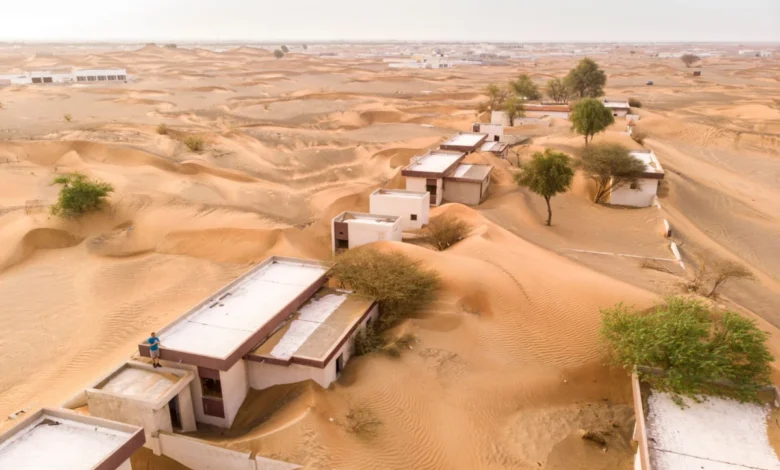
When the steady hum of human activity ceases, the natural world begins a patient, relentless process of reclamation. Across the globe, abandoned cities, forgotten industrial hubs, and desolate ghost towns serve as living laboratories for ecological succession. Whether these locales were surrendered to the encroaching desert, swallowed by dense temperate rainforests, or buried under the silent weight of volcanic ash, they stand as profound testaments to the transience of human endeavor. As civilization withdraws, the environment systematically dismantles the structures left behind, turning corridors of commerce and domesticity into conduits for biodiversity and geological shifts.

The Dynamics of Ecological Succession in Urban Decay
The process of abandonment follows a predictable biological trajectory known as primary or secondary succession. Initially, the removal of human maintenance—such as the cessation of HVAC systems, the failure of drainage infrastructure, and the absence of structural repairs—creates a vacuum. Within months, invasive plant species colonize cracks in concrete and asphalt, their roots exerting mechanical pressure that accelerates structural degradation.
In arid environments, such as the abandoned village near Dubai mentioned in recent reports, the lack of vegetation does not halt this process; instead, wind-driven sand acts as an abrasive, scouring building materials and eventually burying entire ground-floor levels. In humid or tropical climates, the process is markedly more aggressive. Tropical flora, characterized by rapid growth cycles, can compromise the integrity of masonry and steel frameworks within a single decade, as root systems infiltrate foundations and canopy cover deprives walls of the sunlight required to maintain their thermal equilibrium.

Chronology of Abandonment: Why Societies Retreat
The dissolution of a human settlement is rarely a singular event; it is almost always the culmination of long-term socio-economic or environmental pressures. A historical analysis of the 11 most significant abandoned sites globally reveals three primary drivers for total desertion:
- Economic Obsolescence (1950s–1980s): The mid-20th century saw the decline of single-industry towns. As coal mining, steel manufacturing, and textile production shifted toward globalized models, remote company towns were left without an economic reason to exist.
- Environmental Catastrophe (1900–Present): Events such as the Chernobyl nuclear disaster in 1986 or the prolonged drought cycles that have rendered various agrarian villages uninhabitable serve as immediate catalysts. In these instances, the abandonment is often forced, leaving behind a "time capsule" of domestic life.
- Geopolitical Shifts and Conflict: Changing national borders and the rise of modern urban centers often drain the population from traditional rural outposts, leading to a slow, decades-long decline that eventually reaches a point of non-viability.
Supporting Data: The Cost of Neglect
Data from structural engineering surveys indicates that modern building materials—specifically reinforced concrete—have a finite lifespan when exposed to the elements without maintenance. The carbonation process, which lowers the pH of concrete, eventually causes the internal steel rebar to rust. As the rebar expands through oxidation, it causes the concrete to "spall" or flake away.

In coastal abandoned towns, the presence of salt-laden air accelerates this decay by a factor of three compared to inland sites. For example, maritime ghost towns abandoned in the early 20th century typically lose their roof structures within 25 years due to moisture-induced rot, while the main load-bearing walls may hold for 70 to 100 years before a structural collapse occurs. This statistical reality highlights why these locations are inherently dangerous for casual exploration; the "eerie beauty" often masks severe structural instability.
Perspectives on Preservation and "Dark Tourism"
The rising trend of "dark tourism"—the act of traveling to sites associated with death, disaster, or abandonment—has sparked a debate among urban planners and historians. While proponents argue that these sites provide an invaluable look at history and the resilience of nature, official government bodies often categorize these areas as restricted zones.

"The issue is not just the romanticization of decay," notes a representative from a prominent urban preservation group. "It is the significant liability posed by failing infrastructure. When we see nature reclaiming these spaces, we are witnessing the inevitable return of the landscape to its original state, but we are also seeing the degradation of our built heritage. There is a fine line between observing history and inadvertently contributing to its destruction through unregulated access."
In some jurisdictions, local governments have attempted to mitigate the dangers of these sites by cordoning them off. However, the sheer scale of abandoned zones, particularly in vast desert regions or mountainous terrains, makes comprehensive patrolling impossible. Consequently, these sites remain in a state of limbo: neither fully destroyed nor fully preserved, existing in a transitional state between human history and geological time.

The Broader Impact: Nature as a Carbon Sink
Beyond the aesthetic or historical value, there is a scientific dimension to the reclamation of cities. As structures fall and vegetation reclaims the site, these locations often become unplanned carbon sinks. In temperate regions, the reforestation of abandoned industrial zones contributes to local carbon sequestration, helping to mitigate the "urban heat island" effect that was present when the city was active.
Furthermore, these areas often become inadvertent wildlife corridors. Without the presence of humans, endangered species frequently return to these "no-man’s-lands." In the Exclusion Zone surrounding the Chernobyl nuclear power plant, for instance, researchers have observed a resurgence in populations of wolves, lynx, and the rare Przewalski’s horse. This phenomenon demonstrates that while human absence leads to the destruction of our architecture, it often facilitates the restoration of the local ecosystem.

Analysis of Future Implications
As the world faces ongoing challenges related to climate change, the study of abandoned cities provides crucial data on how quickly infrastructure can be returned to the earth. Coastal cities currently threatened by rising sea levels may, in the coming decades, follow the path of these "ghost towns." Understanding the mechanics of how buildings fail when exposed to sand, water, or unchecked plant growth is no longer just a subject for photographers or historians; it is becoming a critical component of climate adaptation planning.
The abandonment of a settlement is a reminder that cities are not static entities. They are fragile, energy-intensive ecosystems that require constant human input to maintain their existence. When that input is withdrawn, the environment does not mourn the loss of the architecture; it simply integrates the remains into the larger, indifferent cycles of the planet.

Conclusion: The Legacy of the Left-Behind
Whether through the slow erosion of a desert wind or the rapid takeover of vines and shrubs, the sites we leave behind are never truly lost. They are transformed. The 11 sites commonly cited by researchers represent a spectrum of human ambition, from grand industrial dreams to modest agrarian lives. While they may no longer serve a human purpose, they remain profound monuments to the dialogue between our species and the natural world.
As we move further into an era of rapid environmental change, these abandoned locales will likely become more common. They will continue to draw the curious, challenge the structural integrity of our past, and serve as quiet, haunting reminders of our place within the grander scale of history. The earth, it seems, is a patient architect, always ready to reclaim what was only ever ours on loan.