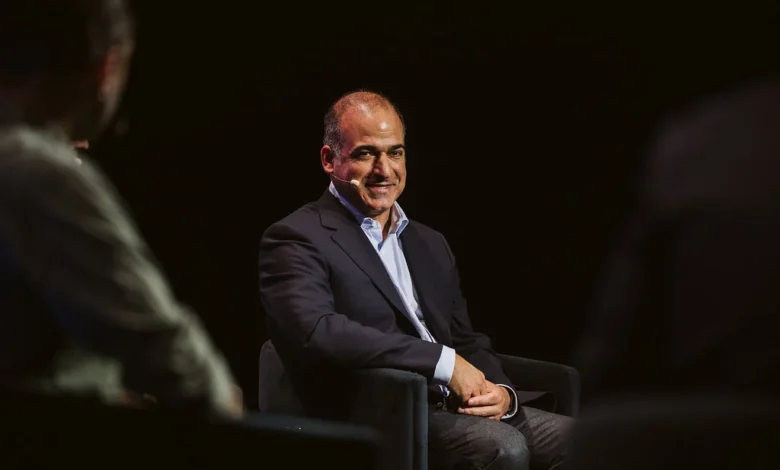
The race to achieve true spatial intelligence has shifted from the theoretical realm of academic papers to the high-stakes environment of venture-backed startups, yet the industry’s most promising innovators remain shrouded in an unusual degree of secrecy. During a recent panel discussion at the All In conference, which focused on the trajectory of world models, a clear pattern emerged: while the technological promise of these systems is immense, the path to commercialization remains intentionally obscured. Industry heavyweights, most notably Yann LeCun’s AMI Labs and Fei-Fei Li’s World Labs, are currently commanding significant capital, yet they are conspicuously prioritizing research and development over immediate revenue-generating applications.
This reticence to disclose specific product roadmaps highlights a broader strategic shift within the AI sector. As startups move beyond the initial excitement of Large Language Models (LLMs) and toward the more complex challenges of physical and spatial reasoning, they are adopting a defensive posture. By remaining tight-lipped, these labs are attempting to navigate the precarious balance between maintaining investor confidence and avoiding the "dark forest" of intense market competition, where early public disclosure could invite an onslaught of well-funded rivals.
The Technological Promise of World Models
At their core, world models represent a fundamental leap in how artificial intelligence perceives and interacts with the physical environment. Unlike traditional AI, which often processes static datasets or linear text, world models are designed to learn the underlying physics and spatial relationships of the real world. This capability allows for the automation of "spatial intelligence"—the ability to navigate, manipulate, and predict outcomes in three-dimensional space.
The potential applications for this technology are vast. In the realm of robotics, world models could allow humanoid assistants to navigate cluttered environments and perform delicate tasks without the need for constant, explicit human guidance. In autonomous systems, these models could provide a deeper, more context-aware understanding of traffic, pedestrians, and infrastructure, moving beyond the current limitations of computer vision. Furthermore, the creative industries are eyeing world models as a means to generate complex, photorealistic, and interactable environments for video games and film, effectively reducing the time and labor required for CGI rendering.
A Chronology of Emerging Ambition
The current landscape of world modeling is relatively young, though its roots trace back to foundational research in computer vision and neural networks.
- Late 2023 – Early 2024: Increased academic interest in "world models" begins to coalesce, moving away from simple generative video toward interactive, physics-aware simulations.
- Mid-2024: High-profile labs, including AMI Labs and World Labs, emerge from stealth mode, securing significant funding rounds based on the reputations of their founders, Yann LeCun and Fei-Fei Li, respectively.
- Late 2024: Initial demonstrations from platforms like World Labs’ "Marble" begin to showcase the ability to synthesize 3D environments from limited video inputs, marking a milestone in spatial AI capabilities.
- 2025: Strategic partnerships, such as AMI Labs’ collaboration with Nabia, suggest early experimentation in niche sectors like biomedicine and manufacturing, though the commercial viability remains unproven.
- September 2026: The All In conference serves as a focal point for the current state of the industry, highlighting the disconnect between rapid capital accumulation and the lack of clear, mass-market product timelines.
The Information Gap: A Supply Chain Perspective
The veil of secrecy surrounding these companies is not limited to their direct product offerings; it permeates their entire supply chain. Companies like Physicl, which specialize in providing the high-quality spatial data required to train these models, find themselves in a precarious position. For data suppliers, the lack of transparency is a tangible obstacle to efficiency.
"I wish they would tell us more," remarked Alex de Vigan, CEO of Physicl, during the All In conference. "We could build more useful data if we knew what they were working on." This disconnect underscores the inefficiency inherent in the current "siloed" approach to AI development. When suppliers are kept in the dark, the resulting data sets are often generalized rather than purpose-built, potentially delaying the very breakthroughs these labs aim to achieve.
Official Responses and the "Research Phase" Defense
When pressed for clarity regarding product pipelines, representatives for these labs remain consistent in their messaging. Michael Rabbat, VP of World Models at AMI Labs, has emphasized that the organization is currently in a "research and building phase." This stance is often framed as a necessity of the industry’s early maturity; because the technology is still being refined, premature commitments to a specific product or timeline could be detrimental.
However, industry analysts suggest that this caginess is also a calculated maneuver. By avoiding a specific focus—such as prioritizing a humanoid robot over a software rendering suite—these companies retain the flexibility to pivot based on which technological capability matures first. This "generalist" approach is common in well-funded AI startups, allowing them to remain attractive to investors across multiple verticals simultaneously.
The Dark Forest: Strategic Implications of Silence
The decision to stay quiet is increasingly being viewed through the lens of the "dark forest" theory, popularized by sci-fi author Cixin Liu. In the context of the AI arms race, the forest is the market, and the hunters are the incumbent tech giants and well-funded competitors.
If a smaller lab were to publicly announce a breakthrough in, for example, a highly efficient, low-latency robotics control system, they would instantly alert companies like OpenAI, Anthropic, or Google to the viability of that specific niche. Given the massive computational resources available to these tech titans, they could potentially out-develop and out-scale a startup in a matter of months. Therefore, the strategy of "quiet development" serves as a protective mechanism. As long as the path to market remains ambiguous, the larger players have little incentive to pivot their entire infrastructure to compete directly with a specialized, under-the-radar startup.
Analysis: The Cost of Capital
The current environment is characterized by an abundance of venture capital, which has inadvertently fueled this period of intense secrecy. When fundraising is relatively easy, the traditional pressure to demonstrate a path to profitability is significantly reduced. This allows labs to ignore the "trying-to-make-money scale" for an extended period, focusing entirely on the technical "moat" they hope to build.
However, this reliance on external funding creates a vulnerability. If the macroeconomic environment shifts or if interest rates rise, making capital more expensive, the labs that have not yet established a revenue-generating product will find themselves under significant pressure. The transition from "research lab" to "commercial enterprise" will eventually be forced by the realities of investor returns.
Future Outlook
The trajectory of world models will likely be defined by the first company that successfully transitions from a generalist research entity to a specialized market leader. Whether that is in the form of a transformative tool for the film industry, a standardized brain for robotics, or a new paradigm for autonomous navigation, the winner will likely be the one that can maintain its silence long enough to build a product that is too far ahead for competitors to catch, yet sufficiently developed to capture immediate market share.
For now, the sector remains in a delicate state of suspense. The potential for world models to fundamentally alter how we interact with the digital and physical worlds is undeniable, but the path to realizing that potential remains hidden behind a wall of strategic silence. As the industry matures, the pressure to emerge from the "dark forest" will grow, and the true capabilities of these labs will finally be put to the test in the harsh light of the open market.