The transformation of America’s federal public lands during the autumn months represents one of the most significant seasonal shifts in the nation’s tourism and ecological calendar. As the peak summer travel window closes in late August and early September, the National Park Service (NPS) oversees a distinct geographical and climatic transition across its more than 400 designated units. Sweeping valleys shift from vibrant summer greens to muted golds, high-elevation forests ignite in fiery reds and burnt oranges, and alpine trails experience a sharp, invigorating drop in temperatures. This seasonal evolution alters not only the visual landscape but also wildlife behavioral patterns, visitor demographics, and park management strategies.

According to historical visitor use statistics compiled by the Department of the Interior, autumn—broadly defined as the months of September, October, and November—functions as a vital "shoulder season" for the United States national park system. While summer remains the period of highest volume, drawing tens of millions of visitors during the peak vacation months of July and August, autumn offers a critical counter-balance. It provides a quieter, more ecologically immersive experience for travelers while presenting park superintendents with a different set of operational challenges, including shifting wildfire risks, preparation for winter road closures, and fluctuating staffing levels.
The Ecological and Climatological Mechanics of Fall Foliage
The vibrant colors that draw millions of leaf-peepers to federal lands each year are the result of a predictable biological process dictated by day length and temperature. As the Earth tilts on its axis and days grow shorter during September, deciduous trees reduce their production of chlorophyll, the green pigment responsible for photosynthesis and summer coloration. As chlorophyll breaks down, underlying pigments—such as carotenoids, which produce yellows and oranges, and anthocyanins, which create reds and purples—become visible.

Climatologists and botanists note that the brilliance and timing of the autumn display depend heavily on localized weather conditions throughout the summer and early fall. Adequate summer rainfall followed by a succession of warm, sunny autumn days and cool, crisp nights—without dropping below freezing—creates optimal conditions for sugar retention in leaves, maximizing the production of bright red anthocyanin pigments.
This phenomenon varies wildly across the diverse ecosystems managed by the federal government. In northeastern sanctuaries like Acadia National Park in Maine, coastal forests of sugar maples, American beeches, and paper birches peak earlier in October, creating a high-contrast palette against the rugged granite coastline and the Atlantic Ocean. Conversely, in western ecosystems such as Rocky Mountain National Park in Colorado and Grand Teton National Park in Wyoming, the autumn spectacle is heavily defined by the golden-yellow transformation of quaking aspens (Populus tremuloides). These interconnected clonal colonies paint entire mountainsides in shimmering metallic hues before shedding their leaves entirely ahead of the heavy winter snowpacks.

Chronology of the Autumn Transition
The progression of autumn across the American landscape follows a distinct temporal and latitudinal timeline, moving systematically from north to south and from high elevations to lowlands.
Early September: The High-Elevation Shift
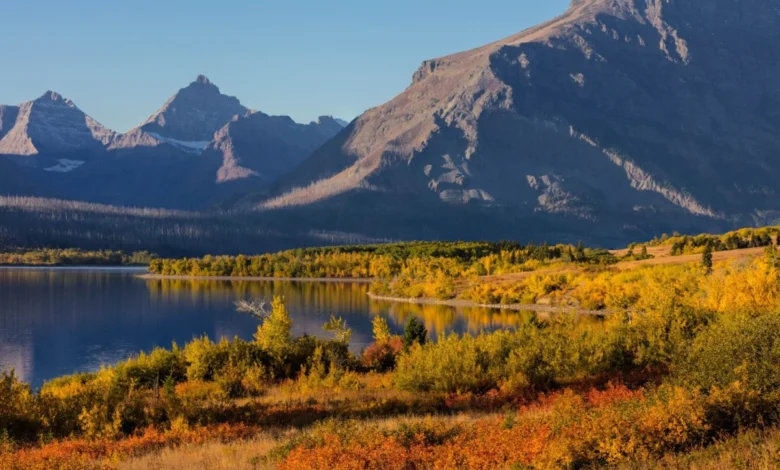
The first signs of autumn typically manifest in early September at high-altitude locations across the Rocky Mountains, the Sierra Nevada, and the Pacific Northwest. Locations sitting above 8,000 feet elevation experience the initial frost events. In places like Glacier National Park in Montana and Mount Rainier in Washington, subalpine meadows turn amber and rust, and seasonal wildlife activity intensifies. Elk enter their annual mating season, known as the rut, making early September an optimal period for wildlife viewing, albeit one that requires strict adherence to safety protocols regarding animal aggression.

Mid-to-Late September: The Aspen Turn and Northern Peaking
By the middle of September, the transformation reaches the middle latitudes and lower subalpine zones. The vast aspen groves of Utah—exemplified by regions near Bryce Canyon and Zion National Parks—and Colorado begin their rapid shift to yellow. Concurrently, northern tier parks like Voyageurs in Minnesota and Isle Royale in Michigan experience peak or near-peak color changes in their dense boreal forests.
October: Peak Foliage Across the East and Mid-Atlantic
October marks the geographic shift of peak tourism toward the eastern seaboard and the Appalachian mountain chain. Acadia National Park, Shenandoah National Park in Virginia, and the Great Smoky Mountains National Park on the border of North Carolina and Tennessee experience their highest visitor density of the autumn window. Great Smoky Mountains National Park, historically the most-visited national park in the United States, manages millions of autumn sightseers who traverse routes like Newfound Gap Road to witness the dense hardwood forests transition through a spectrum of colors.

Late October to November: Southern Descent and Desert Desert Blooms
As November approaches, the northern and high-altitude parks begin shuttering visitor centers, campgrounds, and high-elevation thoroughfares due to impending snowfall—notably portions of Glacier’s Going-to-Sun Road and Rocky Mountain’s Trail Ridge Road. Meanwhile, the autumn transition extends to southern and desert environments such as Big Bend National Park in Texas, Joshua Tree National Park in California, and Saguaro National Park in Arizona. While these desert landscapes lack traditional deciduous leaf changes, they experience a welcome relief from extreme summer heat, lower relative humidity, and occasional secondary floral blooms sparked by autumn precipitation.
Visitor Management and Economic Implications
The operational shift from summer peak to autumn shoulder season carries significant economic and logistical implications for gateway communities and park administrations. Historically, local economies surrounding major parks—such as Bar Harbor near Acadia or Estes Park near Rocky Mountain—rely heavily on the summer tourism cash flow. However, the extension of the travel season through October provides a secondary economic boost to hotels, restaurants, guided outfitters, and local merchants.

Despite the colloquial perception of shoulder seasons as quiet periods with guaranteed accessibility, federal land managers emphasize that autumn popularity has surged significantly over the past decade. The National Park Service has increasingly implemented timed-entry reservation systems, permit quotas, and managed access protocols to combat chronic overcrowding during peak foliage weeks.
In statements regarding visitor preparedness, National Park Service public affairs officials consistently urge travelers to plan well in advance. "While autumn offers a distinct and peaceful way to experience our nation’s natural heritage, visitors must remain cognizant of changing environmental conditions," an NPS spokesperson noted regarding seasonal planning. "Weather in the mountains can shift from mild sunshine to blizzard conditions within hours during October and November. Additionally, popular lodges, backcountry permits, and organized activities frequently book out months ahead of time."

Essential Considerations for Autumn Explorers
Travelers planning autumn excursions to federal public lands must account for several critical logistical and environmental factors:
- Reservation Requirements: Even outside of July and August, popular destinations like Acadia, Yosemite, and Zion continue to utilize reservation systems for vehicle entries, specific hiking trails, and camping loops. Checking recreation.gov prior to departure is mandatory.
- Weather Volatility: Fall weather is notoriously unpredictable. High-altitude mountain passes are subject to sudden closures due to early-season snowstorms, while coastal areas face heightened risks from late-season tropical systems and nor’easters.
- Wildlife Safety: Autumn coincides with critical biological events for major fauna. In addition to the elk rut, bears across the country are entering hyperphagia—a period of excessive eating and foraging to prepare for winter hibernation. Secure food storage, proper disposal of refuse, and the carrying of bear spray in designated bear country are strictly enforced.
- Infrastructure Reductions: As October transitions into November, many park facilities undergo seasonal closures. Restrooms, potable water stations, visitor centers, and concession stands may close earlier than their summer operating hours, requiring visitors to be entirely self-sufficient.
By understanding the ecological triggers, chronological progression, and management realities of the autumn season, travelers can navigate America’s national parks safely while appreciating one of the most dynamic ecological transformations on the continent.