The United States has announced a sweeping 12.5% tariff on Australian exports, a move that has ignited a diplomatic spat with Canberra and signals a significant escalation in the Trump administration’s global trade offensive. This latest tranche of tariffs targets more than 80 nations, justified by what the US president claims is a collective "failure to impose and effectively enforce a prohibition on the importation of goods produced with forced labor." The decision comes amidst a complex backdrop of rising global oil prices due to renewed Middle East hostilities, domestic economic anxieties in Australia, and significant political shifts in key allied nations.
US Tariffs Spark Outcry in Australia
The Trump administration’s declaration, unveiled by the US trade department, places Australia on a list of 54 economies deemed deficient in combating forced labor within their supply chains. This list also includes major global players such as Brazil, China, Egypt, India, Israel, Japan, New Zealand, Norway, Russia, Singapore, and the United Kingdom, all facing the same 12.5% levy. A separate category, including Canada, the European Union, and Mexico, will incur a 10% tariff, cited for their "failure to enforce" forced labor prohibitions rather than a complete lack of prohibition. In total, these tariffs are set to impact "the top 60 U.S. trade partners covering 99.4% of U.S. imports," underscoring the vast reach of this policy. The US trade department’s statement highlighted, "The United States is the only country in the world to adopt, and effectively enforce, a ban on imports made with forced labor. President Trump is asking all trading partners to join the United States in eliminating forced labor from global supply chains."

Australia’s Defence Minister, Richard Marles, swiftly rebuked the US reasoning, stating emphatically on ABC radio, "This, in our view, makes no sense." Marles underscored Australia’s commitment to eradicating forced labor globally, affirming, "Forced labour is definitely something which needs to be combated around the world, so we support that objective." However, he stressed Australia’s robust legal framework: "But we have laws, which are amongst the strongest in the world, and we’ve been making that point to the Trump administration."
The implications for Australian exporters are potentially severe, as the US is a critical trading partner. In 2025, Australian exports to the US totalled over $30 billion, encompassing a diverse range of goods from agricultural products (such as beef, wine, and dairy) to manufactured items and critical minerals. A 12.5% tariff could significantly erode the competitiveness of these goods, leading to increased costs for American consumers and reduced revenues for Australian businesses. Industry bodies, such as the Australian Chamber of Commerce and Industry, have expressed deep concern, with preliminary estimates suggesting potential losses running into hundreds of millions of dollars annually if the tariffs remain in place. The Australian government has indicated it will continue to engage diplomatically with the Trump administration to present its case, advocating for "freer trade and more trade flows between Australia and the United States. Both of our countries benefit from that." This tariff announcement harks back to previous periods of heightened trade protectionism under former US administrations, raising fears of a broader global trade war that could destabilize international commerce and supply chains.
Global Energy Market Volatility and Domestic Economic Pressures
The imposition of tariffs coincides with a period of heightened economic uncertainty, exacerbated by renewed hostilities in the Middle East. Oil prices have surged, with Brent crude reaching over $US100 a barrel, up from $US72 just weeks prior. This spike is directly linked to the US President Donald Trump’s warnings of increased strikes on Iran, signaling a dangerous escalation in regional tensions. The conventional wisdom dictates that every dollar increase in benchmark oil prices translates to approximately a cent per liter rise in petrol prices at the pump, directly impacting household budgets and industrial costs.
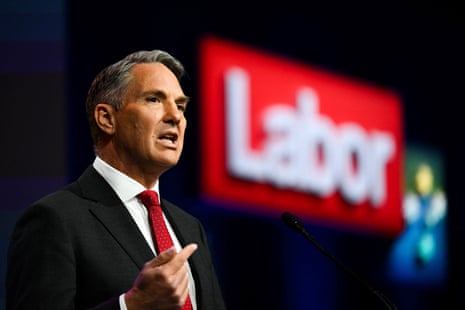
Australia’s Defence Minister, Richard Marles, addressed these concerns, assuring the public that Australia’s strategic fuel reserves are currently higher than before the conflict began. However, he admitted the government was "not sanguine" about the situation, emphasizing the critical need for stability in global shipping lanes. "We absolutely need to see the Strait of Hormuz be open and for freedom of navigation to happen there, for commercial shipping to be allowed through, and we very much call on Iran to allow that to be the case," Marles stated. The Strait of Hormuz is a vital chokepoint for global oil supplies, with approximately one-fifth of the world’s total petroleum liquids passing through it daily, and any disruption there has immediate and far-reaching consequences for energy markets worldwide. Marles reiterated Australia’s call for "a de-escalation of hostilities in the Middle East" and a continued focus on "ensuring that fuel supply going forward."
Domestically, the Australian economy faces its own set of challenges. Despite a resilient labor market, which saw the addition of over 76,000 jobs in June, signaling strong employment growth and maintaining a low unemployment rate of 3.8%, financial markets are bracing for further interest rate hikes. The robust labor force report released by the Australian Bureau of Statistics on Thursday prompted bond traders to increase their expectations for the Reserve Bank of Australia (RBA) to raise interest rates for a fourth time in 2026. The market is now fully pricing in a rate hike by Christmas, a significant shift from a 50-50 probability just weeks ago. This reflects a growing concern that inflationary pressures, exacerbated by rising global energy costs, could prompt the RBA to act aggressively to temper the economy. June quarter inflation data, due next week, is keenly awaited but analysts warn that these figures may already be outdated by the time of their release, given the rapid shifts in the global economic landscape and the immediate impact of rising oil prices.
Labor’s Economic Stance and Political Battles
Against this backdrop of international trade disputes and domestic economic pressures, the Australian Labor government is navigating its own internal and external political battles. Treasurer Jim Chalmers has reiterated the government’s "other priorities" over a new gas tax, despite increasing calls for reform from within Labor ranks. At the party’s national conference in Adelaide, members and MPs endorsed a motion to extract a "fairer return" from Australia’s natural resources. However, Prime Minister Anthony Albanese quickly dampened expectations for an immediate new gas export tax.

Chalmers elaborated on this position in an interview on ABC’s 7.30, stating, "I think that language in the platform reflected the balance that we have been seeking to strike… I acknowledge that there are people around the country and including people in our movement who would like us to go further. But we did take some important steps in that regard to get a fairer return." He highlighted previous reforms to the petroleum resource rent tax (PRRT), which included adjustments to the tax settings on offshore gas projects to ensure a more equitable share of profits for the nation. Additionally, he pointed to the government’s plan to implement a gas reservation policy for Australia’s east coast, aiming to secure domestic supply and stabilize local prices. The government’s stance also considers its role as a "reliable international supplier," balancing domestic revenue needs with maintaining key trade relationships, particularly with Asian nations heavily reliant on Australian liquefied natural gas (LNG) exports. This delicate balancing act reflects the complexities of energy policy, where environmental concerns, economic benefits, and international commitments often collide.
In a broader political critique, Chalmers accused right-wing parties, including One Nation, the Liberal Party, and the Nationals, of attempting to "prey on" voter insecurities about the economy while promoting "anti-worker" policies. Speaking from the Labor conference, he outlined the government’s economic narrative for the upcoming election campaign, asserting, "We’re actually acting to do something about it… our political opponents, they seek to prey on those pressures and those anxieties that people feel, at the same time as their anti-worker agenda would make things worse rather than better." Chalmers pointed to Labor’s record of real wage growth over the past two and a half years, multiple tax cuts (including changes to stage three tax cuts that benefited a broader range of income earners), and low unemployment rates as evidence of their effective economic management. However, he acknowledged the challenge of declining real incomes due to high inflation, which leaves workers with less disposable income. He pledged Labor’s continued commitment to boosting wages, stating, "We’ve done a whole range of things to boost wages in our economy because, deliberately, we believe that one of the best ways to help with these cost-of-living pressures is to make sure that people are paid decent wages. That’s been our [Labor’s] reason for being for more than a hundred years." This rhetoric sets the stage for a contentious economic debate leading into the next federal election, where cost-of-living pressures are expected to be a dominant theme, particularly as public sentiment on economic pessimism has shown to bolster support for parties like One Nation.
Condemnation of Domestic Violence Comments
Amidst the economic and geopolitical discussions, a significant social issue garnered strong condemnation. Comments made by One Nation leader Pauline Hanson regarding domestic violence drew swift and widespread backlash earlier this week. Hanson had controversially referred to domestic violence as a "two-way street," dismissed paid leave for those experiencing family and domestic violence as "ridiculous," and suggested that addressing the issue was diverting police resources from "real crime" during a 2025 podcast.

Deputy Opposition Leader Jane Hume unequivocally condemned Hanson’s statements on ABC radio, declaring, "The comments are wrong. I think it demonstrates just how out of touch on this issue they really are." Hume emphasized the gravity of domestic violence, calling it "a scourge, it’s a national disgrace, it’s a serious crime." She further criticized Hanson’s approach, stating, "I certainly don’t think we’re going to fix it by going on a podcast and calling domestic violence leave a holiday." These comments highlight the ongoing national debate and governmental efforts to combat domestic violence, a critical social issue that often transcends political divides. Advocacy groups and support services have consistently called for greater awareness, funding, and legislative support for victims, emphasizing the systemic nature of the problem and the importance of policies like domestic violence leave in providing crucial support for survivors to leave abusive situations and rebuild their lives.
International Relations and Defence Commitments
Beyond trade and domestic policy, Australia’s international engagements remain a key focus. Prime Minister Anthony Albanese held his inaugural phone call with the newly sworn-in UK Prime Minister, Andy Burnham. Burnham’s appointment on Monday marks a period of significant political churn in the UK, as he is the seventh prime minister in a decade, reflecting the nation’s turbulent political landscape following a series of leadership changes. Albanese extended his congratulations and an invitation to visit Australia, signaling a desire to strengthen bilateral ties.
Their discussion covered several critical areas, including the AUKUS defence pact, a trilateral security partnership between Australia, the UK, and the US focused on nuclear-powered submarine technology and advanced capabilities. The leaders also explored avenues for boosting trade and economic investment, aligning with both nations’ post-Brexit and Indo-Pacific strategies. A notable point of discussion was the shared commitment to regulating social media, specifically the age ban for under-16s, a policy that took effect in Australia in December and was mirrored by the UK last month. This convergence on digital regulation reflects a growing global concern over youth safety online and the impact of digital platforms. Further topics included challenges in the Middle East, the burgeoning field of artificial intelligence, and a more personal note, their mutual passion for rugby league.
In a related development affirming Australia’s defence commitments, construction yards designated for building Australia’s nuclear-powered submarine fleet received an additional $4.6 billion in funding. This significant investment is allocated to the new submarine construction yard at Adelaide’s Osborne shipyard, augmenting the $3.9 billion previously announced in February. Defence Minister Richard Marles emphasized the importance of this funding for delivering Australia’s future submarine capabilities, which are crucial for maintaining regional security and interoperability with allies. "This is really important in terms of delivering our future nuclear-powered submarines," Marles stated. He outlined a phased handover of the yard over the next decade, with the first operational sheds expected within a year, enabling "cutting steel on our first submarine by the end of this decade." This substantial financial commitment underscores the strategic importance of the AUKUS pact and Australia’s long-term defence posture in the Indo-Pacific region, ensuring the nation acquires cutting-edge military technology.
Qantas Pushes Boundaries with Ultra-Long-Distance Flight
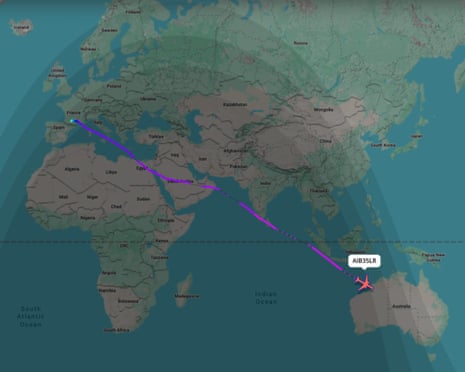
In a feat of aviation engineering and a testament to global connectivity, an Airbus A350-1000ULR, custom-designed for Qantas, is set to land in Melbourne after completing a grueling 19-hour non-stop test flight from Toulouse, France. This ultra-long-range aircraft is central to Qantas’s ambitious "Project Sunrise" initiative, which aims to establish non-stop commercial services between Sydney and London, a journey typically lasting around 20 hours.
The test flight garnered significant international attention, with over 12,000 aviation and transport enthusiasts tracking its progress live on flightradar24.com, demonstrating the public’s fascination with pushing the boundaries of air travel. While Project Sunrise has faced multiple delays in previous years due to factors such as aircraft availability and regulatory approvals, commercial flights are now firmly scheduled to commence in October 2027. This marks a pivotal moment for Qantas, as it seeks to redefine long-haul travel, offering passengers direct routes that cut down on travel time and layovers, potentially reducing overall journey times by several hours. The successful completion of this test flight brings the airline closer to realizing its vision of connecting distant global hubs with unparalleled efficiency, albeit with ongoing considerations for passenger comfort and logistical challenges on such extended journeys. The A350-1000ULR is equipped with advanced fuel efficiency and passenger amenities designed to mitigate the effects of ultra-long-haul travel, such as dedicated wellness zones and enhanced cabin pressurization, representing a new frontier in commercial aviation.

The diverse array of news – from trade tariffs and geopolitical tensions to domestic economic policy, social issues, defence, and aviation innovation – paints a comprehensive picture of Australia navigating a complex and rapidly evolving global and national landscape.