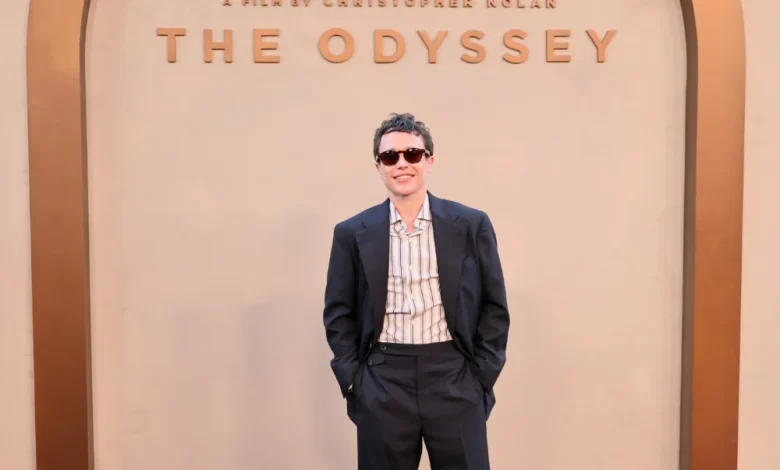
Whoopi Goldberg, a prominent co-host of ABC’s "The View," vociferously defended actor Elliot Page’s casting in Christopher Nolan’s highly anticipated film, "The Odyssey," during a segment on Tuesday’s episode. Goldberg directly addressed and dismissed a clip featuring conservative commentator Ben Shapiro, who had criticized Page’s inclusion in the film, labeling it an "absolute puzzler." The exchange highlights a broader cultural debate surrounding representation in media and the increasingly polarized reactions to casting choices.
Shapiro’s critique, as presented on "The View," focused on Page’s physical attributes and perceived vocal characteristics, stating, "he is about 5’2 and 105 pounds soaking wet and has the voice of a woman. It doesn’t work." This sentiment, according to Shapiro, reflects a broader concern among some conservative audiences.

Goldberg, however, pushed back strongly against this line of reasoning. She questioned the very premise of such criticism, asking, "Why do you care who’s cast in it? If you don’t want to see it, don’t go see it." Her remarks underscored a sentiment that individuals critical of casting choices should simply opt out of engaging with the content rather than attempting to dictate its artistic direction. This perspective aligns with a growing call for artistic freedom and a rejection of gatekeeping in the entertainment industry.
Background: The Controversy Surrounding "The Odyssey" Casting
The controversy surrounding Elliot Page’s casting in "The Odyssey" is part of a larger narrative of cultural friction surrounding LGBTQ+ representation in mainstream media. Page, who publicly came out as transgender in December 2020, has become a prominent advocate and figure within the transgender community. His casting in a role in a major Nolan film, particularly one that has generated significant pre-release buzz, was seen by some as a positive step forward for transgender visibility.
However, this visibility has also drawn the ire of conservative factions who often view such casting as part of a "woke" agenda, prioritizing social or political messaging over traditional casting norms. This particular controversy appears to have been amplified by a pre-existing narrative around "The Odyssey," which, by its very nature as an epic adaptation of a classic Greek myth, invites intense scrutiny and interpretation.

Chronology of Criticisms and Responses
The criticism of Page’s casting did not emerge in a vacuum. Initial speculative rumors incorrectly suggested that Page might be cast as the legendary warrior Achilles. This mischaracterization quickly fueled outrage from some corners of the internet, with prominent figures like Elon Musk weighing in on the perceived miscasting before the actual role was even confirmed. Musk’s involvement, amplified by his substantial social media following, helped to elevate the criticism to a wider audience.
This initial wave of speculation and backlash underscores a pattern where unverified information can rapidly gain traction and provoke strong reactions, particularly within polarized online communities. The subsequent clarification of Page’s role as Sinon, a cousin of Matt Damon’s Odysseus, did little to quell the underlying resistance from some critics.
Furthermore, the discourse surrounding "The Odyssey" has also seen other instances of racially charged objections, notably concerning Lupita Nyong’o’s involvement in the project. These objections, rooted in racist sentiments, highlight a multi-faceted opposition to the film’s casting, encompassing both LGBTQ+ and racial diversity.

Page’s Role and Critical Reception
Elliot Page plays Sinon, a supporting character who is a cousin to Odysseus, portrayed by Matt Damon. The Variety review of "The Odyssey" described Page’s performance with the phrase "tersely vulnerable," suggesting a nuanced and impactful portrayal that resonated with critics. This critical appraisal offers a counterpoint to the criticisms focused on Page’s perceived suitability for the role, emphasizing artistic merit and performance quality.
The decision to cast Page in this role, regardless of the controversy, is a testament to Nolan’s directorial vision and his willingness to engage with contemporary social dialogues through his filmmaking. Nolan, known for his intricate narratives and often unconventional casting, has a history of bringing unique talents to his projects, pushing the boundaries of conventional storytelling.
Goldberg’s Broader Critique of "Woke" Discourse
Beyond defending Elliot Page specifically, Whoopi Goldberg also took aim at the broader conservative critique of "woke" culture. She argued that the term "woke" is often weaponized and misapplied, used to demonize ordinary individuals who are simply trying to navigate life.

"Goldberg told viewers that the label gets thrown at ordinary people just trying to hold down jobs, raise families and get an education, not at anyone pushing an agenda," the original report states. This sentiment suggests that the term "woke" has become a catch-all pejorative, used to dismiss any initiative or individual perceived as promoting progressive social values, regardless of the actual intent or impact. Goldberg’s analysis points to a linguistic tactic where a term intended to signify awareness of social injustices is co-opted to discredit and delegitimize progressive movements and individuals.
Box Office Success: A Rejection of the Criticism’s Impact
Despite the vocal opposition and the amplification of negative commentary, "The Odyssey" has achieved remarkable commercial success. The film enjoyed the biggest opening weekend of Christopher Nolan’s career, a significant achievement given his track record of blockbuster hits. Globally, the film has surpassed the $300 million mark, indicating a robust audience reception that appears largely unfazed by the casting controversies.
This financial success serves as a crucial data point, suggesting that the criticisms, while loud, may not be representative of the broader movie-going public’s priorities. It implies that audiences are often more interested in the quality of the filmmaking, the directorial vision, and the overall entertainment value of a film than in the specific identities of the actors portraying characters. This trend has been observed in other recent film releases where diverse casting choices have initially faced backlash but ultimately did not deter commercial performance.

Analysis: The Evolving Landscape of Representation and Audience Reception
The incident surrounding Elliot Page’s casting in "The Odyssey" and Whoopi Goldberg’s defense of it encapsulates several key trends in contemporary media and culture. Firstly, it highlights the increasing prominence of transgender actors and the ongoing societal adaptation to their visibility in mainstream entertainment. While progress has been made, resistance and prejudice persist, often manifesting in online discourse and through amplified criticism from conservative media outlets.
Secondly, it underscores the power of social media and online platforms in shaping public opinion and amplifying controversial narratives. Figures with large followings can significantly influence the discourse, as seen with Elon Musk’s early involvement. This rapid dissemination of information and opinion can create a distorted perception of public sentiment, where a vocal minority can appear to represent a larger segment of the population.
Thirdly, the box office success of "The Odyssey" provides a compelling counter-narrative. It suggests that audiences are increasingly discerning and may prioritize artistic merit and entertainment value over ideological objections to casting. This could indicate a potential shift in how the film industry responds to criticism, with a greater emphasis placed on the actual performance and the film’s overall quality as determinants of success.

Finally, Goldberg’s critique of the term "woke" points to a broader cultural struggle over language and its use in political and social debates. The decontextualization and weaponization of terms like "woke" can hinder productive dialogue and obscure the genuine issues of social justice and representation that such terms were originally intended to address.
In conclusion, the controversy surrounding Elliot Page’s role in "The Odyssey" serves as a microcosm of larger cultural debates. While conservative critics have voiced objections based on what they perceive as miscasting, the film’s commercial success and Goldberg’s robust defense suggest a more complex reality where audience reception is not solely dictated by identity politics. As the entertainment industry continues to grapple with issues of diversity and inclusion, the interplay between artistic expression, public opinion, and commercial viability will remain a critical area of observation. The film’s performance offers a data point suggesting that, for many, compelling storytelling and directorial vision can transcend the debates surrounding casting choices, ultimately shaping a more inclusive and representative future for cinema.